
An electric bus uses electricity stored in a battery to power its motor instead of a diesel or gasoline engine. These buses are used for city routes, school transportation, shuttle services, and other passenger transport. The basic idea is simple, but operating one requires more than replacing a fuel tank with a battery. Fleet operators must consider route length, passenger load, charging time, electricity supply, climate, maintenance, and total cost. This guide explains how electric buses work, what affects range, how charging is planned, where operating savings can come from, and what challenges operators should consider before switching.
What Is an Electric Bus?
An electric bus is a passenger vehicle powered mainly by electricity. Its battery sends energy to one or more traction motors, which turn the wheels. Many models also use regenerative braking to recover some energy while slowing down. A battery-electric bus has no tailpipe emissions while driving. It can still be linked to emissions from electricity generation, depending on how its charging power is produced. Electric buses come in different sizes, from compact shuttles to full-size transit vehicles.
How Does an Electric Bus Work?
The battery stores electrical energy and sends it through a power-control system to the traction motor. The motor produces torque directly, so the drivetrain can be simpler than a conventional combustion system. During braking, regenerative braking can convert part of the vehicle’s motion into electrical energy and return it to the battery. The amount recovered depends on the bus, route, speed, and driving conditions. This simpler drivetrain can reduce the number of moving mechanical parts compared with a combustion powertrain.
Battery Size and Driving Range
Battery capacity affects range, vehicle weight, and purchase price. A larger battery stores more energy, but it also adds mass. Published range should not be treated as a guaranteed distance. Passenger load, hills, traffic, temperature, heating, air conditioning, speed, and driving style all affect energy use.
Cold weather can be especially demanding because cabin heating consumes energy and battery performance can change at low temperatures. Fleet operators should use realistic route data instead of planning every trip around maximum advertised range. The key question is whether the bus can complete its assigned duty while retaining enough energy for charging and schedule recovery.
Charging an Electric Bus
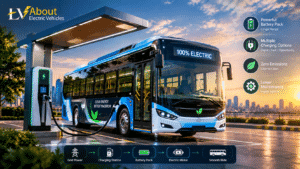
Charging is a central part of electric-bus operation. Operators must decide where buses charge, how much power is available, how many vehicles need energy at once, and how long each bus remains parked. Depot charging is common because buses often return to a central facility for several hours. Slower charging can work well during long overnight dwell periods, while faster charging may help vehicles that return to service quickly. The U.S. Department of Energy says charging choices should match bus duty cycles and dwell times. It also identifies utility capacity, demand charges, installation requirements, and facility upgrades as important planning factors.
Charging Infrastructure
Buying buses is only part of electrification. A fleet may need chargers, electrical equipment, wiring, transformers, switchgear, communications systems, and depot modifications. Infrastructure needs depend on fleet size, charger power, operating schedules, and existing electrical capacity. Utility upgrades can add significant cost and may take time.
The Department of Energy notes that infrastructure costs vary widely because facilities have different power requirements and site conditions. Operators should therefore obtain site-specific estimates instead of assuming one charger price applies everywhere.
How Much Does an Electric Bus Cost?
An electric bus generally costs more to purchase than a comparable conventional bus, although price varies by size, battery capacity, equipment, manufacturer, and market. Purchase price is only one part of the financial picture. Operators should also examine electricity, avoided fuel costs, maintenance, charger installation, utility upgrades, financing, incentives, and expected vehicle life.
The Department of Energy explains that battery-electric bus capital costs can be substantially higher than combustion buses, while lifetime fuel and maintenance costs may be lower. A proper evaluation should consider both short- and long-term costs.
Operating and Maintenance Costs
Electric buses can reduce energy and maintenance expenses, but savings depend on electricity prices, route conditions, labor, maintenance practices, and charging strategy. Electricity is not automatically inexpensive. Commercial bills may include demand charges based on the highest power level used during a billing period. Charging many buses simultaneously can therefore affect operating costs.
Electric drivetrains have fewer mechanical parts than combustion systems. There is no engine oil or many engine-related components. However, tires, brakes, suspension, steering, doors, lights, cooling systems, charging equipment, and electrical systems still need regular service. Regenerative braking may reduce friction-brake use in some situations. High-voltage systems also require trained technicians and appropriate safety procedures.
Environmental Benefits
One major advantage is the absence of tailpipe emissions during operation. This can improve local air quality along busy routes and near passenger stops. Electric buses can also reduce greenhouse-gas emissions compared with conventional buses, although the overall result depends on the electricity source and vehicle life cycle. The EPA notes that electric vehicles do not produce tailpipe or evaporative emissions, while emissions associated with electricity generation still need to be considered.
Noise and Passenger Comfort
Electric motors are generally quieter than combustion engines, particularly at low speeds. This can reduce noise inside the vehicle and around stops. Lower noise can improve passenger comfort, although very quiet vehicles require extra awareness around pedestrians and cyclists. Acceleration can also feel different. Electric motors can deliver torque quickly, so control software can be used to provide smoother power delivery.
Performance and Hill Climbing
An electric bus can provide strong low-speed torque, which helps with starting and climbing grades. Performance still depends on motor output, battery condition, vehicle weight, road slope, temperature, and software limits. A larger motor is not automatically the best choice. Operators should match the powertrain to the actual route and passenger load.
Electric Bus Safety
Electric buses use high-voltage systems, so maintenance and emergency procedures must account for that equipment. Drivers and technicians need training appropriate to their roles. The vehicle should also have reliable brakes, steering, lights, mirrors or cameras, emergency exits, warning systems, and other required safety equipment. Charging areas should follow applicable electrical and safety requirements. Operators should use the manufacturer’s procedures and local regulations.
Vehicle-to-Grid and Energy Storage
Some electric buses support bidirectional charging. When compatible equipment is available, energy can move from the vehicle battery back to a building or electrical grid while the bus is parked. School and transit fleets can be useful candidates because buses often remain stationary for long periods. However, energy cannot be discharged without considering the vehicle’s next route. Vehicle-to-grid projects therefore require compatible buses, chargers, software, utility arrangements, and careful scheduling.
Challenges of Electric Buses
The main challenges include higher upfront cost, charging infrastructure, grid capacity, route planning, battery weight, climate effects, and staff training. Long routes may require larger batteries or additional charging. Extreme temperatures can increase energy demand. A depot with limited electrical capacity may need costly upgrades before several buses can charge together. Fleet operators also need plans for spare parts, battery service, charger maintenance, software support, and future technology changes.
Is an Electric Bus Worth It?
An electric bus can be a strong choice when its route, charging schedule, electricity supply, and financial model fit together. Predictable routes with long parking periods can make charging easier. Fleets with high annual mileage may have more opportunity to benefit from lower energy and maintenance costs. However, results vary by operation. A proper evaluation should use real route data, local electricity rates, expected maintenance, infrastructure costs, and available incentives.
How to Choose an Electric Bus
Start with the route rather than the brochure. Record daily distance, passenger load, stops, hills, traffic, weather, and time available for charging. Then compare battery capacity, motor performance, charging capability, cabin requirements, warranty, service support, and total ownership cost. The best bus is not necessarily the one with the largest battery. It is the one that can complete its assigned work reliably without unnecessary weight or excessive charging requirements.
FAQs About Electric Bus
Q.1 How far can an electric bus travel?
Range varies with battery size, passenger load, weather, terrain, speed, heating, cooling, and driving conditions. Operators should use route-specific estimates rather than one published maximum.
Q.2 How long does it take to charge an electric bus?
Charging time depends on battery size, charger power, starting state of charge, and vehicle capability. Overnight depot charging can work well when buses have enough dwell time.
Q.3 Are electric buses cheaper to operate?
They can be. Electricity and maintenance may cost less than fuel and maintenance for conventional buses, but local rates, labor, route conditions, and infrastructure costs determine actual savings.
Q.4 Do electric buses work in cold weather?
Yes, but cold conditions can increase energy use and affect battery performance. Winter routes should account for heating demand and lower efficiency.
Q.5 Are electric buses better for the environment?
They have zero tailpipe emissions and can reduce greenhouse-gas emissions compared with conventional buses. The total benefit depends partly on the electricity source and vehicle life cycle.
Q.6 Can an electric bus charge overnight?
Yes. Overnight depot charging is practical when the bus has enough parking time and the facility can provide the required power.
Conclusion
An electric bus can reduce tailpipe pollution, lower some operating costs, and provide a quieter alternative to conventional buses. Its electric drivetrain also changes how fleets manage fueling, maintenance, and energy. The main challenge is planning the complete system. A successful transition requires suitable buses, reliable chargers, adequate electrical capacity, trained staff, realistic route data, and a financial plan that considers the vehicle’s full life.
Before purchasing, operators should calculate daily energy needs, charging windows, infrastructure requirements, electricity costs, maintenance, and available incentives. A route-based evaluation is much more useful than choosing a bus from battery size or advertised range alone.
When the vehicle and charging system are designed around real operating conditions, an electric bus can become a practical and efficient part of modern transportation while supporting cleaner and more efficient transportation for communities.