
An electric rickshaw is a three-wheeled vehicle powered by an electric motor and battery instead of a conventional petrol or diesel engine. It is widely used for short passenger trips, local transport, delivery work, and small commercial operations.
Interest in electric rickshaws is growing because they can provide quiet, locally emission-free operation and can reduce dependence on liquid fuel. However, choosing one should not be based on price alone. Battery quality, motor performance, charging time, payload, brakes, service support, and local rules all affect the real value of the vehicle. This guide explains how an electric rickshaw works, what to check before buying, how battery capacity affects range, and which safety and maintenance points matter most.
What Is an Electric Rickshaw?
An electric rickshaw, often called an e-rickshaw or electric auto, uses a battery-powered motor to move a three-wheeled passenger or cargo vehicle. Depending on the model and local regulations, it may use a throttle, pedal-like control, or another accelerator system. The main electrical parts normally include a battery pack, motor, controller, charger, wiring, and battery management system. The vehicle also needs mechanical systems such as brakes, steering, suspension, wheels, and a suitable frame. Passenger versions are designed to carry a driver and several passengers, while loader versions focus on goods.
How Does an Electric Rickshaw Work?
When the driver uses the accelerator, the controller regulates electrical power from the battery to the motor. The motor produces torque, which reaches the driven wheels through the vehicle’s drivetrain. The battery stores energy for the motor and other electrical equipment. A battery management system can monitor battery conditions and help control charging and discharge.
Performance depends on more than motor wattage. Vehicle weight, passenger load, road slope, tire pressure, speed, battery condition, and controller settings can all change how the rickshaw feels and how much energy it uses.
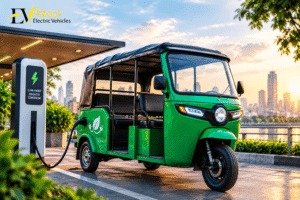
Electric Rickshaw Motor and Performance
Motor power is one of the first specifications buyers notice, but a larger number is not automatically better. The motor must match the vehicle’s weight, expected load, road conditions, and intended operating pattern.
A vehicle used mainly on flat urban roads may not need the same setup as one that regularly climbs steep roads with passengers. Torque is important when starting from a stop and moving uphill, while efficient power delivery can help reduce energy consumption. Check whether the manufacturer lists rated or peak motor output. Also consider service availability for the motor, controller, and other electrical components before making a purchase.
Battery Capacity and Range
Battery capacity strongly influences how far an electric rickshaw can travel between charges. Capacity may be stated in amp-hours, watt-hours, or kilowatt-hours depending on the manufacturer and market. A larger battery can store more energy, but range is never determined by battery size alone. Passenger load, road gradient, speed, traffic, weather, tire pressure, driving style, and battery age all affect energy use.
Treat advertised range as an estimate rather than a guarantee. If the vehicle will operate commercially, calculate range around the driver’s actual daily route and leave a practical reserve instead of planning every trip around the maximum claimed distance.
Battery Types
Electric rickshaws may use lead-acid or lithium-based batteries. Lead-acid can have a lower purchase cost, while lithium systems can offer lower weight and useful energy density. Compare capacity, warranty, replacement cost, charger compatibility, and service support rather than chemistry alone.
Charging an Electric Rickshaw
Charging requirements depend on the battery and charger selected for the vehicle. Use the charger supplied with the vehicle or a replacement specifically approved by the manufacturer. Do not choose a charger simply because its connector fits. Electrical specifications must also match the battery system.
For lithium-ion systems, safe charging is especially important. CPSC recommends using the supplied charger, following manufacturer instructions, staying present while charging, and never charging micromobility batteries while sleeping or away from home. It also recommends using only approved replacement battery packs and avoiding modified or reworked packs.
Payload and Passenger Capacity
Payload is critical for an electric rickshaw because carrying more weight increases energy use and can affect braking and handling. Check the manufacturer’s maximum gross weight or payload rating and understand whether it includes the driver. Never assume that adding more passengers is safe simply because the seating appears to fit them.
Cargo versions need the same attention. Loads should be secured and distributed according to the manufacturer’s guidance. An overloaded vehicle can require more stopping distance and may place extra stress on tires, suspension, brakes, frame, motor, and battery.
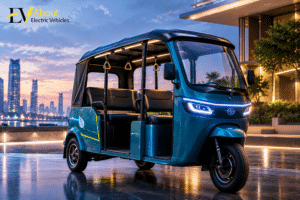
Brakes, Tires and Suspension
An electric rickshaw should have braking equipment appropriate for its weight and operating conditions. Inspect brake components regularly and replace worn parts promptly.
Tires are equally important because they carry the vehicle’s weight and affect grip, stability, and braking. Maintain the recommended pressure and inspect them for cuts, uneven wear, or other damage. Suspension helps manage road impacts and can improve comfort, but it does not remove the need for careful driving. Poor roads, excessive speed, and heavy loads can still affect stability.
Safety Features
Important equipment may include headlights, tail lamps, brake lamps, indicators, reflectors, mirrors, a horn, windshield, seat belts where required, and a strong passenger enclosure. Exact legal requirements vary by jurisdiction. The electrical system deserves special attention. Battery packs, wiring, connectors, chargers, and controllers should be designed for the vehicle and installed correctly.
In 2026, India also reported a cybersecurity concern involving certain e-rickshaw battery-management systems. The government said some low-cost systems had Bluetooth-related weaknesses that could allow unauthorized access and potentially cause a moving vehicle to shut down. Buyers should therefore consider not only physical battery safety but also the security and support of connected battery systems.
Maintenance of an Electric Rickshaw
Electric rickshaw maintenance is usually different from engine-powered vehicle maintenance because there is no conventional internal-combustion engine, engine oil, or exhaust system. However, the vehicle still needs regular mechanical and electrical checks. Inspect brakes, tires, steering, suspension, lights, wiring, connectors, fasteners, and battery condition. Keep electrical connections clean and protected according to manufacturer instructions. Pay attention to unusual heat, damaged cables, swelling, unusual smells, or unexpected battery behavior. Stop using a damaged battery system and have it inspected by qualified personnel.
Electric Rickshaw Cost
The purchase price varies widely by country, battery type, motor, body design, payload, brand, and equipment. A lower initial price does not necessarily mean lower ownership cost. For a commercial buyer, calculate the full cost of ownership. Include electricity, battery replacement, tires, brakes, insurance, registration, servicing, financing, and possible downtime.
Pakistan’s State Bank announced a federal cost-sharing financing scheme for electric bikes and rickshaws/loaders for fiscal year 2025–26. The published scheme included financing for e-rickshaws/loaders, with a maximum loan cap of PKR 880,000 for a three-wheeler and a capital subsidy of up to PKR 200,000, subject to the scheme’s conditions.
Electric Rickshaw in Pakistan
Pakistan is encouraging electric mobility, including electric rickshaws and loaders. A federal financing program announced in 2025 included support for e-rickshaws/loaders. Buyers should verify current eligibility, financing terms, registration requirements, and approved vehicle lists before purchasing because programs and local rules can change.
How to Choose the Right Electric Rickshaw
Start with the job the vehicle must perform. A passenger vehicle for short city routes has different requirements from a cargo vehicle working long shifts. Compare battery capacity, motor output, expected range, payload, charging time, brakes, tires, dimensions, warranty, and service network. Ask how much replacement batteries and major electrical parts cost.
Check the manufacturer’s documentation instead of relying only on dealer claims. If possible, test the vehicle with a realistic load and on the type of roads where it will operate. Also check local registration, licensing, insurance, route permissions, and safety requirements.
Common Buying Mistakes
One common mistake is choosing only by purchase price. Another is assuming a bigger motor automatically provides better performance. Ignoring battery replacement cost can also make a cheap vehicle expensive later. Buyers sometimes overlook charger compatibility, spare-parts availability, warranty conditions, and after-sales service. Do not plan commercial routes around the maximum advertised range. Real operating conditions can reduce it significantly. Finally, avoid modified battery packs or uncertified electrical components. Saving money on an unsafe electrical system is not worth the risk.
FAQs About Electric Rickshaw
Q.1 How far can an electric rickshaw travel on one charge?
The distance depends on battery capacity, vehicle load, speed, terrain, road conditions, weather, tires, and battery age. Use the manufacturer’s figure as an estimate and plan with a reserve.
Q.2 How long does an electric rickshaw battery last?
Battery life depends on chemistry, charging habits, temperature, usage, maintenance, and cell quality. Follow the manufacturer’s charging and storage guidance and monitor battery performance over time.
Q.3 Is an electric rickshaw cheaper than a fuel rickshaw?
It can have lower energy and maintenance costs, but the result depends on electricity prices, battery replacement, financing, usage, and local fuel costs. Compare total ownership cost rather than energy cost alone.
Q.4 Can an electric rickshaw carry heavy loads?
Only within its rated payload. Extra weight increases energy use and can affect braking, handling, tires, suspension, and motor performance.
Q.5 Is an electric rickshaw good for commercial use?
Yes, it can be suitable for passenger transport, deliveries, and other short-distance commercial work when the vehicle matches the route, load, charging schedule, and local regulations.
Conclusion
An electric rickshaw can provide practical three-wheel transportation for passengers, deliveries, and local commercial work. Its value depends on the complete vehicle rather than one specification.
Before buying, compare the battery, motor, range, payload, charging time, brakes, tires, warranty, spare parts, and service support. For commercial use, calculate total operating costs and make sure the vehicle can complete its daily route without depending on its maximum advertised range.
Battery and charger safety should always be a priority. Use approved components, follow manufacturer instructions, and avoid modified battery systems. With the right specifications, reliable support, and proper maintenance, an electric rickshaw can be a useful option for efficient everyday and commercial transportation.