
Washing an electric car is almost the same as washing any car — with a few important differences. An electric car washing guide has to cover the charge port, the sensors and cameras, the sealed battery underneath, and the simple rule that water and high-voltage electrics deserve respect. Follow this electric car washing guide and your EV stays clean, safe, and protected. Get those right, and washing your EV is easy, safe, and actually good for the car. This guide walks you through the full process, step by step.
Before You Start: EV Safety Rules
Never wash while charging. Unplug the car before you start, and keep the charge port door closed. Water around a live charging connection is the one real risk in EV washing, and it is entirely avoidable.
Keep high pressure away from sensitive spots. Modern EVs are sealed against rain and normal washing, but avoid blasting a pressure washer directly at the charge port, camera lenses, parking sensors, door seals, and the underbody battery area at close range. Hold the nozzle at least 30 cm away and use a wide fan spray.
Wash in the shade if you can. Soap dries fast on hot panels and leaves spots, especially on dark paint. Early morning or evening is ideal.
What You Need
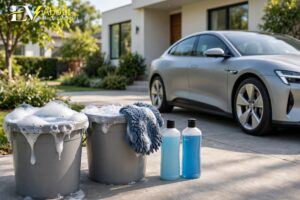
- Two buckets (one wash, one rinse) with grit guards
- A pH-neutral car shampoo (never dish soap — it strips wax and sealant)
- A microfiber wash mitt
- Several clean microfiber drying towels
- A wheel cleaner and a soft wheel brush
- Glass cleaner safe for tinted windows
- Optional: spray wax or sealant for protection
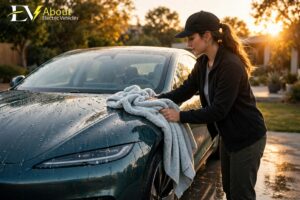
Step 1: Rinse the Whole Car
Start with a gentle rinse from top to bottom to remove loose dirt, dust, and grit. Pay attention to wheel arches and the lower panels, where mud collects. This step matters most in any electric car washing guide: washing grit into the paint is what causes swirl marks.
Step 2: Wheels First
Wheels are the dirtiest part, so clean them before the bodywork. Spray wheel cleaner, let it sit for a minute, brush gently, and rinse. Brake dust on EVs is lighter than on gas cars (regenerative braking does much of the slowing), but road grime still builds up.
Step 3: The Two-Bucket Wash
Fill one bucket with shampoo solution and one with clean rinse water. Dip the mitt in the wash bucket, wash one panel at a time from the roof downward, then rinse the mitt in the clean bucket before reloading. This electric car washing guide recommends the two-bucket method because it is the single best way to prevent swirl marks. This keeps dirt out of your wash water and off your paint. Work in straight lines rather than circles to minimize swirls.
Step 4: Charge Port and Sensors — Handle With Care
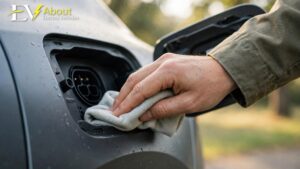
This electric car washing guide treats the charge port as a no-pressure zone: wipe around the charge port door with a damp cloth, but do not force water inside the port. If the port area is dirty, a soft brush and a light wipe are enough. Clean camera lenses and parking sensors gently with a microfiber cloth — a dirty sensor can trigger false parking warnings, and a dirty camera blurs your reversing view. Avoid harsh chemicals on these parts.
Step 5: Rinse and Dry Properly
This electric car washing guide stresses thorough rinsing: rinse from top to bottom, then dry immediately with clean microfiber towels. Do not let the car air-dry: mineral deposits in water leave spots, and EVs with large glass roofs show them badly. Pat dry rather than dragging the towel, and use a second towel for door jambs and the charge port surround.
Step 6: Glass, Trim, and Protection
Following this electric car washing guide, clean all glass inside and out with a dedicated glass cleaner — EV cabins have big screens and glass roofs, so streak-free glass makes a real difference to visibility. Dress exterior black trim with a trim restorer if it has faded, and finish with a spray wax or sealant every few washes. A sealed surface sheds dirt, so your next wash is faster.
Interior Cleaning: Screens, Seats, and Glass Roofs
This electric car washing guide would be incomplete without the inside, because EV cabins are full of screens and glass. Clean the touchscreen with a dry microfiber cloth first — never spray cleaner directly onto it, since liquid can seep into the edges. For stubborn marks, dampen the cloth slightly with water or a screen-safe cleaner. Vacuum the seats and footwells before wiping surfaces, and use an interior cleaner matched to your trim: leather conditioner for leather, a gentle fabric cleaner for cloth.
Glass roofs deserve attention too: clean the inside of the roof glass with a glass cleaner and a fresh microfiber, working in sections so you can see streaks before they dry. A clean interior makes the whole car feel newer, and it protects the screens and materials that make an EV cabin special.
Protecting Matte Paint and Wraps
Matte paint and vinyl wraps need gentler handling than gloss paint, and this electric car washing guide treats them separately for good reason. Never use wax, polish, or sealant on matte finishes — they add shine and ruin the matte look permanently. Use a matte-specific shampoo, wash with the same two-bucket method, and dry with a clean microfiber.
For wrapped cars, avoid pressure washers near wrap edges and seams, where water can lift the film. Bird droppings and bug splatter should come off promptly on matte and wrapped surfaces, because they stain faster than on gloss paint. If your EV has a matte finish, a matte-specific detail spray between washes keeps it looking even without adding gloss.
Seasonal Tips: Winter Salt and Summer Dust
Seasons change the washing routine. In winter, road salt is the biggest threat: it attacks suspension components, brake parts, and underbody hardware, so rinse the lower body and wheel arches weekly and never let salt sit for a month. In summer, dust, pollen, and bird droppings are the main enemies — they bake onto hot panels fast, so wash in the shade and remove droppings as soon as you notice them.
Spring is the right time for a deeper clean and a fresh coat of sealant after winter, while autumn calls for clearing leaves from scuttle panels and wiper areas before they trap moisture. Adjusting your routine to the season is what keeps an EV’s paint and underbody healthy year after year, and it is the part of this electric car washing guide that saves you the most money over time.
How Often Should You Wash an Electric Car?
Every two weeks is a good rhythm for a daily driver; weekly if you drive on salty winter roads or dusty routes. This electric car washing guide treats frequency as protection, not vanity: regular washing prevents the buildup that damages paint and trim. Salt is the enemy of the underbody, so after winter driving, give the lower panels and wheel arches an extra rinse. The sealed battery pack underneath is protected, but keeping salt off the surrounding components and suspension parts extends their life.
Automatic Car Washes: Are They Safe for EVs?
Yes, with conditions. This electric car washing guide rates touchless automatic washes as the safest option — no brushes touching the paint, no risk to sensors. Brush washes are acceptable occasionally but will add swirl marks over time, especially on soft EV paint. Avoid any wash that uses high-pressure underbody jets aimed directly at the battery area, and never enter a wash while the car is plugged in.
Common Mistakes to Avoid
- Using dish soap or household cleaners that strip protection
- Washing in direct sun, leaving soap spots baked onto the paint
- Pressure-washing the charge port, sensors, or seals at close range
- Drying with old towels or chamois that carry grit
- Forgetting the cameras and sensors, which need a gentle wipe to work properly
- Washing while the car is charging
Skipping these rules is the fastest way to undo an otherwise good electric car washing guide routine.
FAQs About Washing an Electric Car
Here are the questions every electric car washing guide should answer:
Q.1 Can you wash an electric car like a normal car?
Yes. EVs are sealed against rain and normal washing. Just unplug before washing, keep high pressure away from the charge port and sensors, and follow the normal two-bucket method.
Q.2 Is it safe to use a pressure washer on an electric car?
Yes, at a safe distance (30 cm or more) with a wide fan spray. Avoid aiming directly at the charge port, camera lenses, sensors, door seals, and the underbody battery area.
Q.3 Can I wash my EV while it is charging?
No. Always unplug the car before washing, and keep the charge port door closed while water is around.
Q.4 Are automatic car washes safe for electric cars?
Touchless washes are the safest choice. Brush washes are fine occasionally but cause swirl marks over time. Skip any wash with aggressive underbody jets.
Q.5 How often should I wash my electric car?
Every two weeks for normal use, weekly in winter or on dusty roads. Rinse salt off the underbody promptly after winter driving.
Q.6 Do I need special shampoo for an electric car?
No — any pH-neutral car shampoo works. Avoid dish soap, which strips wax and sealant from any car’s paint.
Conclusion
An electric car washing guide really comes down to one idea: wash it like a normal car, but treat the charge port and sensors with care. Keep this electric car washing guide handy, and washing stays simple every time. Unplug first, use the two-bucket method, dry properly, and keep the cameras clean — and your EV will look as good as it drives for years.
A clean car is not just about looks, either: clean sensors work better, protected paint lasts longer, and a salt-free underbody stays healthier. Make it a fortnightly habit, and washing becomes the easiest maintenance your electric car will ever need.