
Electric buses cost more to buy than diesel buses — nobody disputes that. But the running costs tell a different story, and electric bus maintenance cost is where fleets save real money year after year. This electric bus maintenance cost guide gives you the honest numbers. With no engine oil, no gearbox, no exhaust system, and brakes that last far longer thanks to regenerative braking, an electric bus simply has fewer things to break. This guide breaks down the real numbers: what maintenance costs per mile, which parts still need attention, and where the hidden costs sit.
Electric Bus Maintenance Cost at a Glance
Cost Item | Electric Bus | Diesel Bus |
|---|---|---|
Maintenance per mile | $0.25–$0.35 | $0.50–$0.82 |
Oil changes | None | Regular, every service interval |
Transmission service | None | Regular |
Brake replacement | Extended by regenerative braking | Standard intervals |
Fuel / energy per mile | $0.14–$0.28 | $0.49–$0.82 |
Battery replacement | $50,000–$100,000 (after 7–12 years) | N/A (engine overhaul instead) |
Fleet data shows electric buses saving 30–50 percent on maintenance compared with diesel, and 60–75 percent on fuel costs. Real-world operating costs as low as $0.19 per mile have been recorded for electric buses versus $0.82 for diesel — a gap that compounds across a fleet of dozens of buses over a 12–15 year service life.
Why Electric Buses Cost Less to Maintain
Fewer moving parts
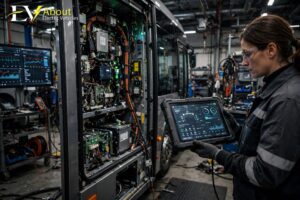
A diesel drivetrain has hundreds of wear items: pistons, injectors, turbochargers, clutches, gearboxes, exhaust after-treatment. An electric drivetrain has a motor, an inverter, and a battery — dramatically fewer parts to wear, adjust, or replace.
Regenerative braking
Electric buses slow down largely by recovering energy into the battery, so the friction brakes work far less. Brake pads and discs last much longer, which is one of the biggest single savings in electric bus maintenance cost.
No fluids to change
No engine oil, no transmission fluid, no coolant flushes for an engine, no diesel exhaust fluid. The fluids that remain — brake fluid, windscreen wash, and battery coolant — need attention far less often.
Software instead of spanners
Many issues are diagnosed remotely through telematics, and some are fixed with over-the-air software updates. A bus that reports its own battery health and fault codes spends less time in the workshop.
What Still Needs Maintaining
Electric buses are cheaper to maintain, not maintenance-free. The regular items are:
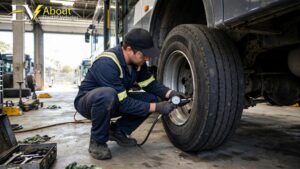
Tires. Heavy battery packs make electric buses heavier than diesel equivalents, and tires wear accordingly. Tire rotation and pressure checks matter more, not less — under-inflated tires on a heavy bus cost range as well as rubber.
Brakes. Regenerative braking extends brake life, but friction brakes still need inspection, and they can corrode from under-use in some climates. Annual brake checks remain essential.
Battery thermal management. The cooling system that keeps the battery at the right temperature is the most important maintenance item on an electric bus. Coolant levels, pumps, and sensors need scheduled checks — a neglected cooling system shortens battery life, and the battery is the most expensive component on the bus.
High-voltage safety inspections. Technicians need specific training and equipment to work on high-voltage systems. Scheduled HV inspections are a safety requirement, and they cost more per hour than standard diesel servicing — though they happen less often.
Suspension and bodywork. The extra weight of the battery puts more load on suspension components, and the usual body, door, and ramp maintenance for a passenger vehicle continues unchanged.
The Big One: Battery Replacement
Battery replacement is the elephant in the room for electric bus maintenance cost: currently $50,000–$100,000 per bus. But context matters. Most manufacturers warranty batteries for 8–12 years or 500,000 miles, with capacity retention above 80 percent. Real-world data shows packs lasting 12–15 years in moderate climates with proper thermal management.
Battery prices have fallen roughly 72 percent since 2015 and continue to drop, so a replacement bought in ten years will likely cost far less than today’s figure. Many operators also plan a second life for retired packs — stationary storage for depots — which recovers part of the cost.
Electric Bus Maintenance Cost by Bus Type
Not all electric buses cost the same to maintain. City buses, running stop-start routes all day, wear tires and suspension hardest, but they also gain the most from regenerative braking — their electric bus maintenance cost typically sits at the lower end of the per-mile range. School buses have the easiest life: short daily routes of around 34 miles, long idle periods, and gentle duty cycles mean tires, brakes, and batteries all last longer, which is one reason school districts report strong savings.
Coaches face the toughest conditions: long highway runs at steady speed recover less braking energy, and their larger 500 kWh batteries cost more to replace when the day eventually comes. Minibuses and shuttles sit in between, with lighter weights but often intensive urban use. The pattern is consistent: the harder the duty cycle, the closer electric bus maintenance cost moves toward the top of the range — but in every category it stays below the diesel equivalent, because the fundamental advantage of fewer moving parts applies to every bus type.
Workforce and Training Costs
One cost that surprises new operators is people, not parts. High-voltage technicians need specialist training and certification, and their hourly rates run higher than standard diesel mechanics. For a small fleet, that training cost can feel significant — but it is a one-time investment spread across years of lower routine work. Larger fleets often find the opposite effect: because electric buses need fewer routine services, the same workshop team can cover more buses, and remote diagnostics cut unplanned downtime.
Some operators retrain existing diesel mechanics rather than hiring new staff, which keeps institutional knowledge in-house. When budgeting electric bus maintenance cost, smart operators include training in year one and watch it fade as a line item while the savings on parts and routine labor compound every year after.
Depot Charging: A Maintenance Cost Too
Charging infrastructure needs its own maintenance budget: chargers (typically 50–150 kW at depots), cabling, and electrical systems need inspection and occasional repair. Smart charging software also needs managing. These costs are real, but they replace the diesel fueling infrastructure — tanks, pumps, and emissions compliance — that fleets already pay to maintain.
Total Cost of Ownership: The Full Picture
Purchase price still favors diesel: a new diesel bus costs roughly $200,000 versus $400,000+ for electric, though incentives can cut 30–50 percent from the electric price. Over a 12–15 year life, though, the math flips for most fleets: fuel savings of $4,000–$11,000 per bus per year plus 30–50 percent lower maintenance typically outweigh the higher upfront cost. School bus fleets show the same pattern — electric school buses cost $300,000–$400,000 versus $110,000–$130,000 for diesel, but federal rebates of up to $325,000 per bus and lower running costs close the gap.
Tips to Keep Electric Bus Maintenance Cost Down
- Protect the battery: keep thermal management serviced, avoid routine 0–100 percent charging, and pre-condition while plugged in.
- Train drivers smoothly: gentle acceleration and braking extend tires, brakes, and battery life at once.
- Use telematics: track energy consumption and fault codes per bus to catch problems before they become workshop visits.
- Schedule HV inspections properly: qualified technicians cost more per hour, but catching a cooling fault early saves a battery.
- Plan charging smartly: charge overnight when electricity is cheapest and the bus is idle anyway.
Maintenance Scheduling: What a Year Looks Like
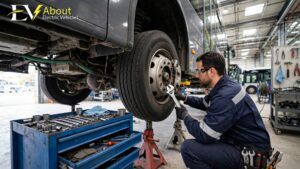
A typical year for an electric bus is refreshingly light. Daily checks cover tires, lights, doors, and dashboard warnings — quick walkarounds any driver can do. Monthly inspections add brake condition, coolant levels, and high-voltage warning systems. Annual servicing covers the full battery thermal management system, suspension, steering, and a detailed high-voltage safety inspection.
Compare that with a diesel bus year: regular oil changes, filter replacements, transmission servicing, exhaust after-treatment checks, and more frequent brake jobs. The lighter schedule is why electric bus maintenance cost stays low even as buses age — and why workshops report that electric buses spend noticeably fewer days off the road. For fleet planners, that uptime is worth as much as the direct savings: a bus earning fares beats a bus sitting in a workshop, and electric bus maintenance cost calculations should count those extra earning days too.
FAQs About Electric Bus Maintenance Cost
Q.1 How much does it cost to maintain an electric bus?
Typically $0.25–$0.35 per mile, about 30–50 percent less than a diesel bus. For a bus covering 40,000 miles a year, that is roughly $10,000–$14,000 annually versus $20,000–$33,000 for diesel.
Q.2 Are electric buses cheaper to maintain than diesel buses?
Yes. Fewer moving parts, no oil or transmission service, and regenerative braking extending brake life all cut costs. Fleet data shows 30–50 percent lower maintenance spending.
Q.3 What is the most expensive maintenance item on an electric bus?
The battery. Replacement currently costs $50,000–$100,000, but most packs are warrantied for 8–12 years and often last 12–15 years, while prices keep falling.
Q.4 Do electric buses need oil changes?
No. Electric drivetrains have no engine oil, no transmission fluid, and no exhaust system to service. Remaining fluids are brake fluid, battery coolant, and windscreen wash.
Q.5 How long do electric bus brakes last?
Significantly longer than diesel brakes, because regenerative braking handles much of the slowing. Exact life depends on route and driving style, but brake jobs are far less frequent.
Q.6 Does cold weather increase electric bus maintenance cost?
Slightly — heating demand rises, range falls, and brake corrosion from under-use needs watching. But proper thermal management and pre-conditioning keep the effect small.
Conclusion
Electric bus maintenance cost is one of the strongest arguments for electrification: 30–50 percent lower than diesel, with the biggest savings coming from the parts that simply do not exist on an electric drivetrain. Any fleet manager comparing options should put electric bus maintenance cost at the center of the calculation. The battery is the one large future cost, but warranties, falling prices, and second-life value soften it considerably. For any fleet weighing the switch, the honest calculation is total cost over 12–15 years — and on that measure, electric buses increasingly win. Lower maintenance is not a side benefit of going electric; for most operators, it is the reason the numbers work.