
A diesel bus refuels in ten minutes; an electric bus cannot. Yet cities are switching anyway, because electric bus charging has grown into a system: overnight depot charging, fast depot chargers, and on-route pantographs working together so a bus runs a full shift, tops up in minutes, and is ready next morning.
If you are a fleet manager, a transit planner, or just curious about how electric buses work in daily service, this electric bus charging guide explains the whole picture: charger types, charging times, costs, and how to plan a setup that never leaves a bus stranded.
The Two Worlds of Electric Bus Charging
Every electric bus charging setup falls into two worlds, and most fleets use both.
Depot charging happens overnight at the fleet’s own base. Buses return after their last run, plug in, and charge slowly while nobody needs them — the backbone of almost every fleet, since overnight hours are long, electricity is usually cheaper at night, and the depot is controlled.
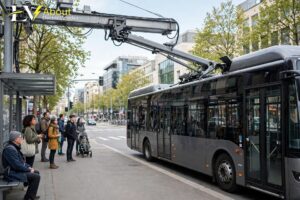
Opportunity charging happens during the day, in short bursts. A bus pulls into a terminus, a pantograph drops from an overhead gantry, and the bus takes on enough energy in minutes to finish its next loop — how long routes stay electric without giant batteries.
Depot charging is cheap and gentle on batteries; opportunity charging is fast and keeps buses in service. In a good electric bus charging plan the two work together — a fleet with only one of them either pays too much for batteries or risks buses running out of charge mid-shift.
Types of Electric Bus Chargers Compared
Charging method | Typical power | Full charge time | Best for |
|---|---|---|---|
Depot plug-in (AC/DC) | 22–50 kW | 8–10 hours overnight | City buses with fixed routes |
Fast depot charger | 150–200 kW | 3–4 hours | Fleets with short overnight windows |
Pantograph (opportunity) | 150–450 kW | 5–15 minute top-ups | Long routes, high-frequency service |
High-power depot system | Up to 480 kW per cabinet | 20–80% in about 1 hour | Large depots, rapid turnaround |
A typical city bus carries a 400–600 kWh battery. At 50 kW, filling that pack takes most of the night; at 300 kW, a meaningful top-up takes minutes. Power level, not just the charger itself, is the real decision.
How Long Does Electric Bus Charging Take?
Charging time is roughly the energy needed divided by charger power, plus a little extra because charging slows near full. Take a 400 kWh city bus battery:
- 50 kW depot charger: about 8 hours — perfect for overnight.
- 150 kW fast charger: about 2.5–3 hours — for short overnight windows.
- 450 kW pantograph: a 10-minute stop adds roughly 60–70 kWh, enough for another hour of city driving.
School buses have it easier: the average school route is only about 34 miles a day, so a modest overnight charge covers it. Coaches have it harder and need the fastest depot chargers or planned fast-charging stops.
Depot Charging: The Overnight Backbone
Depot charging is where most electric bus charging happens, and it is also where the biggest planning work sits.
First, the electrical supply. A depot with 50 buses charging at 50 kW each needs 2.5 MW — roughly what a small factory uses. Smart charging software staggers the load: earliest departures charge first, others wait, and total draw stays under the grid limit, often avoiding an expensive upgrade.
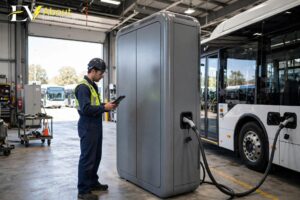
Second, layout. Plug-in dispensers need parking space and cable management; pantographs need clearance and gantries. Large depots increasingly mix electric bus charging hardware: plug-in posts for the bulk of the fleet and a few high-power pantographs for fast turnarounds.
The scale is real. In Austin, Texas, CapMetro installed two 1,440 kW systems connected to 48 dispensers at its main depot — 2.9 MW of capacity for up to 48 buses overnight. Depot design starts years before the first bus arrives.
Third, cost. Chargers range from a few thousand dollars for a basic plug-in post to hundreds of thousands for a high-power cabinet and gantry, and grid upgrades can cost more than the chargers. Once built, overnight electricity is the cheapest energy a bus will ever use. For the full cost picture, see our guide to electric bus maintenance cost.
Opportunity Charging on Route
Opportunity charging changed what electric buses can do: instead of a battery big enough for the longest possible day, a bus carries a moderate battery and tops up whenever it pauses.
The standard tool is the pantograph: an overhead arm that lowers onto roof rails and delivers 150–450 kW. A 3–6 minute terminus stop adds enough range for the next loop, and since the connection is automatic, the driver just waits.
Austin shows what this unlocks: CapMetro added pantograph chargers at the end of two Rapid routes, and a bus that would normally hold about 8 hours of charge can now stay in service for 20–22 hours — making 10–15 minute frequencies possible on electric routes.
For any electric bus charging strategy, opportunity charging also shrinks battery needs, which cuts purchase price and weight. The trade-off is infrastructure: each pantograph station needs a roadside grid connection, so operators place them only at termini and busy interchanges where buses already pause.
What Electric Bus Charging Costs
Charging costs have three layers, and fleets that only look at the electricity price miss the other two.
1. Electricity.
At typical commercial rates, electric bus energy costs roughly $0.14–$0.28 per mile, against $0.49–$0.82 per mile for diesel. Overnight rates are usually lowest; on-route fast charging costs more, and demand charges — fees based on peak monthly power draw — punish fleets that charge everything at once.
2. Chargers and installation.
A depot plug-in post is cheapest; a pantograph station with gantry and grid work is most expensive. A phased plan — depot first, pantographs only where routes need them — keeps the upfront bill under control.
3. Maintenance.
Chargers need servicing too: cables, connectors, cooling, and software. Budget a small annual amount per charger, and choose vendors with local support.
Together, the economics still favour electric: fuel savings of 60–75% and maintenance savings of 30–50% pay back the charging infrastructure over the fleet’s life.
Battery Health and Charging Habits
Charging habits decide how long a bus battery lasts, and replacements run $50,000–$100,000. Fortunately, fleet charging is naturally battery-friendly: slow overnight charging generates less heat — heat is the main enemy of battery life — most fleets cap daily charging around 80%, and liquid thermal management keeps packs comfortable in summer and winter alike.
Fast charging is harder on cells, which is why opportunity charging is used in short bursts rather than full 0–100% cycles. Modern LFP packs, increasingly common in buses, tolerate frequent fast charging better and last 8–12 years in service, often longer.
Electric Bus Charging for School Buses and Coaches
School buses are the easiest case: short routes, long dwell times, and predictable schedules mean a simple depot setup works, with no on-route infrastructure needed — one reason they are a popular first step into electrification.
Coaches are the hardest: long distances, tight turnarounds, and big batteries mean they need high-power depot charging and fast-charging stops on their routes, so operators should budget for the fastest depot equipment from the start.

How to Plan an Electric Bus Charging Setup
Work through this checklist before buying a single charger:
- Map your routes. Daily miles, longest day, layovers, and turnarounds decide whether depot-only charging is enough.
- Size the depot supply. Total overnight power, smart charging for peaks, and whether the grid connection needs upgrading — ask the utility early, because upgrades take time.
- Choose the charger mix. Plug-in posts for the bulk fleet, high-power cabinets for fast turnarounds, pantographs only where routes genuinely need them.
- Phase the rollout. Start with routes that fit depot charging today, add opportunity charging as the fleet grows.
- Budget the whole cost. Electricity, demand charges, charger maintenance, and driver training — not just the charger price tag.
Getting this right matters more than picking the flashiest charger in any electric bus charging project. A well-planned, boring depot setup beats an impressive fast charger that the grid cannot support.
Electric Bus Charging and Range, Side by Side
Charging and range are two halves of the same question: what matters is how the two fit the route. That is why charging planning starts with real daily range. Our guide to electric bus range covers claimed versus real-world range, the 75–85% real-world rule, and cold-weather effects — the numbers your charging plan should be built on.
FAQs
Q.1 How long does it take to charge an electric bus?
Overnight depot charging at 50 kW takes about 8–10 hours. Fast depot chargers at 150–200 kW do it in 3–4 hours, and a 5–15 minute pantograph top-up adds enough for another loop of city service.
Q.2 What is the difference between depot charging and opportunity charging?
Depot charging happens overnight at the fleet base, usually at 22–50 kW per bus. Opportunity charging happens during service, using 150–450 kW pantographs at termini to top up in minutes.
Q.3 How much power does an electric bus depot need?
Fifty buses at 50 kW each need 2.5 MW before smart charging. Smart charging staggers the load so the depot stays under its grid limit, often avoiding a costly upgrade.
Q.4 Does fast charging damage electric bus batteries?
Frequent full fast charges add wear, but short top-ups and modern LFP packs handle it well. Most fleets charge slowly overnight and fast-charge only where routes need it, keeping battery life at 8–12 years or more.
Q.5 Can electric buses run all day without charging?
Many city buses can, on a full overnight charge. Very long routes use opportunity charging at termini to extend service to 20–22 hours, as CapMetro demonstrated in Austin.
Q.6 Is electric bus charging cheaper than diesel fuel?
Yes. Electricity typically costs $0.14–$0.28 per mile against $0.49–$0.82 for diesel. Demand charges and infrastructure costs matter, but fuel saving is the main reason fleets switch.
Conclusion
Electric bus charging is not one technology but a system: slow depot charging overnight, fast depot chargers for tight turnarounds, and pantograph top-ups for long routes. Fleets that plan the mix around their real routes get the lowest costs, the longest battery life, and buses that never miss a departure.
Start with the depot, add opportunity charging only where routes demand it, and build in room to grow.