
If you are searching for electric cars for sale, it is important to look beyond the price and appearance of a car. Range, charging speed, battery size, efficiency, warranty, comfort, and running costs can all affect your ownership experience. The right electric car should match your daily driving needs, charging options, budget, and lifestyle.
Electric vehicles are now available in many different sizes and price ranges. Some are designed mainly for city driving, while others offer more range and space for long trips or families. Whether you want a new EV or are looking at used electric cars for sale, understanding the important features can help you make a better decision.
What to Check in Electric Cars for Sale
When comparing electric cars for sale, start with the things that will affect your everyday use. Do not choose an EV only because it has the biggest battery or the longest advertised range.
Consider these important factors:
- Driving range
- Charging speed
- Battery capacity and warranty
- Energy efficiency
- Purchase price
- Maintenance and running costs
- Interior space and comfort
- Safety features
- Home charging options
- Vehicle history if buying used
Your daily driving pattern should guide your decision. If you mainly drive short distances around the city, you may not need an expensive long-range EV. If you regularly travel between cities, charging speed and longer range may be much more important.
Check the Electric Car Range
Range tells you how far an EV can travel before it needs to recharge. This is one of the first things people check when looking at electric cars for sale, but the advertised number should not be treated as a guaranteed real-world distance.
Actual range can change because of driving speed, weather, road conditions, hills, vehicle weight, heating or air conditioning, and driving style. High speeds and rapid acceleration can use more battery energy, while extreme temperatures can also reduce range. For everyday driving, think about your normal distance rather than choosing the car with the biggest possible range.
For example, if you normally drive 50 to 80 kilometers a day and can charge at home, an EV with moderate range may be more than enough. A longer-range model can still be useful if you often travel long distances or do not have easy access to charging. You can also read our guide on [electric car range] to understand how range works and what can reduce it.
Understand EV Charging
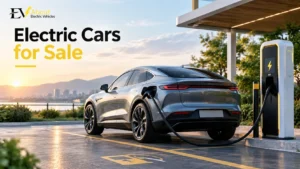
Charging is another major factor when comparing electric vehicles for sale. The charging experience depends on the vehicle, charger type, battery size, temperature, and the car’s maximum charging rate.
Home Charging
Home charging can be one of the easiest ways to use an EV. You can plug in while the car is parked, allowing it to charge overnight or during other periods when you are not driving.
A home charging setup is especially useful for people who drive regularly and have access to suitable parking and electricity. Before buying an EV, check whether you can install a home charger and whether your home’s electrical system can support it.
New vs. Used Electric Cars for Sale
Both new and used EVs can make sense, depending on your budget and needs.
New Electric Cars
New electric cars usually provide the latest technology, a full manufacturer warranty, and the latest safety and charging features. You may also get a better choice of battery sizes, body styles, driver-assistance systems, and infotainment features.
The main disadvantage is the higher purchase price. A new EV can also lose value over time, so compare the total cost rather than looking only at the monthly payment.
Used Electric Cars
Used electric cars for sale can offer better value because the original owner has already taken much of the initial depreciation. However, you should inspect the vehicle carefully before buying. Check the battery condition, charging performance, service history, accident history, tires, brakes, and overall condition. Ask whether the battery warranty is still active and whether the vehicle has had any major battery or electrical repairs.
For a used EV, a lower price is not automatically a better deal. Battery condition and vehicle history can have a major effect on long-term value.
My Practical Approach to Choosing an EV
If I were comparing electric cars for sale, I would start with my actual driving needs instead of looking at the most expensive or longest-range model first. I would check how many kilometers I normally drive each day, whether I can charge at home, and how often I make longer trips. Then I would compare range, charging speed, battery warranty, and total ownership cost.
I would also look at the interior and driving position in person if possible. Numbers on a specification sheet cannot tell you everything about how comfortable a car feels or whether its size works well for daily use. For a used EV, I would give extra attention to battery health and vehicle history before deciding based only on price. This simple approach can make the buying process much easier.
Consider the Total Cost of Ownership
The purchase price is only one part of the cost of owning an EV.
You should also consider:
- Electricity costs
- Home charger installation
- Public charging costs
- Insurance
- Tires
- Routine maintenance
- Repairs
- Registration and taxes
- Battery warranty coverage
Electric cars generally have fewer moving parts than conventional gasoline vehicles, which can reduce some maintenance needs. They also do not require regular engine oil changes. However, EVs are not completely maintenance-free. Tires, brakes, suspension components, cooling systems, and other parts still need attention.
Electricity prices also vary by location and charging method. Home charging may be more convenient for regular use, while public charging can become more important during longer trips.
Which Electric Car Is Right for You?
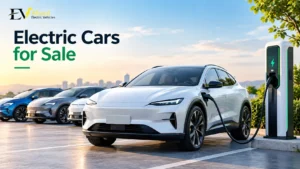
There is no single best EV for everyone. The right choice depends on how you use your car.
For City Driving
For mainly city driving, focus on efficiency, comfortable size, easy parking, and reasonable range. You may not need the largest battery because daily trips are often shorter. A smaller EV can also be easier to drive and park in busy areas.
For Long-Distance Driving
If you regularly travel long distances, look for a combination of good range and fast charging. A vehicle that can travel farther between charging stops can make long trips easier. However, charging infrastructure along your normal routes is equally important.
For Families
Families should look at interior space, rear-seat room, cargo capacity, safety features, and charging convenience. A compact EV may work well for a small family, while a larger electric SUV may be more practical for passengers, luggage, and longer journeys.
What to Check Before Buying
Before buying any of the electric cars for sale you are considering, take a final look at the complete ownership picture. Check the real-world range, charging options, battery warranty, vehicle warranty, service requirements, and expected running costs.
If possible, take the car for a test drive. Pay attention to driving position, visibility, ride comfort, braking, steering, cabin space, and how easy the controls are to use. For a used EV, inspect the battery condition and request the vehicle’s service and ownership history. Also check whether the car has been involved in an accident or has had major repairs.
Do not make the decision based only on a low purchase price. A slightly more expensive EV may offer better efficiency, warranty coverage, charging performance, or battery condition and could provide better value over time.
FAQs About Electric Cars for Sale
Q.1 Where can I find electric cars for sale?
You can find electric cars through manufacturer dealerships, authorized dealers, used-car marketplaces, private sellers, and EV-focused dealerships. Compare several vehicles instead of choosing the first one you find.
Q.2 Are used electric cars worth buying?
Yes, a used EV can be a good option if the battery is healthy, the vehicle has a good history, and the price reflects its condition. Always check battery warranty and service records before buying.
Q.3 How much range do electric cars have?
EV range varies widely between models. Smaller city-focused EVs may have less range, while larger long-range models can travel much farther on a full charge. Real-world range also depends on weather, speed, driving style, and road conditions.
Q.4 Are electric cars expensive to maintain?
Electric cars can have lower routine maintenance needs because they have fewer moving parts and do not need engine oil changes. However, tires, brakes, suspension, cooling systems, and other components still require maintenance.
Q.5 Is a long-range EV better?
Not always. A long-range EV can be useful for frequent long trips, but it may cost more and have a larger, heavier battery. If most of your driving is local and you can charge at home, a shorter-range EV may be a better fit.
Q.6 Should I buy a new or used EV?
Choose based on your budget, required features, warranty needs, and battery condition. A new EV provides the latest features and full warranty coverage, while a used EV can offer a lower purchase price.
Conclusion
Finding the right electric cars for sale is about matching the vehicle to your real driving needs. Range, charging, battery health, efficiency, price, warranty, comfort, and ownership costs all matter. Do not automatically choose the EV with the biggest battery or highest range. Instead, think about how far you drive, where you can charge, how often you travel long distances, and how much you want to spend.
For a new EV, compare warranty, technology, charging performance, and total cost. For a used EV, pay special attention to battery health and vehicle history. With the right research, you can find an electric car that fits your daily life, budget, and long-term driving needs.