
An electric car uses electricity instead of gasoline or diesel to power its wheels. The electricity is stored in a large battery, which sends power to an electric motor. When the battery gets low, you recharge it using a home charger or a public charging station.
Electric cars have become a practical option for many drivers because they are quiet, have quick acceleration, and generally need less routine maintenance than gasoline vehicles. However, buying an EV is different from buying a traditional car. You need to consider range, charging, battery size, electricity costs, driving habits, and the availability of charging where you live.
This guide explains how an electric car works, what it costs to own, how far it can travel, how charging works, and what to consider before buying one.
What Is an Electric Car?
An electric car is a vehicle that uses an electric motor for propulsion instead of a conventional gasoline engine.
A battery pack stores electrical energy and supplies it to the motor when the vehicle is moving. The car also contains power electronics, a charging system, thermal management components, and other systems that control how electricity is stored and used.
A fully electric vehicle, often called a battery electric vehicle or BEV, does not need gasoline to operate. It must be connected to an external power source to recharge its main battery.
Electric vehicles are different from hybrids. A hybrid normally combines an internal-combustion engine with an electric motor, while a fully electric car relies entirely on electricity for propulsion.
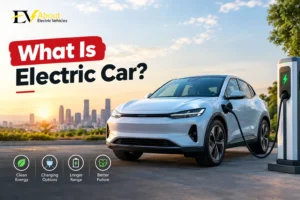
How Does an Electric Car Work?
The basic process is straightforward. When you press the accelerator, the battery sends electrical energy through the vehicle’s power electronics to the electric motor. The motor converts that electrical energy into mechanical power, which turns the wheels.
When you slow down, the motor can also work in reverse as part of regenerative braking. Instead of wasting all the vehicle’s motion as heat through the brakes, some energy can be converted back into electrical energy and returned to the battery. An electric car also has an onboard charger for AC charging. This system converts incoming AC electricity into the DC electricity required by the battery.
Because there is no conventional engine, an EV does not need many of the components found in gasoline cars, such as an engine oil system, fuel tank, fuel pump, and exhaust system.
Main Parts of an Electric Car
Understanding the main components makes EV technology easier to understand.
Battery Pack
The battery stores the electricity used to move the car. Its capacity is normally measured in kilowatt-hours, or kWh. A larger battery can store more energy, but it can also add weight and increase the vehicle’s cost.
Electric Motor
The motor converts electrical energy into movement. Electric motors can produce strong torque quickly, which is one reason EVs can feel responsive when accelerating.
Power Electronics
These components control the flow of electrical energy between the battery and motor. They help determine how much power the motor receives based on what the driver requests.
Charge Port
The charge port is where you connect the vehicle to a charging cable. The type of connector depends on the vehicle and market.
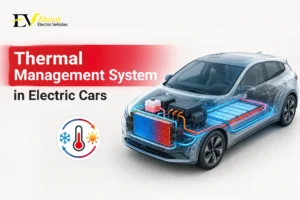
Thermal Management System
The battery and other high-voltage components need to operate within suitable temperature ranges. A thermal system helps manage heat and temperature during driving and charging.
Electric Car Range
Range is one of the biggest concerns for people considering an EV. It tells you approximately how far the vehicle can travel before it needs to recharge. The actual distance you get can differ from the official rating because driving conditions affect energy consumption.
Speed, weather, road conditions, hills, vehicle weight, heating, air conditioning, and driving style can all change range. High-speed highway driving generally uses more energy than slower city driving, while rapid acceleration and heavy loads can also reduce range. This means you should not choose an EV based only on its maximum advertised range.
Instead, think about how far you normally drive each day and how often you take longer trips. If you usually drive a short distance and can charge at home, a moderate-range EV may be sufficient. If you regularly travel between cities, longer range and convenient fast charging become more important. For a deeper explanation, see our guide to [electric car range].
Electric Car Charging
Charging is one of the biggest differences between an EV and a gasoline car. You can charge an electric car at home, at work, or at public charging stations. Most EV drivers can handle much of their regular charging while the vehicle is parked, while public chargers provide additional flexibility for longer trips.
There are three main charging levels to understand.
Level 1 Charging
Level 1 charging uses a standard household electrical outlet in markets where this equipment is available.
It is the slowest common charging option, but it can be useful for drivers with low daily mileage who leave their vehicle parked for many hours. The DOE estimates roughly 5 miles of range per hour under its stated Level 1 assumptions, although the actual result depends on the vehicle and charging conditions.
Level 2 Charging
Level 2 charging provides substantially more power and is commonly used at homes, workplaces, and public locations.
For many EV owners, Level 2 is a practical home solution because it can replenish a typical battery during an overnight parking period. Actual charging speed depends on the vehicle and the charger. The DOE lists approximately 25 miles of range per hour as a typical reference point, but individual vehicles can differ.
DC Fast Charging
DC fast charging is designed for situations where you need to add a large amount of energy in a shorter period.
It is particularly useful for road trips because you can stop, charge, and continue your journey without waiting for a full slow charge. The vehicle’s maximum charging rate, battery temperature, current battery level,and charger output all affect how quickly the battery charges.
How Much Does an Electric Car Cost?
The purchase price of an electric car varies greatly depending on its battery size, vehicle class, equipment, brand, and market. A small EV and a large electric SUV can have very different prices, so it is better to compare vehicles within the same category. Do not look only at the purchase price. Consider the complete ownership cost.
Your total cost can include:
- Vehicle payment or purchase price
- Electricity
- Insurance
- Charging equipment
- Tires
- Maintenance
- Repairs
- Registration and taxes
An EV can have higher upfront costs than some comparable gasoline vehicles, but lower fueling and routine maintenance expenses can affect the long-term calculation. The DOE notes that EVs generally have fewer moving parts and fewer fluids to replace.
Electric Car Charging Cost
The cost of charging depends mainly on your electricity rate, vehicle efficiency, and where you charge.
A simple home-charging calculation is:
Charging cost = electricity used × electricity price
For example, if your car uses 30 kWh and electricity costs $0.15 per kWh:
30 × $0.15 = $4.50
That gives you a basic electricity cost of $4.50.
Public charging can have different pricing structures, so the price may not match your home electricity rate. If you want to understand the subject in more detail, read our complete guide to [electric car charging cost].
Electric Car Battery Life
The battery is one of the most important parts of an EV, so battery health matters when buying both new and used vehicles. Modern EV batteries are designed for long-term use, but they do gradually lose some capacity over time. Battery life depends on factors such as climate, charging habits, battery chemistry, vehicle design, and thermal management.
A battery with some degradation does not suddenly become useless. Instead, its available capacity gradually decreases, which can reduce the vehicle’s range. When buying a used EV, check the battery warranty, available battery-health information, service history, and vehicle condition. For more information, see our guide to [electric car batteries].
Electric Car Maintenance
One major advantage of an electric car is its simpler drivetrain. A fully electric vehicle does not have a conventional gasoline engine, engine oil, fuel system, or exhaust system. That means there are fewer engine-related components that require routine service. However, an EV still needs maintenance.
You may need to replace or inspect:
- Tires
- Brake components
- Cabin air filters
- Suspension parts
- Wiper blades
- Cooling-system components
- Other vehicle-specific parts
Regenerative braking can also reduce the amount of work done by the friction brakes, although the brakes still need regular inspection. The exact maintenance schedule depends on the vehicle manufacturer.
Electric Car Performance
Many EVs feel different from gasoline cars because the electric motor can deliver strong torque quickly. This can make acceleration feel smooth and immediate. Performance varies significantly between models. Some electric cars are designed for efficiency and everyday comfort, while performance-oriented models focus on acceleration and handling.
However, choosing a faster EV does not necessarily mean choosing the best EV for your needs. A more efficient vehicle may be a better choice if your main priorities are range, charging cost, comfort, and everyday practicality.
Electric Car Safety
Electric cars are subject to vehicle safety requirements just like conventional vehicles. Important safety features can include airbags, electronic stability systems, advanced driver-assistance technology, strong passenger compartments, and battery protection systems.
The high-voltage battery is also designed with safety systems that monitor temperature, voltage, and other conditions. If you are buying an EV, check the safety rating of the specific model rather than assuming every vehicle has identical protection.
Is an Electric Car Good for Long Trips?
Yes, an EV can be suitable for long-distance travel, but planning is more important than with a gasoline car.
Before a long trip, check:
- Your expected driving range
- Fast-charging locations
- Distance between charging stops
- Charger compatibility
- Weather conditions
- Expected traffic
- A reasonable battery reserve
Do not plan your journey around the assumption that you will always achieve the vehicle’s maximum advertised range. Cold or hot weather, high speeds, hills, heavy loads, and aggressive acceleration can increase energy use and reduce the distance available. A little planning can make long-distance EV travel much easier.
New vs. Used Electric Cars
A new electric car gives you access to the latest technology, a new battery, current safety features, and manufacturer warranty coverage. A used EV can be attractive because the purchase price may be lower. However, battery condition becomes especially important.
When considering a used electric car, check:
- Battery health
- Remaining battery warranty
- Charging performance
- Service history
- Accident history
- Tire condition
- Previous ownership
- Software or recall information
Do not choose a used EV simply because it has the lowest price. The condition of the battery and the rest of the vehicle can have a major effect on its actual value.
Is an Electric Car Right for You?
An electric car can be a strong choice if your daily driving fits its range and you have convenient access to charging.
Before buying, ask yourself:
How far do I drive each day?
Can I charge at home or at work?
How often do I take long trips?
Are public chargers available on my regular routes?
What can I comfortably spend?
Do I need a large vehicle or a small one?
These questions are more useful than simply asking which EV has the longest range or the biggest battery. The best electric car is the one that fits your actual lifestyle.
FAQs About Electric Car
Q.1 What is an electric car?
An electric car is a vehicle powered by electricity stored in a battery and delivered to an electric motor. A fully electric vehicle does not use gasoline for propulsion.
Q.2 How does an electric car work?
The battery sends electrical energy to the motor through power electronics. The motor converts that energy into movement, while regenerative braking can recover some energy when the vehicle slows down.
Q.3 How far can an electric car travel?
Range varies by model and driving conditions. Current BEVs cover a wide range of capabilities, and actual range can change with speed, temperature, terrain, driving style, and climate-control use.
Q.4 How long does it take to charge an electric car?
Charging time depends on the charger, battery size, starting battery level, vehicle charging capability, and temperature. Level 1 is slow, Level 2 is faster, and DC fast charging can add substantial range much more quickly.
Q.5 Is an electric car cheaper to maintain?
It can be. Fully electric vehicles generally have fewer moving parts and fewer fluids to replace than conventional gasoline vehicles, which can reduce routine maintenance needs.
Q.6 Are electric car batteries reliable?
Modern EV batteries are designed for long-term use, but they gradually lose some capacity over time. Battery life depends on the vehicle, battery chemistry, climate, charging behavior, and thermal management.
Q.7 Is an electric car good for everyday driving?
For many drivers, yes. If your daily distance is comfortably within the vehicle’s range and you have convenient charging, an EV can work well for commuting, errands, and regular local driving.
Q.8 Is an electric car good for long-distance travel?
Yes, but you need to plan charging stops. A suitable EV with adequate range and access to reliable fast charging can handle long trips, but weather, speed, terrain, and traffic can affect the distance between charging stops.
Q.9 Should I buy a new or used electric car?
A new EV provides the latest features and full manufacturer coverage, while a used EV can offer a lower purchase price. For a used model, pay particular attention to battery health, warranty, charging performance, and vehicle history.
Conclusion
An electric car is more than a vehicle with a battery instead of a gasoline engine. It changes how you think about driving, charging, maintenance, and ownership costs. The most important things to evaluate are range, charging access, battery health, efficiency, purchase price, maintenance, and your normal driving routine.
You do not need the biggest battery or the longest-range model to get a good EV. If most of your driving is local and you can charge at home, a moderately priced and efficient model may be a better choice. For frequent long trips, focus more on real-world range, fast-charging capability, and the availability of chargers along your routes.
The right electric car is ultimately the one that meets your daily needs without making charging, ownership, or your budget unnecessarily difficult.