
The electric car price is one of the first things buyers check before choosing an electric vehicle. However, the showroom price is not the only expense you should consider. Battery size, driving range, charging equipment, insurance, maintenance, taxes, financing, and resale value can all affect the real cost of ownership.
Electric cars are available in different sizes and price categories. Small city cars are usually less expensive than family SUVs, luxury sedans, and high-performance models. By understanding what affects the price, you can choose an EV that fits your budget without paying for features you may not need.
What Determines Electric Car Price?
There is no single electric car price for every country or model. The final amount depends on the vehicle’s battery, size, performance, equipment, manufacturing cost, brand, taxes, and local market conditions. A small electric hatchback may be designed for short urban journeys. A larger electric SUV may offer more passenger space, a bigger battery, stronger performance, and advanced technology. These differences can create a major price gap.
The listed price may also exclude registration, insurance, delivery charges, optional accessories, and home charger installation. Before making a decision, ask the seller for the complete on-road price. You should also check whether the advertised amount is a recommended retail price, dealer price, promotional price, or price after incentives. These details can make the final cost different from the number shown in an advertisement.
How Battery Size Affects Electric Car Price
The battery is one of the most expensive parts of an electric vehicle. It stores the energy used by the electric motor and has a major effect on driving range. A larger battery usually allows an EV to travel farther between charges. However, it can also increase the vehicle’s weight, production cost, and purchase price.
A large battery may be useful for drivers who regularly travel between cities or live far from public charging stations. On the other hand, someone who drives a short distance every day may not need an expensive long-range battery. Battery chemistry can also influence the cost. Different battery types offer different combinations of price, weight, durability, energy density, and charging performance. This is why two electric cars with similar range figures can have very different prices.
When comparing vehicles, do not look at battery capacity alone. Consider the battery size together with efficiency, range, charging speed, warranty, and the overall vehicle price.
Does More Range Mean Better Value?
A longer driving range can be helpful, but it does not automatically make an EV a better purchase. If you mainly drive to work, school, shops, or nearby locations, a smaller electric car may provide enough range for your needs. Paying extra for a very large battery may not be useful if you rarely travel long distances.
A long-range EV makes more sense for drivers who frequently use highways, travel between cities, carry heavy loads, or have limited access to charging facilities. You should also remember that advertised range is measured under specific testing conditions. Real-world range can change because of speed, traffic, weather, hills, air conditioning, passengers, and driving style.
The best choice is not always the EV with the highest range. It is the vehicle that provides enough practical range at a price you can comfortably afford.
New Electric Car Price vs Used EV Price
A new electric car generally costs more than a used model because it includes newer technology, a fresh battery, updated features, and full original warranty coverage. New EVs may also provide better access to official dealerships, financing plans, software updates, and manufacturer support. However, depreciation can reduce the value of a new vehicle soon after purchase.
A used electric car can lower the initial buying cost. It may be a good option for people who want electric driving without paying the original showroom price.
However, a used EV requires careful inspection. Before buying, check:
- Battery health
- Remaining battery warranty
- Mileage
- Charging cable and equipment
- Service records
- Accident history
- Tire condition
- Suspension
- Signs of water or flood damage
Availability of replacement parts
Battery condition is especially important. A low purchase price may not be a good deal if the battery has lost significant capacity or the vehicle has an unclear service history. A slightly more expensive used EV with a healthy battery and proper maintenance records may offer better long-term value.
Electric Car Price and Vehicle Size
Vehicle size has a direct effect on the cost of an electric car. Small electric hatchbacks generally need less material, a smaller battery, and fewer expensive features. This can make them more affordable for city drivers.
Electric crossovers and SUVs usually cost more because they offer additional cabin space, larger bodies, higher seating positions, and sometimes all-wheel drive. Luxury electric vehicles can be even more expensive because they include premium interiors, advanced driver assistance, powerful motors, larger screens, upgraded sound systems, and special design features.
Think carefully about the size you actually need. A large EV may be useful for a family, but it can be unnecessary for a single driver who mainly travels through crowded city streets. Choosing the right size can help you control both the purchase price and everyday energy use.
Electric Car Price and Performance
Performance is another factor that can raise the cost of an EV. Some electric cars are designed mainly for efficiency and comfortable daily driving. Others focus on quick acceleration, high top speed, sportier handling, or all-wheel-drive performance. Powerful motors, larger batteries, stronger cooling systems, performance tires, and advanced suspension components can increase the final price.
A performance EV may be enjoyable, but it may not provide better value for a driver who mainly needs affordable transportation. Before paying more for extra power, consider whether you will use it regularly. For many buyers, efficiency, comfort, reliability, and charging convenience are more important than maximum acceleration.
Electric Car Price vs Gasoline Car Price
Some electric cars have a higher purchase price than similar gasoline vehicles. However, comparing onlythe initial price can give an incomplete picture. An EV may cost less to operate because electricity can be cheaper than gasoline in some areas. A fully electric vehicle also does not require engine oil changes and has fewer traditional drivetrain components.
Possible ownership savings may come from:
- Lower energy costs
- Fewer engine-related repairs
- Reduced routine maintenance
- Convenient home charging
- Less frequent brake replacement in some driving conditions
However, the actual savings depend on local electricity rates, fuel prices, annual mileage, insurance, charging access, tire costs, and the vehicle you choose. A lower-priced gasoline car may not remain cheaper over many years. In the same way, an expensive EV is not automatically a poor financial choice. You should compare the complete cost of ownership.
How Much Does It Cost to Charge an Electric Car?
Charging cost depends on the amount of electricity added to the battery and the price charged for each unit of electricity.
The basic formula is:
Charging cost = Electricity used in kWh × Electricity rate
For example, if your vehicle receives 40 kWh and your electricity rate is 0.20 in your local currency per kWh, the energy cost would be 8 currency units before taxes, fees, or charging losses. You do not always charge from empty to full. Many drivers add energy when the battery reaches a lower level and stop charging before it reaches 100%.
Home charging is often convenient and may be less expensive, depending on your electricity tariff. Public charging can cost more because charging companies must cover equipment, installation, maintenance, land, and operating expenses. When calculating the running cost of an EV, use your actual electricity rate and expected driving distance.
Home Charging and Upfront EV Cost
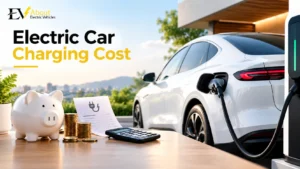
Home charging equipment can add to the initial electric car price. Some vehicles include a basic charging cable. Others may require you to purchase a separate home charger. A standard household outlet can provide slow charging in suitable conditions, while a dedicated Level 2 charger can offer faster charging.
Installation costs depend on the electrical system, wiring distance, charger capacity, parking location, labor, and whether an electrical upgrade is required. Before buying an EV, check whether you can park close to a safe electrical connection. If home charging is not possible, identify public chargers near your home, workplace, and regular routes. An affordable EV may become less convenient if you have no reliable place to charge it.
Maintenance and Battery Warranty
Maintenance is an important part of the total electric car price. A fully electric vehicle does not use a conventional combustion engine, so it does not need engine oil, spark plugs, fuel filters, or several other engine-related parts. However, an EV is not maintenance-free. You may still need to service or replace:
- Tires
- Brake components
- Cabin air filters
- Wipers
- Suspension parts
- Cooling-system components
- Charging equipment
- Electrical systems
The battery warranty should also be reviewed carefully. Check the warranty period, mileage limit, covered faults, and any minimum battery-capacity requirement. Battery degradation happens gradually, and its speed can depend on temperature, charging habits, battery chemistry, usage, and thermal management. A strong battery warranty can provide valuable protection for long-term ownership.
Taxes, Incentives, and Regional Differences
The final electric car price can change because of import duties, sales taxes, registration charges, exchange rates, local policies, and manufacturer pricing. Some governments, states, cities, or utility companies offer incentives for EV purchases or home charging installations. These programs may apply only to certain models, battery sizes, income groups, or purchase conditions.
Incentives can also change or expire. Therefore, never assume that a discount shown online will automatically apply to your purchase. Before making a booking, confirm the current rules with the relevant authority, dealer, or electricity provider. Ask whether the advertised price includes taxes, registration, delivery, and other compulsory charges.
How to Find the Best Electric Car Price
Start by setting a complete budget. Include the vehicle price, registration, insurance, charging equipment, financing costs, and expected maintenance. Next, identify your real driving needs. Consider your daily distance, passenger requirements, luggage space, road conditions, home parking, and frequency of long trips.
Then compare several EVs that serve the same purpose. Review their:
- Real-world range
- Energy efficiency
- Battery warranty
- Charging speed
- Safety features
- Service support
- Insurance cost
- Resale value
- Total ownership cost
Request written quotations from dealers and check every extra charge. A vehicle with a low advertised price may become more expensive after delivery fees, accessories, taxes, and registration. If you are financing the vehicle, compare the total amount payable rather than looking only at the monthly installment.
Is an Expensive Electric Car Worth It?
A more expensive EV can be worth buying when its additional features solve a real problem. A larger battery may help frequent travelers. Faster DC charging can reduce waiting time during road trips. Extra cabin space can benefit families, while all-wheel drive may be useful in certain road and weather conditions.
However, premium features are not always necessary. Large wheels, luxury materials, powerful motors, and advanced entertainment systems can increase the price without improving your daily driving experience. If your driving is mostly local, a smaller and efficient electric car may provide better value. Spend more only when the additional range, space, comfort, performance, or technology is genuinely useful.
My Practical Approach to Electric Car Price
If I were comparing electric car price options, I would first decide the total amount I could afford. I would not begin by choosing a brand or the most expensive model. I would calculate my average daily distance, check whether home charging was possible, and identify how often I made longer trips.
After that, I would shortlist vehicles with enough real-world range. I would compare charging speed, energy use, battery warranty, insurance, maintenance, safety, and service availability. For a used EV, I would give extra attention to battery health and vehicle history. I would also ask for a complete on-road quotation before making a final decision. This approach focuses on practical value instead of marketing claims.
FAQs About Electric Car Price
Q.1 How much does an electric car cost?
The electric car price depends on the model, battery size, vehicle category, equipment, country, taxes, and dealer charges. Small EVs usually cost less than large SUVs and premium models.
Q.2 Are electric cars more expensive than gasoline cars?
Some EVs have a higher purchase price than gasoline cars. However, lower charging and maintenance costs may reduce the difference over time.
Q.3 Is a used electric car cheaper?
A used EV usually has a lower purchase price than a new model. However, battery health, warranty coverage, mileage, and vehicle history should be checked before buying.
Q.4 Does a larger battery increase EV price?
Usually, a larger battery can increase production cost and purchase price. However, efficiency, design, performance, equipment, and brand also affect the final amount.
Q.5 What extra costs should I include?
Include registration, taxes, insurance, charging equipment, electricity, maintenance, tires, financing interest, repairs, and depreciation.
Q.6 How can I reduce EV ownership costs?
Choose a model that matches your actual needs, charge at home when practical, compare insurance offers, maintain the tires correctly, and calculate the complete cost before buying.
Conclusion
The best electric car price is not always the lowest advertised amount. A smart purchase balances the upfront cost with range, charging access, battery warranty, maintenance, insurance, efficiency, and long-term value.
Before buying an EV, understand your daily driving habits and decide how you will charge the vehicle. Compare new and used models carefully, inspect battery condition, and request the complete on-road price.
An affordable electric car should not only be cheap to purchase. It should also be practical to operate, reliable to maintain, and suitable for your lifestyle. When you compare all these factors together, you can make a better decision and avoid paying for features you do not really need.