
Finding the best electric motorcycle for commuting is not simply about choosing the motorcycle with the biggest motor or the highest advertised range. An electric motorcycle used for daily commuting needs to provide a practical balance of range, performance, comfort, charging convenience, safety, reliability, and running costs.
Electric motorcycles can be especially useful for commuters who travel through busy city streets, deal with traffic, ride longer distances, or want to reduce their dependence on gasoline. However, different riders have different requirements. A lightweight electric motorcycle may work well for short urban trips, while a more powerful model with a larger battery may be better suited to longer commutes. This guide explains what to look for when choosing the best electric motorcycle for commuting, including battery capacity, motor power, range, charging, brakes, comfort, weight, safety, and everyday practicality.
What Makes the Best Electric Motorcycle for Commuting?
The best electric motorcycle for commuting should make your daily journey practical, comfortable, and predictable. Unlike an electric bicycle, an electric motorcycle is designed around motorcycle-style performance, controls, suspension, braking, and road use. This means commuters should look beyond simple motor wattage and consider the complete motorcycle.
Important factors include:
- Battery capacity and practical range
- Motor power and torque
- Charging speed
- Riding position and comfort
- Braking performance
- Tire quality
- Motorcycle weight
- Suspension
- Lighting and visibility
- Storage options
- Maintenance requirements
- Local licensing and road regulations
The right electric motorcycle is the one that matches your actual commute rather than simply having the most impressive specifications.
Why Choose an Electric Motorcycle for Commuting?
Electric motorcycles can make daily transportation convenient because their electric motors provide immediate power without requiring a gasoline engine. For urban commuting, electric propulsion can also provide smooth acceleration and quiet operation. Riders may find electric motorcycles particularly useful for frequent stop-and-go traffic because the motor delivers power directly without traditional multi-speed gear shifting.
Another important advantage is charging convenience. Depending on the model, an electric motorcycle can potentially be charged at home or another suitable charging location. However, charging access should be considered before purchasing. If your daily commute is long, you need to know where and how often you can recharge the motorcycle.
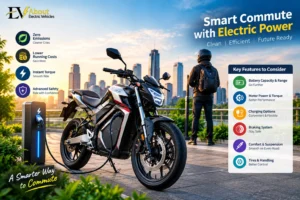
Choose the Right Electric Motorcycle for Your Commute
Before choosing the best electric motorcycle for commuting, calculate how far you actually travel. Do not only consider the distance from your home to your workplace. Include the return trip, shopping, errands, traffic detours, and other regular journeys.
For example, a 15-mile one-way commute could require around 30 miles of daily riding before additional trips are included. It is also important not to rely entirely on the manufacturer’s maximum range figure. Real-world range can vary depending on:
- Riding speed
- Rider and passenger weight
- Terrain
- Weather
- Wind
- Tire pressure
- Acceleration
- Use of lights and accessories
- Battery condition
A commuter should ideally have enough practical range for the complete daily journey with some additional capacity.
Battery Capacity Matters
Battery capacity is one of the most important specifications when choosing an electric motorcycle. Battery energy is generally expressed in watt-hours (Wh) or kilowatt-hours (kWh). A larger battery can store more energy, but battery size alone does not determine exactly how far the motorcycle will travel.
A powerful motorcycle ridden aggressively can consume considerably more energy than a smaller motorcycle traveling at moderate speeds. For commuters, the better approach is to match battery capacity to the actual distance and conditions of the daily route.
Charging Convenience
Charging is another major consideration. Before buying an electric motorcycle, consider where you will charge it and how much time you have available between trips. A motorcycle with a larger battery may take longer to charge depending on the charger and charging system. A faster charging setup can be useful for commuters who have limited charging time.
What Motor Power Is Best for Commuting?
Motor power is another major factor when choosing the best electric motorcycle for commuting. However, more power does not automatically mean a better commuter motorcycle. A lower-power electric motorcycle may be sufficient for city commuting, while riders traveling on faster roads, carrying additional weight, or dealing with hills may need a more powerful system.
Torque is also important. Strong torque can help an electric motorcycle accelerate from a stop and climb inclines more effectively. Instead of choosing a motorcycle solely by its wattage or kilowatt rating, consider how the motor performs under the conditions you actually encounter.
Mid-Drive vs Hub Motor for Electric Motorcycles
Electric motorcycles can use different motor configurations.
Hub Motor
A hub motor is integrated into one of the motorcycle’s wheels. This design can simplify the drivetrain because the motor directly drives the wheel. Hub motors can be suitable for certain commuter applications, but the wheel, axle, suspension, and braking system must be designed to handle the motor and additional weight.
Centrally Mounted Motor
A centrally mounted motor transfers power through a chain or belt system. This configuration can offer greater drivetrain flexibility and may work well for motorcycles where acceleration, torque, and mechanical integration are important. Neither design is automatically suitable for every commuter. The motorcycle’s weight, intended speed, terrain, and drivetrain design should determine the appropriate configuration.
Comfort Is Essential for Daily Commuting
A motorcycle can have excellent range and performance but still be uncomfortable for daily use. If you ride to work every day, you may spend hundreds of hours on the motorcycle over the course of a year. Riding position, seat design, handlebars, suspension, and footpeg placement can therefore make a significant difference.
Look for a riding position that allows you to maintain good control without putting excessive strain on your back, shoulders, wrists, or neck. Suspension is particularly important if your commute includes potholes, broken pavement, speed bumps, or uneven roads.
Tires and Wheels for Commuting
Tires affect grip, braking, handling, comfort, and efficiency. For everyday commuting, tires should provide a suitable balance between road grip and rolling efficiency. If you regularly ride in wet conditions, tire quality becomes even more important. Proper tire pressure should also be maintained according to the motorcycle manufacturer’s recommendations. Incorrect tire pressure can affect handling, tire wear, braking, and energy consumption.
Brakes Are More Important Than Speed
When choosing the best electric motorcycle for commuting, do not focus only on acceleration and top speed. Braking performance is one of the most important safety considerations on any electric motorcycle. Electric motorcycles can be heavier than traditional bicycles and can travel at substantially higher speeds. Reliable brakes are therefore essential.
Disc brakes are commonly used on motorcycles, and the braking system should be appropriate for the motorcycle’s weight, speed, and intended use. Riders should also maintain adequate stopping distance and adjust their riding to traffic, weather, and road conditions.
Lights, Storage, and Everyday Features
A commuter motorcycle needs to be practical beyond its motor and battery. Bright front and rear lighting can improve visibility, especially during early-morning or evening commutes. Turn signals, mirrors, a clear instrument display, and other road-use equipment can also make everyday riding easier.
Storage is another consideration. If you carry a backpack, laptop, work equipment, groceries, or other items, look for a motorcycle that supports suitable luggage or storage solutions. These features may not look as exciting as motor power, but they can make a major difference when the motorcycle is used every day.
What About Electric Bike Weight?
Weight matters more for some commuters than others. A heavier electric motorcycle may provide a larger battery and stronger performance, but it can also be more difficult to move when parked or maneuvered manually.
Consider where you will park the motorcycle, whether you need to move it frequently, and whether your storage area has ramps, narrow spaces, or other limitations. The battery is often one of the heaviest components, so battery size should be balanced against the actual range you need.
Electric Bikes Safety for Commuting
Safety should be considered alongside performance. Before purchasing an electric motorcycle, check the braking system, tires, lights, suspension, mirrors, and other essential equipment. Battery safety is equally important. The battery, charger, controller, and electrical system should be designed to work together and should be used according to the manufacturer’s instructions.
Avoid using incompatible chargers or modifying high-voltage electrical components without appropriate expertise. Riders should also use appropriate protective equipment and follow the traffic and road rules that apply to motorcycles in their location.
Common Mistakes When Choosing an Electric Commuter Bikes
One common mistake is choosing a motorcycle based only on its advertised range. Another is focusing entirely on motor power while ignoring battery capacity, brakes, comfort, tires, and charging requirements. Some buyers also forget to consider replacement parts and service availability.
Before purchasing, check whether the manufacturer or local service providers can support important components such as batteries, chargers, brakes, tires, and electrical systems. You should also consider your daily charging routine. An electric motorcycle can be convenient, but only if its charging requirements fit your lifestyle.
How to Improve Electric Bike Range
Riding style can have a significant effect on range. Smooth acceleration, moderate speeds, correct tire pressure, and avoiding unnecessary weight can help reduce energy consumption. High speeds generally require more energy, particularly because aerodynamic resistance increases as speed rises.
Planning your route can also help. If possible, choose routes that reduce unnecessary stop-and-go traffic while still providing safe and legal riding conditions. Battery condition is another important factor. Following the manufacturer’s charging and storage recommendations can help maintain the battery over time.
How Much Should You Spend on an Electric Bike?
There is no single budget that works for every commuter. A lower-cost electric motorcycle may provide enough performance for short urban trips, while a more expensive model may offer a larger battery, stronger motor, better suspension, improved braking, faster charging, or additional equipment. Instead of asking only how much the motorcycle costs, consider the complete ownership cost.
Think about:
- Purchase price
- Charging costs
- Insurance
- Tires
- Brake maintenance
- Battery replacement
- Service
- Registration
- Accessories
A motorcycle that costs more initially may have features that are valuable for a rider who depends on it every day.
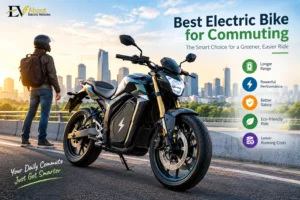
Common Confusion: Electric Bike vs Electric Bike
The term electric bike can sometimes create confusion because it may refer to either an electric bicycle or an electric motorcycle, depending on the context. An electric bicycle generally uses pedals and provides electric assistance within bicycle-oriented specifications and regulations. An electric motorcycle, on the other hand, is designed as a motor vehicle with motorcycle-style controls, performance, chassis components, and road requirements.
For this article, “best electric motorcycle for commuting” refers to electric motorcycles and motorcycle-style electric bikes, not pedal-assist bicycles. Always check the legal classification of a particular vehicle in your location because requirements can differ between regions.
FAQs About the Best Electric Motorcycle for Commuting
Q.1 What is the best electric bike motorcycle commuting?
The best electric motorcycle for commuting is the electric motorcycle that matches your daily distance, required speed, terrain, charging access, comfort needs, and local regulations. Battery range, motor performance, braking, suspension, and reliability are all important.
Q.2 How much range does an electric motorcycle need for commuting?
It depends on your complete daily journey. Calculate your round-trip distance and include regular errands or detours. It is sensible to have additional range beyond your normal daily requirement.
Q.3 Is a high-power electric bike better for commuting?
Not necessarily. Higher power can provide stronger acceleration and performance, but it can also increase energy consumption, weight, and cost. Choose power based on your actual route and requirements.
Q.4 How long does an electric bike take to charge?
Charging time depends on the battery capacity, charger output, battery state, and motorcycle design. Always check the manufacturer’s charging specifications for the particular model.
Q.5 Are electric bike good for daily commuting?
They can be suitable for daily commuting when their range, charging requirements, performance, comfort, and legal requirements match the rider’s needs.
Q.6 Is a hub motor or central motor better?
Both configurations have different characteristics. A hub motor can simplify the drivetrain, while a centrally mounted motor can provide drivetrain flexibility. The appropriate choice depends on the motorcycle and intended use.
Q.7 Is an electric motorcycle cheaper to operate than a gasoline bike?
Electric motorcycles generally do not require gasoline and may have different maintenance requirements, but total operating costs vary depending on electricity prices, insurance, tires, servicing, battery condition, and how frequently the motorcycle is used.
Q.8 Can I charge an electric bike at home?
Many electric motorcycles can be charged at home using their compatible charging equipment, but the exact charging requirements vary by model. Check the manufacturer’s instructions and your home’s electrical capacity before installation.
Final Thoughts
Choosing the best electric motorcycle for commuting is about finding the right balance between range, motor performance, battery capacity, charging convenience, comfort, safety, and everyday practicality. Do not choose an electric motorcycle simply because it has the biggest motor or the longest advertised range. Start with your actual commute and determine how far you travel, what roads you use, how much performance you need, and where you can charge.
For shorter city commutes, a compact electric motorcycle with practical range may be sufficient. Longer or more demanding routes may require a larger battery and stronger motor. Riders who deal with hills should pay particular attention to torque and overall motor performance.
Most importantly, consider the complete motorcycle rather than one specification. Battery, motor, brakes, suspension, tires, charging system, comfort, service support, and legal requirements all contribute to the ownership experience. When the motorcycle is selected around your real commuting needs instead of marketing numbers alone, it can become a practical and efficient option for everyday transportation.