
Electric Mountain Bikes are changing the way riders experience dirt trails, muddy paths, steep hills, forest tracks, and other off-road terrain. These machines combine the aggressive design of a dirt bike with an electric motor and rechargeable battery, giving riders strong acceleration without the noise and exhaust associated with a gasoline engine.
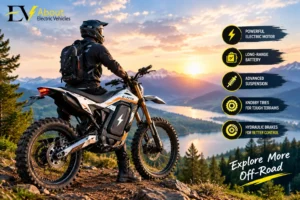
Unlike conventional pedal-assist e-MTBs, the motorcycle-style machines discussed in this guide are built around a throttle-controlled electric drivetrain. They typically use motorcycle-style seats, foot pegs, long-travel suspension, knobby tires, hydraulic disc brakes, and powerful battery systems designed for demanding off-road riding.
For riders who want the feel of a dirt bike without a gasoline engine, this type of electric off-road machine can offer an exciting alternative. Instant electric torque, quiet operation, and simple controls make these bikes especially interesting for trail riding, hill climbing, muddy terrain, and recreational off-road adventures.
What Are Electric Mountain Bikes?
The term Electric Mountain Bikes can be used in different ways, but this guide focuses on the motorcycle-style electric off-road machines commonly used for dirt riding and mud trails. These machines use a rechargeable battery to supply electricity to an electric motor. Instead of depending on pedaling, the rider normally controls the motor through a throttle. This makes the riding experience much closer to an electric dirt bike or lightweight electric motorcycle than a conventional pedal-assist bicycle.
The basic system includes a battery pack, electric motor, motor controller, throttle, wiring, charging system, and battery management electronics. When the rider opens the throttle, the controller regulates electrical power delivered to the motor, which then turns the rear wheel through the drivetrain.
Motorcycle-style electric off-road bikes are generally designed with a strong frame and suspension capable of handling rough surfaces. Their tires are designed for loose dirt, mud, rocks, sand, and uneven trails rather than ordinary pavement.
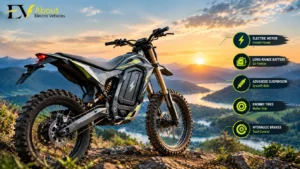
Why Choose Electric Mountain Bikes?
There are several reasons riders are becoming interested in Electric Mountain Bikes for off-road recreation.
Instant Electric Torque
One of the biggest advantages of an electric off-road motorcycle is the way it delivers power. Electric motors can produce strong torque from very low motor speeds. This can provide quick acceleration when climbing hills, crossing loose surfaces, or exiting a corner. For technical riding, smooth torque delivery can be more useful than simply having an extremely high peak-power number. Predictable power helps the rider maintain control when the rear tire is operating on mud, gravel, sand, or loose soil.
Quiet Off-Road Riding
An electric motor is dramatically quieter than a gasoline dirt-bike engine. This makes electric off-road riding attractive to people who want a quieter experience on permitted trails or private property. Riders can hear more of their surroundings, while the absence of engine exhaust also changes the overall riding environment. Quiet does not mean risk-free, however. Riders still need to watch for other vehicles, pedestrians, wildlife, obstacles, and changing trail conditions.
Low Routine Powertrain Maintenance
Electric drivetrains have fewer conventional engine components than gasoline-powered dirt bikes. There is no engine oil, spark plug, fuel injector, exhaust system, or traditional combustion engine to service. This can reduce some routine maintenance tasks. The mechanical parts still require attention. Tires, brakes, chain or belt systems, bearings, suspension components, wheels, and steering parts all experience wear during off-road riding.
Strong Off-Road Capability
The combination of an electric motor, high-capacity battery, motorcycle-style chassis, and long-travel suspension can make these machines capable on demanding terrain. Depending on the model, riders may use them for dirt trails, hill climbs, forest tracks, sand, mud, enduro-style riding, or recreational off-road riding.
Important Features to Consider Before Buying
Not all Electric Mountain Bikes are designed for the same terrain or riding style. Some are lightweight trail machines, while others are built with considerably more power and suspension travel. Understanding the major specifications can help you choose a machine that fits your needs.
Motor Power and Torque
Motor performance is one of the first specifications to examine. Manufacturers may advertise continuous power, nominal power, or peak power, and these figures are not always directly comparable. Peak power can indicate how much performance the system can deliver for short periods, while continuous output gives a different picture of sustained operation. Torque is equally important for off-road riding.
Strong torque can help when climbing steep slopes or moving through soft terrain. However, excessive power can also make a bike harder to control for inexperienced riders. A good off-road electric motorcycle should provide predictable throttle response rather than simply overwhelming the rider with power. Consider your experience level, terrain, rider weight, and intended speed before choosing a high-powered model.
Battery Capacity and Range
Battery capacity determines how much electrical energy the machine can store. Capacity may be expressed in watt-hours or kilowatt-hours, depending on the manufacturer and vehicle class. A larger battery generally provides more stored energy, but it can also add weight. Real-world range depends on much more than battery size.
Riding aggressively, climbing steep hills, riding through mud or sand, carrying additional weight, and using high-power settings can consume considerably more energy than relaxed riding on firm terrain. Temperature can also influence battery performance. For frequent trail riding, think about your normal ride length rather than relying entirely on an advertised maximum range. If you regularly ride far from a charging point, additional battery capacity can be useful.
Suspension and Ground Clearance
Suspension is critical for motorcycle-style off-road riding. Unlike road-oriented electric motorcycles, Electric Mountain Bikes designed for dirt and mud need suspension that can handle rocks, roots, jumps, ruts, landings, and uneven ground. Long-travel suspension allows the wheels to move through a greater range while helping maintain traction and control.
Ground clearance is also important. A low chassis can strike rocks, roots, or deep ruts, while adequate clearance allows the machine to move over obstacles with less risk of contact. When comparing models, examine front fork quality, rear shock design, suspension travel, adjustability, and overall chassis geometry. A suspension system designed for serious off-road use can make a substantial difference in stability and comfort.
Tires and Traction
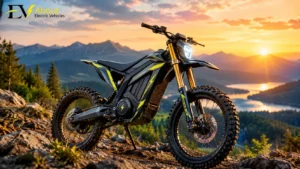
Tires are one of the most important parts of an off-road electric bike. Knobby tires are designed to dig into loose surfaces and provide traction where ordinary street tires would struggle. Different tread patterns perform differently in mud, sand, hard-packed dirt, gravel, and rocky terrain. For muddy conditions, a more open tread pattern can help clear debris from the tire. For hard-packed trails, a different tread design may provide better contact and cornering behavior.
Tire pressure also affects traction. Lower pressure can sometimes improve grip on loose terrain, while excessive pressure can reduce the tire’s ability to conform to uneven surfaces. However, pressure should remain within the manufacturer’s recommended range for the specific tire and wheel.
Brakes and Safety
Powerful Electric Mountain Bikes need dependable brakes. Motorcycle-style electric dirt bikes can be substantially heavier and faster than conventional pedal-assist e-MTBs. As speed and vehicle mass increase, braking performance becomes increasingly important. Hydraulic disc brakes are common on performance-oriented off-road machines because they can provide strong and controllable stopping power.
Brake size, pad material, rotor design, and hydraulic system quality can all affect performance. Riders should also use appropriate protective equipment. A properly fitted helmet, gloves, boots, eye protection, and protective riding gear can reduce injury risk during off-road riding. Before every ride, inspect the brakes, tires, throttle, chain or belt, suspension, wheels, battery connections, and major frame components.
Choosing Electric Mountain Bikes for Your Riding Style
The right Electric Mountain Bikes setup depends on where and how you plan to ride. For casual trail riding, a lighter machine with moderate power may provide easier handling and sufficient performance. For aggressive trail riding, enduro-style terrain, or steep hill climbs, riders may prefer greater motor output, stronger suspension, larger brakes, and more battery capacity.
Mud riding also requires special consideration. Deep mud increases rolling resistance and can place additional load on the motor and battery. Strong traction, adequate ground clearance, effective mud-shedding tires, and good sealing around electrical components become especially important. For riders who enjoy jumps or technical terrain, chassis strength and suspension quality should be considered just as carefully as motor power. The goal should be to match the machine to the terrain rather than simply buying the most powerful model available.
How Much Range Do You Need?
Range is one of the most common concerns when purchasing Electric Mountain Bikes. Off-road range can be difficult to predict because trail conditions vary significantly. A smooth dirt road may require relatively little energy, while deep mud, loose sand, steep climbs, and repeated acceleration can consume substantially more battery power. Rider weight also matters. A heavier combined rider-and-bike load requires more energy, particularly when climbing.
High-power riding modes can further reduce range. Instead of treating the manufacturer’s maximum range as a guaranteed distance, consider your typical trail conditions and leave enough battery reserve to return safely. For longer adventures, carrying a spare compatible battery or planning a charging point can provide additional flexibility when the vehicle and riding location allow it.
Weight and Handling
Weight has a noticeable effect on off-road handling. Battery packs and powerful motors can make electric dirt bikes heavier than conventional bicycles. That additional mass can provide stability at speed, but it can also make the machine more demanding to maneuver at low speeds. Weight distribution matters just as much as total weight.
A well-balanced frame can feel easier to control when turning, jumping, climbing, or navigating technical obstacles. Seat height is another important consideration. Riders should be able to control the machine confidently while maintaining a comfortable standing and seated position. When comparing models, look at total weight, wheelbase, seat height, center of gravity, frame design, and suspension geometry.
Maintenance Tips for Electric Mountain Bikes
Regular maintenance helps keep Electric Mountain Bikes reliable and safe. Start with the tires. Inspect them for cuts, punctures, damaged sidewalls, and excessive wear. Check tire pressure before riding, particularly when switching between different types of terrain.
Inspect the brake pads and rotors regularly. Off-road mud and grit can accelerate component wear. If the bike uses a chain, clean and lubricate it according to the manufacturer’s recommendations. Belt-drive systems require a different maintenance routine. Suspension components should also be inspected and serviced according to the manufacturer’s schedule.
The electrical system deserves special attention. Use the correct charger and follow the battery manufacturer’s charging instructions. Do not attempt to open or modify a high-voltage battery unless you have the required technical training. If a battery becomes swollen, physically damaged, unusually hot, or behaves abnormally, stop using it and follow the manufacturer’s safety instructions. Keeping the battery clean and protected from unnecessary damage can also help maintain reliable performance.
Are Electric Mountain Bikes Worth It?
For riders who want a quieter alternative to a gasoline dirt bike, Electric Mountain Bikes can offer an exciting combination of performance and simplicity. Instant torque can make hill climbing enjoyable, while the absence of a combustion engine removes many traditional engine-maintenance tasks. Electric power can also make off-road riding feel smoother because there is no clutch shifting or engine noise dominating the experience.
There are still limitations. Battery range can restrict very long rides, charging takes longer than filling a gasoline tank, and battery replacement can be an important long-term ownership consideration. The initial cost can also vary considerably depending on motor power, battery capacity, suspension quality, and overall construction. The best choice depends on how frequently you ride, what terrain you use, how much power you need, and where you are legally permitted to ride.
FAQs About Electric Mountain Bikes
Q.1 Are Electric Mountain Bikes good for beginners?
Some lower-powered electric off-road models can be approachable for new riders, but motorcycle-style electric dirt bikes still require proper riding skills. Beginners should learn throttle control, braking, balance, cornering, and body positioning before attempting steep hills, jumps, deep mud, or technical terrain.
Q.2 How far can Electric Mountain Bikes travel on one charge?
Range varies according to battery capacity, motor power, rider weight, terrain, speed, riding mode, temperature, tire pressure, and surface conditions. Mud, sand, steep climbs, and aggressive riding can reduce range considerably compared with riding on firm, level ground.
Q.3 Can Electric Mountain Bikes handle mud?
Many motorcycle-style electric off-road models are designed for dirt and muddy terrain, but performance depends on tire design, ground clearance, motor protection, battery protection, and suspension. Deep mud can place additional demands on the motor and drivetrain, so riders should follow the manufacturer’s limits and maintenance recommendations.
Q.4 Do Electric Mountain Bikes have pedals?
The term can be confusing.
Traditional e-MTBs are pedal-assist bicycles and have functional pedals. Motorcycle-style electric dirt bikes generally use foot pegs and a throttle rather than relying on pedaling. Always check the actual specifications and legal classification of a model rather than relying only on the product name.
Q.5 Can Electric Mountain Bikes be ridden on public roads?
That depends entirely on the vehicle’s specifications and local regulations.
A motorcycle-style electric dirt bike may be classified as an off-highway vehicle, moped, or motorcycle rather than an electric bicycle. Some models may be designed for road registration, while others are intended only for private property or designated off-road areas.
Check local registration, licensing, insurance, equipment, and trail-access requirements before riding.
Conclusion
Modern Electric Mountain Bikes can bring the excitement of dirt-bike riding together with the instant torque and quiet operation of an electric drivetrain. For riders interested in mud, dirt trails, steep climbs, forest tracks, and technical off-road terrain, a motorcycle-style electric machine can provide a very different experience from a conventional pedal-assist bicycle.
The important thing is to choose according to the terrain and riding style rather than focusing on one impressive specification. Motor power, battery capacity, suspension travel, ground clearance, tire design, braking performance, weight, and overall chassis construction all influence how an electric off-road machine performs.
A lightweight model may be easier to control on technical trails, while a more powerful machine may be better suited to high-speed riding and demanding climbs. Battery capacity becomes increasingly important for longer adventures, while suspension and tires can make a major difference on rough or muddy ground. Before purchasing, also confirm how the specific vehicle is classified where you live and where you are allowed to ride it. With the right combination of power, range, suspension, traction, braking, and handling, Electric Mountain Bikes can provide an exciting and modern way to explore off-road terrain.