
The electric scooter motor converts battery energy into wheel movement. It affects acceleration, hill climbing, carrying ability, speed, and overall ride feel. Performance depends on the battery, controller, motor design, wheel size, rider weight, terrain, and temperature. Understanding these factors helps you choose or troubleshoot a scooter.
What Is an Electric Scooter Motor?
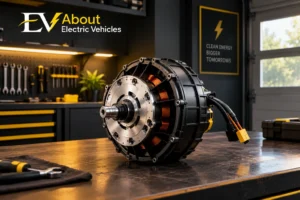
An electric scooter motor is an electrical machine that produces rotational force to turn a wheel. Most modern scooters use brushless designs, and many use a hub motor built directly into the wheel. The battery supplies energy, while the controller regulates current going to the motor. Battery voltage, current capability, controller limits, and cooling therefore influence motor performance.
This means the motor should not be viewed as an isolated component. The complete electrical system determines how much useful performance reaches the road.
How Does an Electric Scooter Motor Work?
A common scooter motor uses permanent magnets and electromagnetic windings. The controller energizes the windings in sequence, creating a rotating magnetic field that interacts with the magnets. Many scooter motors also use Hall sensors to report rotor position to the controller. This helps the controller determine when to energize different windings. Some systems use sensorless control instead. In simple terms, the battery supplies energy, the controller manages it, and the motor produces rotation.
Hub Motor vs Other Motor Designs
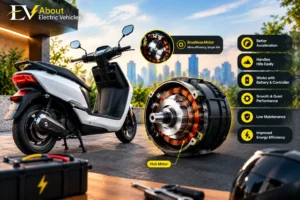
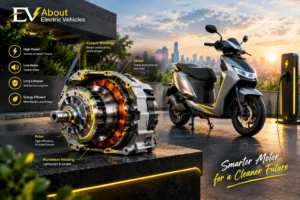
Hub motors are common because they can sit directly inside a wheel, removing the need for a chain or belt. A hub design can be compact, quiet, and relatively low-maintenance. Geared hub motors use internal gearing, while gearless versions have fewer mechanical parts.
Mid-drive or mechanically driven arrangements are less common in stand-up scooters and transfer power through another drivetrain. The appropriate design depends on the scooter’s construction and intended use.
What Do Motor Watts Mean?
Watts measure power. In scooter specifications, the number can provide a useful starting point, but it does not tell the complete performance story.
A 500W motor and another 500W motor do not necessarily produce identical results. Motor efficiency, controller current, battery voltage, wheel size, thermal design, and the way the manufacturer defines its rating can all affect actual performance. Current motor guides also warn that wattage should not be treated as a direct prediction of speed. Therefore, a lower-rated scooter can sometimes feel stronger than one with a larger advertised number.
Rated Power vs Peak Power
This is one of the most important details to check when comparing scooters. Rated or nominal power generally describes a level the motor is designed to sustain under specified conditions. Peak power describes a higher output that the system may reach for a limited period.
Manufacturers do not always present these figures in the same way. One company may prominently advertise peak output while another emphasizes rated power. For a fair comparison, find out which figure is being quoted. A large peak number may sound impressive but does not tell you how the scooter will behave during a long climb.
Motor Torque Explained
Torque is rotational force, usually expressed in newton-metres. It helps explain how strongly a motor can turn the wheel, particularly when starting or dealing with resistance. A scooter with strong low-speed torque can feel responsive when moving away from a stop or climbing a hill. Power and torque are related, but they are not the same measurement. Power also depends on rotational speed.
Torque figures can also be reported differently, so an isolated number is difficult to compare unless the measurement method is clear.
Does Higher Motor Power Mean Higher Speed?
Not automatically.
Motor power can support stronger acceleration and help maintain speed under load, but top speed is also affected by battery voltage, controller limits, motor design, wheel size, rider weight, aerodynamics, and software restrictions.
A higher-powered motor can consume more energy during aggressive riding, reducing practical range if the battery cannot support its demands. For this reason, choosing a motor only by maximum wattage can lead to the wrong scooter for your needs.
How Much Motor Power Do You Need?
There is no single watt rating that is perfect for every rider. A lightweight scooter used on relatively flat roads may work well with a modest motor. A heavier rider, frequent hill climbing, or a scooter carrying cargo may benefit from a more capable system.
Some current buying guides place common urban scooters around the lower hundreds of watts and recommend more power as rider weight and terrain increase, but these figures should be treated as general guidance rather than universal rules. The better approach is to match motor capability to your weight, route, desired acceleration, daily needs, and local legal limits.
Battery and Motor Compatibility
A powerful motor needs an electrical system that can support it. The battery must be able to deliver the required current, while the controller must be rated for the system. If a large motor is paired with a small battery or restrictive controller, its advertised potential may never be available. Conversely, demanding too much current from a battery can increase heat and voltage drop. Consider voltage, current capability, battery capacity, controller rating, and motor rating as one system.
Single Motor vs Dual Motor
Most basic scooters use one driven motor. Performance-oriented models may use two, usually one at each wheel. A dual-motor arrangement can improve acceleration, traction, and hill performance because power is distributed across two driven wheels. It can also increase weight, energy consumption, cost, and system complexity. Dual motors make most sense when their extra traction and power are useful. For flat commuting, one suitable motor may be enough.
Heat and Motor Performance
Heat is an important part of motor performance. High load, steep hills, heavy riders, aggressive acceleration, and hot weather can increase thermal stress. A motor may perform well for a short burst and then reduce output as temperatures rise. Good thermal design helps the system handle sustained demand.
Do not assume that a larger motor is automatically better for longclimbs. The battery, controller, cooling, and motor all need to be capable of handling the workload together.
Electric Scooter Motor Efficiency
Efficiency describes how effectively electrical input is converted into useful mechanical output. No motor converts all supplied energy into movement; some energy becomes heat and other losses. Real efficiency changes with speed, load, temperature, and operating conditions.
Efficiency affects energy consumption and practical range. Sensible speed, smooth acceleration, correct tire pressure, and reasonable load can also reduce energy use.
Signs of a Motor Problem
Motor faults can appear in several ways. The scooter may hesitate, lose power, make unusual sounds, vibrate, overheat, or fail to respond correctly to the throttle. Before assuming the motor itself has failed, check other possible causes. A weak battery, damaged connector, controller fault, brake sensor, Hall sensor, wiring issue, or charging problem can produce similar symptoms.
If the motor becomes unusually hot, smells burnt, makes grinding sounds, or behaves unpredictably, stop riding and have the scooter inspected.
Electric Scooter Motor Maintenance
Most sealed hub motors need little routine maintenance, but inspect the wheel, axle, cable routing, and visible connectors. Follow the manufacturer’s cleaning instructions and avoid unnecessary water exposure. Geared or mechanically driven systems may also require inspection of gears, belts, or chains. Do not open electrical components without suitable knowledge and tools.
Replacing an Electric Scooter Motor
Motor replacement is not simply a matter of matching wattage. The replacement must fit the mounting structure and work with the scooter’s voltage, controller, sensors, connectors, and wheel dimensions. Check the original specifications before ordering. Proprietary electronics may not work with an aftermarket motor, so professional help can prevent serious compatibility problems and costly mistakes.
How to Choose the Right Motor
Start with the riding conditions rather than the advertised wattage. Think about your rider weight, hills, road quality, desired acceleration, normal speed, expected range, and whether you carry additional weight. Then examine the complete electrical system.
Look for rated power, peak power, battery voltage, controller limits, motor type, wheel size, and warranty support. Be cautious when a listing provides only a large watt number. A balanced scooter is usually a better purchase than one designed around a single impressive specification.
FAQs About Electric Scooter Motor
Q.1What is the best electric scooter motor?
There is no universal best motor. A suitable motor is one that matches the scooter’s battery, controller, rider weight, terrain, and intended speed.
Q.2 Is a 500W electric scooter motor powerful enough?
It can be enough for many riders and relatively flat routes, but performance depends on the complete system. Weight, hills, controller settings, battery capability, and motor rating all matter.
Q.3 Does a higher-watt motor use more battery?
It can use more energy when operated at higher output, especially during hard acceleration or climbing. Actual consumption depends on riding conditions and system efficiency.
Q.4 Are dual motors better?
Dual motors can provide stronger acceleration, traction, and hill performance, but they also add weight, cost, and energy demand. They are most useful when those advantages match your route.
Q.5 How long does an electric scooter motor last?
There is no fixed lifespan that applies to every motor. Construction quality, bearings, heat, water exposure, load, riding conditions, and maintenance can all affect service life.
Q.6 Can an electric scooter motor be repaired?
Some faults can be repaired, while others make replacement more practical. Diagnosis should identify whether the problem is actually the motor or another component such as the controller, wiring, or sensors.
Conclusion
The electric scooter motor is a major part of the scooter’s performance, but its watt rating tells only part of the story. Battery capability, controller limits, torque, motor design, cooling, rider weight, and terrain all influence how the scooter performs.
Instead of buying the biggest motor available, choose a complete system that fits your real riding conditions. Check rated and peak power, understand the battery and controller, and consider whether one or two motors make sense for your route. A well-matched motor can provide smooth acceleration and useful hill performance. Choose the system that meets your needs without unnecessary weight, cost, or energy use in normal real-world riding conditions today.