
Choosing an electric scooter for seniors can make everyday travel more convenient, comfortable, and accessible. Whether an older adult wants to run errands, visit nearby friends, explore the neighborhood, or enjoy short outdoor trips, the right electric scooter can provide a practical way to get around without relying on a car for every journey.
However, not every electric scooter is suitable for older riders. Features such as stability, comfortable seating, easy-to-use controls, reliable brakes, and manageable weight are especially important when choosing a model for senior use. A scooter that looks impressive on paper may not necessarily be the most comfortable or practical option for everyday travel.
The best electric scooter for seniors should match the rider’s physical abilities, preferred riding position, daily travel distance, and storage requirements. In this guide, we will explore the essential features to consider, explain how to ride safely, and help you understand what makes an electric scooter suitable for older adults.
What Makes an Electric Scooter Senior-Friendly?
A senior-friendly electric scooter should be easy to operate, comfortable to ride, and predictable when accelerating, turning, and stopping. Older adults may have different mobility needs, so choosing a scooter based on individual comfort and control is more important than focusing on speed or advanced features.
A low deck or step-through design can make mounting and dismounting easier. Wider platforms provide additional foot space, while comfortable seats can reduce the need to stand throughout a journey. Simple controls also help riders operate the scooter without unnecessary confusion.
When evaluating an electric scooter for seniors, consider the following features:
- Stable frame and balanced weight distribution
- Comfortable seat or standing platform
- Easy mounting and dismounting
- Smooth acceleration and predictable braking
- Suitable tire size and suspension
- Manageable weight for storage and transportation
- Simple controls and a clear display
- Sufficient battery range for everyday trips
- Reliable lighting and visibility features
These features work together to create a more comfortable riding experience. A scooter does not need to have every available feature to be suitable for seniors. Instead, it should provide the right combination of accessibility, control, and convenience for the person using it.
Stability Should Come First
Stability is one of the most important considerations when choosing an electric scooter for seniors. A well-balanced scooter can make steering and stopping feel more predictable, helping riders maintain control during ordinary journeys. Pay attention to the wheel size, deck width, handlebar position, frame design, and weight distribution. Larger wheels may handle certain road imperfections more comfortably, while a wider platform can provide additional room for the rider’s feet.
An extremely lightweight scooter may be easier to carry, but it might not feel as planted as a slightly heavier model. The goal is to find a balance between portability and stable handling. If balance is a concern, do not rely on specifications alone. A supervised test ride in a safe area can help determine whether the scooter feels comfortable when starting, turning, and braking.
Seat or Standing Design?
Electric scooters generally come in two main designs: standing scooters and seated scooters. Both can serve different needs, depending on the rider’s comfort and mobility.
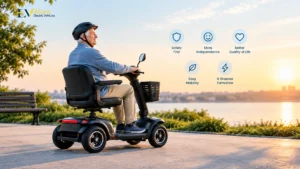
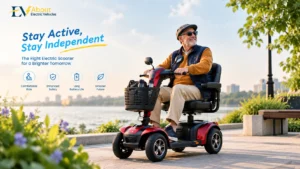
A standing electric scooter is usually compact and convenient to store. It may work well for shorter trips and riders who are comfortable maintaining a standing position. A seated electric scooter for seniors provides a supported riding position and may be more comfortable for people who find prolonged standing difficult. It can also be useful for longer neighborhood journeys.
However, a seat does not automatically make a scooter safer. The frame, wheelbase, tires, brakes, and rider’s ability to control the vehicle remain important. Before purchasing a seated model, check the seat height, foot placement, and available space for getting on and off. The rider should be able to mount and dismount without awkward movements.
Easy Mounting and Dismounting
Getting onto an electric scooter should not require excessive effort or uncomfortable movements. This is particularly important for seniors who experience stiffness, reduced flexibility, or difficulty lifting their legs. A low deck or step-through design can make entering and leaving the scooter easier. The rider should also be able to reach the handlebars comfortably without leaning too far forward.
For seated scooters, consider whether the seat height allows the rider to sit down and stand up naturally. Check that the frame does not obstruct the entry area. Whenever possible, allow the intended rider to try the actual scooter before buying it. A comfortable mounting position can make a noticeable difference in everyday usability.
Motor Power Without Excessive Speed
When selecting an electric scooter for seniors, powerful acceleration should not be the primary goal. Smooth and controlled movement is generally more useful for everyday travel. A motor should provide enough power to handle normal loads, gentle inclines, and typical road conditions. However, sudden acceleration can make a scooter difficult to control, particularly for beginners.
Adjustable riding modes can be helpful. A low-speed or beginner mode allows the rider to become familiar with the throttle and braking system before using faster settings. Choose a motor that matches the rider’s needs rather than paying extra for performance that may never be used.
Brakes Are Critical
Reliable brakes are essential for any electric scooter, especially when the rider needs predictable stopping behavior. Some scooters use mechanical brakes, drum brakes, disc brakes, electronic braking, or a combination of systems. The exact setup varies between models, so it is important to understand how the brakes operate before purchasing.
Look for a braking system that responds smoothly and allows the rider to slow down without sudden or unpredictable movements. Before every trip, check that the brakes are functioning normally. If a brake lever feels unusually loose, makes unfamiliar noises, or provides reduced stopping power, discontinue use until the issue has been inspected.
Tires and Suspension Improve Comfort
Uneven roads, small potholes, cracks, and loose surfaces can make scooter rides uncomfortable. Suitable tires and suspension can help reduce some of the vibration experienced during travel. Pneumatic tires can absorb certain road imperfections, while suspension systems may provide additional comfort on rougher surfaces.
However, tires and suspension cannot eliminate every road hazard. Seniors should still reduce speed before bumps, avoid obstacles that are difficult to judge, and remain cautious on unfamiliar roads. Regularly inspect the tires for visible damage and maintain the recommended pressure according to the manufacturer’s instructions.
Weight and Portability
The weight of an electric scooter for seniors is especially important when it needs to be moved, stored, or transported. Some riders may need to lift a scooter into a vehicle, carry it through a doorway, or move it into a storage area. In these situations, a manageable weight can make everyday use more convenient. If lifting is difficult, consider a scooter that can be rolled easily or stored without requiring the rider to carry it.
There is a balance between portability and stability. A very lightweight scooter may be easier to transport, while a somewhat heavier design may feel more stable during use. The right choice depends on the rider’s physical abilities and storage arrangements.
Battery Range for Daily Trips
Battery range determines how far an electric scooter can travel before requiring a recharge. For seniors, the ideal range depends on regular travel habits rather than the largest number advertised by a manufacturer. Someone who uses a scooter for short neighborhood trips may not need a large battery. However, riders who regularly visit nearby shops or travel longer distances should consider additional range.
Remember that advertised range is usually measured under specific testing conditions. Real-world performance can be affected by:
- Rider weight
- Road inclines
- Wind conditions
- Outdoor temperature
- Tire pressure
- Riding speed
- Frequent acceleration and braking
Real-world range may be lower than the manufacturer’s estimate. Therefore, choose an electric scooter for seniors with enough battery capacity to complete normal journeys while maintaining a reasonable reserve.
Controls Should Be Simple
Complicated controls can make an electric scooter harder to operate, particularly for someone using one for the first time. A senior-friendly model should have clearly labeled buttons, an easy-to-understand display, and conveniently positioned controls.
The rider should be able to identify the throttle, brake levers, power button, speed settings, and battery indicator without confusion. Before taking the scooter onto a road, practice turning it on, selecting a low-speed mode, accelerating gently, stopping, and switching it off in a safe, open area. Simple controls can help build familiarity and make routine operation more comfortable.
Battery and Charging Safety
Electric scooter batteries, particularly lithium-ion batteries, require proper handling and charging practices. Always use the charger supplied with the scooter or one specifically recommended by the manufacturer. Avoid damaged charging equipment, modified batteries, and questionable replacement parts. Follow the manufacturer’s charging instructions and inspect the charging cable and connector regularly.
The U.S. Consumer Product Safety Commission (CPSC) recommends using the supplied or manufacturer-recommended charger and remaining present while charging micromobility products. Keep the battery and charging area away from conditions prohibited by the manufacturer, and discontinue charging if you notice unusual heat, swelling, damage, or other signs of a potential problem.
Is an Electric Scooter for Seniors Safe?
An electric scooter can be suitable for many older adults, but age alone does not determine whether someone is ready to ride. Balance, vision, reaction time, strength, confidence, and familiarity with the controls all play a role. Older adults may face more serious consequences from falls and collisions, making preparation and protective equipment especially important.
Before choosing an electric scooter for seniors, consider whether the rider can:
- Maintain a comfortable and controlled riding position
- Operate the throttle and brakes reliably
- Turn and stop without losing balance
- Notice pedestrians, vehicles, and road hazards
- Mount and dismount without excessive difficulty
- Follow basic riding instructions and local traffic rules
If someone has difficulty maintaining balance or controlling a scooter, another mobility solution may be more appropriate. A discussion with a qualified healthcare professional can help when there are concerns about whether a particular rider can safely operate a scooter.
Where Should Seniors Practice Riding?
A quiet, open area is the ideal place for beginners to become familiar with an electric scooter. Avoid busy roads, crowded sidewalks, and complicated intersections during the initial practice sessions. Start by learning how to accelerate gently, brake smoothly, turn, stop, and start again. Practice these movements until they become familiar and comfortable.
Once basic control improves, gradually move to familiar routes with limited traffic. Avoid steep hills, loose gravel, wet surfaces, and uneven roads until the rider has sufficient experience to handle them. Always adjust speed to match the road conditions and personal comfort level.
Safety Gear and Riding Habits
Wearing appropriate protective equipment is an important part of riding an electric scooter for seniors. A properly fitted helmet can help protect the head during a fall or collision. Choose a helmet designed and certified for an activity appropriate to the scooter and riding conditions. Closed, secure footwear can improve foot placement and control. Gloves and other protective equipment may also be useful, depending on the rider’s needs.
In addition to protective gear, follow these essential riding habits:
- Keep both hands on the handlebars.
- Watch for pedestrians, vehicles, potholes, and opening car doors.
- Avoid using a phone while riding.
- Never ride under the influence of alcohol or drugs.
- Use appropriate lights and reflective equipment when visibility is limited.
- Follow local traffic laws and the manufacturer’s instructions.
- Inspect the scooter before every trip.
The CPSC recommends checking important components such as the handlebars, brakes, throttle, lights, tires, cables, and frame before riding. Good riding habits, combined with suitable protective equipment, can help reduce avoidable risks.

How to Choose the Right Electric Scooter for Seniors
Choosing the right model starts with understanding the rider’s individual needs rather than comparing advertisements or focusing on technical specifications alone.
Consider the rider’s height, balance, strength, preferred riding position, typical travel distance, and storage space. These factors can help narrow the options before comparing specific models.
Here are some important questions to consider:
- Does the rider prefer sitting or standing?
- Is the scooter easy to mount and dismount?
- Does the frame feel stable during turns and stops?
- Are the brakes predictable and comfortable to operate?
- Is the scooter light enough to move or store when necessary?
- Does the battery provide sufficient range for regular journeys?
- Are the controls easy to understand?
- Are replacement parts and servicing available?
Do not purchase a scooter simply because it has a powerful motor, high top speed, or a long list of features. For many older adults, smooth acceleration, reliable braking, comfortable positioning, and easy handling are more relevant to everyday use. A test ride, when available, can help reveal important differences that specifications cannot fully explain.
FAQs About Electric Scooter for Seniors
Q.1 What is the best electric scooter for seniors?
The best electric scooter for seniors depends on the rider’s comfort, mobility, and daily travel needs. Look for a stable frame, manageable weight, smooth acceleration, reliable brakes, and easy-to-use controls. A seated model may be useful for someone who finds prolonged standing uncomfortable, while a compact standing scooter may suit shorter trips.
Q.2 Should seniors use an electric scooter with a seat?
A seated electric scooter can be helpful for seniors who prefer a supported riding position or find standing for extended periods uncomfortable. However, the seat should be stable, positioned at a comfortable height, and easy to access. Riders should also ensure they can control the scooter confidently while seated.
Q.3 How fast should seniors ride an electric scooter?
There is no single speed that is appropriate for every older rider. Beginners should start at a low speed and gradually become familiar with the scooter’s handling. Riding speed should always reflect personal experience, road conditions, traffic, and applicable local regulations.
Q.4 Are three-wheel electric scooters better for seniors?
Three-wheel electric scooters offer a different handling and turning experience, but they are not automatically more suitable for every senior. Stability depends on the overall design, wheel arrangement, steering, and rider’s ability to control the vehicle. Testing the scooter before purchasing can help determine whether its handling feels comfortable.
Q.5 How much battery range does a senior need?
The required battery range depends on the rider’s typical daily journeys. Choose a scooter that can comfortably cover regular trips while leaving a reasonable battery reserve. Avoid planning travel around the manufacturer’s maximum advertised range because real-world conditions can reduce battery performance.
Conclusion
Choosing the right electric scooter for seniors means focusing on comfort, stability, accessibility, and safety rather than maximum speed or unnecessary features. A low and accessible design, predictable acceleration, dependable brakes, suitable tires, clear controls, and manageable weight can make everyday journeys more comfortable.
Before purchasing, consider where the scooter will be used, how it will be stored, how far the rider normally travels, and whether sitting or standing is the more comfortable option. A test ride is valuable because real-world handling cannot be judged from specifications alone.
Start slowly, wear a properly fitted helmet, inspect the scooter before every trip, and practice in a quiet area. Ultimately, the right electric scooter for seniors is one that matches the rider’s individual needs and can be operated comfortably and confidently for the journeys that matter most.