
Electric Motorcycle Range is one of the most important factors to consider before buying an electric motorcycle. Whether you use an electric motorcycle for daily commuting, weekend rides, long-distance travel, or urban transportation, knowing how far it can travel on a single charge helps you choose the right model.
Manufacturers often advertise a specific range figure, but that number does not always represent what riders experience in everyday conditions. Real-world Electric Bike Range can change significantly depending on battery capacity, motor power, riding speed, motorcycle weight, terrain, weather, tire pressure, riding style, and use of accessories.
For example, an electric motorcycle traveling at moderate speed on level roads may achieve considerably more range than the same motorcycle being ridden aggressively on steep roads. Understanding these factors can help you set realistic expectations and avoid choosing a motorcycle based only on its advertised maximum range.
What Is Electric Motorcycle Range?
Electric Motorcycle Range refers to the distance an electric motorcycle can travel before its battery needs to be recharged. Manufacturers generally provide a range estimate in miles or kilometers. However, this figure should be treated as an estimate rather than a guaranteed distance.
Real-world range depends on how much energy the motorcycle uses during a ride. A motorcycle traveling at high speed, carrying extra weight, or climbing hills will normally require more energy than one traveling at a moderate speed on flat roads.
The most useful way to think about range is not simply, “How many miles does this motorcycle claim?”
Instead, consider:
- How far is your normal daily trip?
- How much highway or high-speed riding will you do?
- Are there steep hills on your route?
- Will you regularly carry a passenger?
- How frequently can you recharge?
- How much battery reserve do you want?
These questions provide a much more realistic picture of the range you actually need.
How Far Can an Electric Motorcycle Go?
There is no single range figure that applies to every electric motorcycle. Some models are designed primarily for short urban trips, while others have larger batteries and more powerful systems intended for longer journeys. Motorcycle design, battery size, motor efficiency, aerodynamics, weight, and speed can all produce major differences in real-world range.
A lightweight electric motorcycle traveling at moderate speeds may consume considerably less energy than a heavier, performance-oriented model being ridden aggressively. This is why advertised range should be used as a comparison point rather than a promise. If your normal commute is 30 miles in total, for example, choosing a motorcycle with an advertised range only slightly above that distance may leave little room for unexpected traffic, weather changes, detours, or battery consumption from higher speeds. A reasonable range reserve is therefore important.
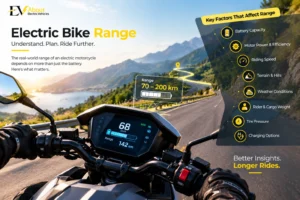
What Affects Electric Motorcycle Range?
Several factors determine how far an electric motorcycle can travel on one charge. Understanding them can help you improve range and choose a motorcycle that fits your riding conditions.
Battery Capacity
Battery capacity is one of the biggest factors affecting Electric Motorcycle Range.
It is commonly measured in watt-hours (Wh) or kilowatt-hours (kWh). A larger battery generally stores more electrical energy, which can allow an electric motorcycle to travel farther before recharging. However, a larger battery does not automatically guarantee a specific range.
For example, two motorcycles with similarly sized batteries can have different ranges because their motors, weights, aerodynamics, and riding characteristics are different. Think of battery capacity as the amount of energy available. How quickly that energy is used depends on how the motorcycle is ridden.
Motor Power and Efficiency
The electric motor also has a major effect on range. A powerful motor can deliver strong acceleration and maintain performance under demanding conditions, but using high power frequently can consume battery energy more quickly. Motor efficiency matters as well. An efficient motor can convert a greater portion of electrical energy into useful mechanical power, reducing unnecessary energy losses. This is why choosing an electric motorcycle based only on motor wattage is not enough. Battery capacity, motor efficiency, torque, controller settings, motorcycle weight, and riding conditions should all be considered together.
Riding Speed
Speed is one of the most important factors affecting Electric Bike Range. As speed increases, aerodynamic drag also increases. Maintaining a high speed therefore requires substantially more energy than traveling at a moderate pace. Frequent rapid acceleration can increase energy consumption even further.
If maximizing range is important, maintaining a steady and reasonable speed can make a noticeable difference. This is especially relevant for electric motorcycles because high-speed riding can consume energy much faster than moderate urban riding.
Rider, Passenger, and Cargo Weight
The motor has to move the complete motorcycle system, including the rider, passenger, and cargo. Additional weight generally increases the amount of energy required, particularly during acceleration and uphill riding. If you regularly ride with a passenger or carry luggage, your actual Electric Bike Range may be lower than the manufacturer’s advertised figure. This does not mean carrying additional weight is a problem. It simply means range estimates should be considered in relation to how you actually use the motorcycle.
Hills and Terrain
Terrain can have a significant effect on battery consumption. Flat roads generally require less energy than steep climbs. When an electric motorcycle travels uphill, the motor must work harder to overcome gravity. If your regular route contains long or steep climbs, you should consider both battery capacity and motor torque when choosing an electric motorcycle. A motorcycle with sufficient battery capacity for flat-city riding may provide noticeably less range when used regularly in mountainous terrain.
Weather and Temperature
Weather can also influence range. Cold temperatures can affect battery performance, while strong headwinds increase aerodynamic resistance. Wet roads and difficult riding conditions can also change energy consumption. Temperature is particularly important because battery performance can vary depending on operating conditions. If you ride throughout the year, especially in areas with very hot or cold weather, consider real-world conditions rather than relying exclusively on the manufacturer’s ideal range figure.
Tire Pressure
Tire pressure is an easy-to-overlook factor. Underinflated tires can increase rolling resistance, meaning the motor needs to use more energy to maintain movement. Keeping the tires at the manufacturer’s recommended pressure can help the motorcycle operate efficiently while also supporting proper handling and tire wear. Regular tire checks are therefore useful for both safety and range.
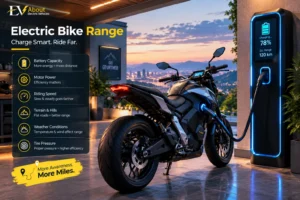
How to Get Better Electric Motorcycle Range
You do not always need a larger battery to increase your riding distance. A few simple changes can help you use the available energy more efficiently.
Ride at a Consistent Speed
Avoid unnecessary rapid acceleration and sudden high-speed riding. Smooth acceleration and a consistent speed can reduce energy consumption.
Reduce Unnecessary Weight
If you are carrying items that you do not need, removing them can reduce the total load and help improve efficiency.
Maintain Proper Tire Pressure
Check tire pressure regularly and follow the manufacturer’s recommended specifications.
Plan Your Route
If possible, choose routes that avoid unnecessary steep climbs and excessive stop-and-go traffic. A slightly longer route can sometimes use less energy if it has smoother terrain.
Use Regenerative Braking Properly
Some electric motorcycles use regenerative braking to recover a portion of kinetic energy during deceleration. Regeneration cannot replace the energy used to accelerate, but it can return some energy to the battery under suitable conditions. The effectiveness of regenerative braking varies by motorcycle, riding conditions, battery state, and system design.
Does a Bigger Battery Give You More Range?
Generally, yes. A larger battery provides more stored energy, which can allow an electric motorcycle to travel farther before charging. However, battery size is only one part of the equation. A large battery can add weight to the motorcycle. If that additional weight is significant, it can also increase energy consumption. Similarly, a high-performance motorcycle with a large battery may still have limited range when ridden aggressively at high speeds. The best battery is therefore not necessarily the biggest one. It is the battery capacity that provides enough range for your normal riding requirements without adding unnecessary cost or weight.
What Battery Size Do You Need?
The right battery size depends on how you use your electric motorcycle. For short urban commuting, a relatively modest battery may be sufficient. Riders with longer commutes may benefit from greater capacity, especially if charging is not available at work or during the day. Long-distance riders should pay even more attention to battery capacity and charging availability.
For example, if your daily journey is 40 miles round trip, buying a motorcycle with a claimed 40-mile maximum range leaves little room for real-world variables. A better approach is to consider your longest regular journey and allow additional capacity for traffic, weather, hills, passenger weight, and unexpected detours.
How to Plan Around Electric Motorcycle Range
Good range planning starts with your complete journey. If you commute to work, calculate both the outbound and return distances. Then consider your normal speed, traffic, terrain, weather, passenger or cargo weight, and charging opportunities. Do not plan important long-distance rides around the absolute maximum advertised range.
Unexpected headwinds, temperature changes, road conditions, detours, or higher-than-usual speeds can increase energy consumption. If your electric motorcycle provides a real-time range estimate, use it as a useful reference, but remember that predicted range can change as riding conditions change.
What Happens When an Electric Motorcycle Runs Out of Battery?
When the battery reaches a very low charge level, an electric motorcycle may no longer be able to provide normal propulsion. Unlike a conventional bicycle, you generally cannot simply rely on pedaling an electric motorcycle after its battery is depleted. Electric motorcycles are substantially heavier and are designed around motor-powered operation. This makes battery planning particularly important. For longer journeys, identify charging locations in advance and maintain a reasonable reserve instead of attempting to use every last percentage of battery capacity.
Electric Bike Range vs Battery Life
Electric Bike Range and battery life are two different concepts. Range describes how far the motorcycle can travel on one charge. Battery life describes how long the battery remains capable of holding useful capacity over its overall service life. As a battery ages, its usable capacity can gradually decline. Charging habits, temperature, storage conditions, usage patterns, and battery design can all influence long-term performance. Following the manufacturer’s charging and storage recommendations can help maintain battery performance over time.
How to Choose an Electric Motorcycle for Maximum Range
If range is your priority, look at the complete motorcycle rather than one specification.
Start with battery capacity, then consider:
- Motor efficiency
- Motorcycle weight
- Aerodynamics
- Riding modes
- Motor power
- Tire type
- Expected riding speed
- Terrain
- Passenger and cargo requirements
- Charging availability
A motorcycle with a very large battery is not automatically the most practical choice. For long-distance riders, charging speed and charging infrastructure can be almost as important as the battery’s capacity. A motorcycle that can recharge efficiently at available charging locations may be more practical for extended journeys than one with slightly greater theoretical range but limited charging flexibility.
FAQs About Electric Bike Range
Q.1 What is a good Electric Motorcycle Range?
A good Electric Motorcycle Range depends on your individual riding requirements. A short-distance commuter may need much less range than someone traveling long distances every day. Choose a motorcycle that comfortably covers your normal trips with some reserve.
Q.2 How can I increase Electric Motorcycle Range?
Ride at moderate and consistent speeds, avoid unnecessary rapid acceleration, maintain recommended tire pressure, reduce unnecessary weight, and use efficient riding modes when appropriate.
Q.3 Does rider weight affect Electric Motorcycle Range?
Yes. Rider, passenger, and cargo weight can increase energy consumption, particularly during acceleration and uphill riding.
Q.4 Does speed reduce Electric Motorcycle Range?
Yes. Higher speeds generally require more energy because aerodynamic resistance increases as speed rises.
Q.5 Do hills reduce Electric Motorcycle Range?
Yes. Climbing steep hills requires more energy from the motor and can significantly increase battery consumption.
Q.6 Does a larger battery always mean more range?
A larger battery generally stores more energy, but actual range also depends on motor efficiency, motorcycle weight, speed, terrain, riding style, and other conditions.
Q.7 Can an electric motorcycle be used for long-distance travel?
Yes, but long-distance suitability depends on battery capacity, real-world range, charging speed, charging infrastructure, riding conditions, and the motorcycle’s intended design.
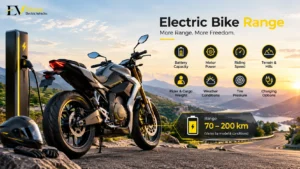
Final Thoughts on Electric Motorcycle Range
Electric Motorcycle Range depends on much more than the number printed on a battery or the range figure shown in a manufacturer’s specifications. Battery capacity is important, but motor efficiency, riding speed, motorcycle weight, terrain, weather, tire pressure, riding style, and passenger or cargo weight can all change the distance you actually achieve.
If you want to maximize range, focus on efficient riding rather than simply searching for the largest battery. Maintain the motorcycle properly, keep tire pressure within the recommended range, avoid unnecessary weight, accelerate smoothly, and plan longer journeys around realistic charging needs.
Most importantly, choose an electric motorcycle based on your actual riding requirements. A realistic range that comfortably covers your everyday journeys is much more useful than an impressive maximum figure that is difficult to achieve in normal riding conditions. When you understand what influences Electric Bike Range, you can make a more informed decision and choose an electric motorcycle that fits your commute, travel habits, performance expectations, and charging routine.