
Here is the number that surprises petrol riders most: the typical electric motorcycle maintenance cost is just $150 to $400 per year. A comparable petrol bike usually costs $500 to $1,200 a year to maintain — and a sportbike serviced at a dealer can run far higher. The reason is simple: an electric motorcycle deletes most of the maintenance list. No engine oil, no spark plugs, no air or fuel filters, no valve adjustments, no clutch, no exhaust, and often no chain.
What remains is a short, predictable list of wear items shared with any motorcycle. In this guide we break down the real electric motorcycle maintenance cost item by item, compare it honestly with a petrol bike, and show you where the money actually goes.
What Does Electric Motorcycle Maintenance Actually Include?
An electric powertrain has one moving part where a petrol engine has hundreds. That leaves a short service list:
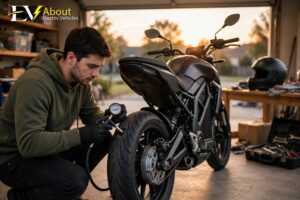
Tires — the biggest cost.
Instant torque is hard on the rear tire especially. Expect $200 to $500 for a pair of quality tires fitted, every 5,000 to 10,000 miles depending on riding style. Aggressive riders on powerful models will be at the short end of that range.
Brakes.
Regenerative braking does most of the slowing down, so pads commonly last two to three times longer than on a petrol bike. Pads cost $30 to $80 a set; brake fluid should still be flushed about every two years for $50 to $150 at a shop.
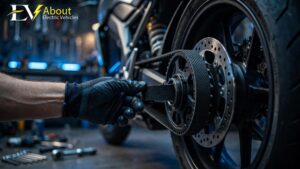
Drive belt or chain.
Many electric motorcycles (Zero, LiveWire) use a carbon belt that needs no lubrication and lasts 20,000 miles or more, with replacement around $150 to $300. Chain-drive models (some Energica and budget bikes) need cleaning and lubing like any chain — a few dollars of lube — plus a chain and sprockets every 15,000 to 20,000 miles for $150 to $300.
Suspension and chassis.
Fork oil and seals eventually, steering-head and wheel bearings over the years, and the occasional bolt check. Budget $100 to $250 every couple of years rather than annually.
Software and inspections.
Firmware updates are usually free, often over the air. Most manufacturers recommend an annual inspection — typically $100 to $250 at a dealer — covering brakes, tires, belt tension, bearings, and a battery health check.
Add it up and the electric motorcycle maintenance cost lands at roughly $150 to $400 a year for most owners — a few hundred dollars, mostly tires.
Electric vs. Petrol: A Side-by-Side Cost Comparison
Maintenance Item | Petrol Motorcycle | Electric Motorcycle |
|---|---|---|
Engine oil + filter (2–3×/year) | $100–$300/yr | None |
Spark plugs | $50–$150/yr | None |
Air/fuel filters | $30–$100/yr | None |
Valve adjustment (periodic) | $400–$1,500 | None |
Clutch service/replacement | $300–$800 over time | None |
Coolant flushes | $50–$150 | Rare (most are air-cooled) |
Chain/belt care + replacement | $150–$300/yr | $0–$150/yr (belt models near $0) |
Brake pads | $100–$250/yr | $40–$100/yr (regen braking) |
Tires | $200–$500/yr | $200–$500/yr |
Typical annual total | $500–$1,200+ | $150–$400 |
Over five years, that gap becomes $1,000 to $4,000 in the electric bike’s favor — before you count the fuel savings. This is why the electric motorcycle maintenance cost is often called the hidden discount on the purchase price: the bike may cost more upfront, but it quietly pays you back every service interval that never happens.
What About the Battery — Is It a Maintenance Cost?
The battery is the one big-ticket item people worry about, so let’s be precise: it is not a routine maintenance cost. Modern electric motorcycle batteries are sealed, need no servicing, and carry warranties of 5 years (often with unlimited miles on the pack from brands like Zero). Real-world packs typically last 5 to 10 years before range loss becomes noticeable, and most owners sell or trade the bike before a replacement is ever discussed.
If a pack did need replacing out of warranty, costs range from about $1,500 for small commuter bikes to $5,000 or more for large premium packs — which is exactly why battery care matters. Our full guide to electric motorcycle battery life covers the charging habits that make a pack last. Keep it between roughly 20 and 80 percent for daily use, store it indoors, and it should serve you well for years. Treat the battery well and it stays off your maintenance budget entirely.
Maintenance Cost by Type of Electric Motorcycle
Not every model costs the same to run, and your electric motorcycle maintenance cost will mostly follow the class of bike you choose:
Lightweight commuters (NIU, Super Soco, and similar city bikes): the cheapest of all to maintain, typically $100 to $200 a year. Small tires cost less, hub or small belt drives need almost nothing, and many owners do everything except tires themselves.
Mid-range road bikes (Zero S, DS, and FX lines, Kawasaki’s electric models): roughly $150 to $300 a year. Belt drive, strong regenerative braking, and dealer inspections at sensible prices keep the total low even with spirited riding.
Premium and performance models (Energica, LiveWire, Zero SR/F): around $250 to $400 a year. The powertrain is just as simple, but premium tires, higher-spec suspension components, and dealer labor rates push the figure up — still well below a comparable petrol superbike, whose major services alone can exceed $1,500.
Whichever class you pick, the pattern holds: the electric motorcycle maintenance cost tracks your tire bill and riding style, not a long list of engine services.
Service Intervals: How Often Does an Electric Motorcycle Need a Dealer?
Far less often than a petrol bike. A typical schedule looks like this: an initial check at around 600 miles (fasteners, belt tension, firmware), then an annual or 5,000-mile inspection. There are no 4,000-mile oil services, no seasonal carburetor or injector dramas, and no winterization beyond battery storage care.
Some costs are identical to any motorcycle and worth planning for: tires are the main one, plus brake fluid every two years, and fork service every few years on high-mileage bikes. Insurance, registration, and charging costs sit outside maintenance — though at roughly 3 to 5 cents per mile for electricity versus 15 to 30 cents for petrol, running costs widen the gap further. The honest summary of electric motorcycle maintenance cost is that it is mostly tires, time, and very little else.
DIY vs. Dealer: Where You Can Save More
Electric motorcycles are unusually DIY-friendly because the routine jobs are the simple ones: tire pressure and condition checks, brake pad inspection, belt tension checks, chain cleaning on chain models, and keeping the bike clean and connectors dry. A rider who does these at home can run close to the bottom of the $150-per-year range, paying dealers only for tires, brake fluid, and the annual inspection.
Two firm warnings, though. First, never open the battery pack or high-voltage components — that is trained-technician territory, and no saving justifies the risk. Second, keep your dealer inspections even if you DIY the basics: the written service record supports warranty claims and measurably improves resale value. The cheapest electric motorcycle maintenance cost is low, but the smartest one is low and documented.
Hidden Costs and Honest Caveats
Low maintenance is not zero maintenance, and three things catch owners out. First, tires: powerful electric bikes can eat a rear tire in 4,000 miles if ridden hard, and premium rubber is not cheap. Second, dealer scarcity: if your nearest brand dealer is far away, transport and time add real cost to that annual inspection — check the dealer network before buying. Third, some premium models use expensive proprietary parts (suspension components, bodywork), so a tip-over can cost more than on a mass-market petrol bike even though scheduled servicing is cheaper.
None of this overturns the conclusion — it just means your personal electric motorcycle maintenance cost depends on the model you choose and how you ride it, like any machine.
FAQs About Electric Motorcycle Maintenance Cost
Q.1 How much does it cost to maintain an electric motorcycle per year?
Most owners spend $150 to $400 per year, covering tires, brake wear, an annual inspection, and minor items. Gentle commuters who do basic checks themselves sit at the bottom of that range.
Q.2 Is an electric motorcycle cheaper to maintain than a petrol motorcycle?
Yes, decisively. A petrol bike typically costs $500 to $1,200 or more per year thanks to oil, plugs, filters, valve services, and clutch wear. Over five years, electric owners commonly save $1,000 to $4,000 on maintenance alone.
Q.3 What maintenance does an electric motorcycle need?
Mainly tires, brake pads and fluid, belt or chain care, and an annual inspection including a battery health check. There is no oil, no spark plugs, no filters, no valves, and no clutch to service.
Q.4 Do electric motorcycle brakes last longer?
Yes. Regenerative braking handles much of the deceleration, so brake pads typically last two to three times longer than on a petrol bike. Brake fluid still needs replacing about every two years.
Q.5 How often does an electric motorcycle need servicing?
Usually an initial check around 600 miles, then once a year or every 5,000 miles for an inspection. Software updates are often delivered over the air for free.
Q.6 What is the most expensive part of electric motorcycle maintenance?
Tires, by a wide margin — especially the rear, which wears faster under instant electric torque. The battery would be the biggest cost of all, but it is a long-life component covered by warranty for years and rarely needs replacement during normal ownership.
Conclusion
The electric motorcycle maintenance cost is one of the strongest arguments for going electric: $150 to $400 a year, mostly tires, against $500 to $1,200 or more for a petrol bike — with no oil, plugs, valves, or clutch ever appearing on the bill. Add regenerative braking that stretches pad life, belts that skip chain chores, and free software updates, and ownership becomes refreshingly simple. Choose a model with a dealer within reach, look after the battery with sensible charging, and your maintenance budget shrinks to the point where riding is almost all pleasure and almost no paperwork.