
A Level 2 home charger is the single best upgrade an EV owner can buy. Instead of waiting 40 hours on a wall socket, you plug in at night and wake up to a full battery — every single day. But with dozens of models on sale, finding the best home charger for an electric car means looking past the marketing and matching amps, cable, smart features, and price to your car and your home. These are the five chargers owners recommend most in 2026. Below: our top picks, a full comparison, and everything you need to know before you buy.
Our Top Picks at a Glance
Charger | Max Power | Range per Hour | Cable | Approx. Price | Best For |
|---|---|---|---|---|---|
ChargePoint Home Flex | 50A (12 kW) | ~37 miles | 23 ft | $500–$700 | Best overall |
Emporia Level 2 | 48A (11.5 kW) | ~35 miles | 24 ft | ~$400 | Best value |
Tesla Universal Wall Connector | 48A (11.5 kW) | ~44 miles (Tesla) | 24 ft | $475–$600 | Best for Tesla |
Grizzl-E Classic | 40A (9.6 kW) | ~30 miles | 24 ft | $350–$400 | Best budget / outdoor |
Wallbox Pulsar Plus | 48A (11.5 kW) | ~36 miles | 25 ft | $650–$700 | Best compact / multi-EV |
Prices change often; treat these as guides. Every charger below is safety certified (UL/ETL listed).
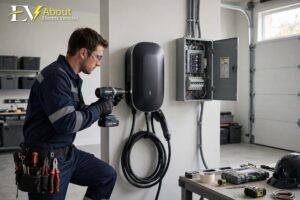
1. ChargePoint Home Flex — Best Home Charger for an Electric Car Overall
If you want one recommendation, this is it. The Home Flex is the best home charger for an electric car for most people because it adapts to almost any home: its output adjusts from 16 to 50 amps, so it works on a modest circuit today and a beefier one after a future panel upgrade. At full power it delivers about 37 miles of range per hour — a full overnight charge for virtually any EV.
The ChargePoint app is the best in this class, with reliable scheduling for off-peak electricity rates, energy and cost tracking, and integration with ChargePoint’s public network in the same account. It is available with either a J1772 or NACS connector, and you can choose a plug-in (NEMA 14-50) or hardwired version. The 23-foot cable is thick, flexible, and handles cold weather well. At $500 to $700 it is not the cheapest here, but its flexibility and software polish justify the premium.
2. Emporia Level 2 — Best Value Smart Charger
The Emporia proves a smart charger does not need a premium price. For around $400 you get full 48-amp charging (about 35 miles of range per hour), Wi-Fi, and an app that tracks energy use in real time. Emporia’s energy-management ecosystem is its secret weapon: paired with the company’s home energy monitor, the charger can automatically use excess solar power and throttle itself to avoid overloading your electrical panel — a feature that can save you a costly panel upgrade.
It comes hardwired or with a NEMA 14-50 plug, with J1772 or NACS connectors, and a generous 24-foot cable. For budget-conscious buyers comparing the best home charger for an electric car, the Emporia delivers 90 percent of the premium experience for roughly half the price.
3. Tesla Universal Wall Connector — Best for Tesla Owners
Tesla’s Universal Wall Connector is the obvious pick for Tesla households: 48 amps, up to 44 miles of range per hour on a Tesla, Wi-Fi, and seamless control inside the Tesla app. The “Universal” part matters — a built-in adapter also charges J1772 cars, so mixed-EV households and future non-Tesla purchases are covered without buying a separate adapter.
Installation is clean, and up to six units can share power on one circuit. At $475 to $600 with a 4-year warranty (longer than most), it is also a strong choice for non-Tesla owners who want the NACS future with J1772 flexibility today.
4. Grizzl-E Classic — Best Budget and Outdoor Charger
Built in Canada and famously tough, the Grizzl-E Classic is the best home charger for an electric car owners who park outside in harsh weather. Its aluminum enclosure shrugs off snow, rain, and sub-zero temperatures, and its thick 24-foot cable stays flexible in deep cold. Output is 40 amps (about 30 miles of range per hour) — plenty for overnight charging.
There is no app and no Wi-Fi: you plug in, it charges. Many owners see that simplicity as the feature, and the price — $350 to $400 — plus a solid warranty make it the rugged value champion. A smart version exists if you later want scheduling and tracking.
5. Wallbox Pulsar Plus — Best Compact Charger for Tight Spaces
The Pulsar Plus packs 48-amp power into one of the smallest wall units you can buy — ideal for crowded garages. Beyond the size, it offers genuinely useful smart features through the my Wallbox app: scheduling, energy stats, voice control, and optional power sharing so two EVs can charge from one circuit. The 25-foot cable is the longest in this roundup, which matters for awkward parking layouts.
At $650 to $700 it sits at the premium end, and you are paying for the design and the software. For apartment-adjacent garages, shared parking, and two-EV homes, it earns its place on any best home charger for an electric car shortlist.
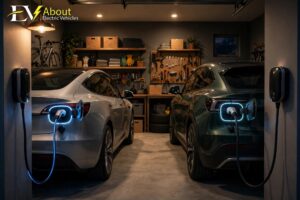
How to Choose the Best Home Charger for an Electric Car
Choosing best home chargers for your electric car:
Amps and speed.
A 40- or 48-amp charger on a 240V circuit adds 25 to 40 miles of range per hour — enough to refill a typical day’s driving in 1 to 2 hours. Electrical code requires the circuit to be rated 25 percent above the charger’s continuous draw: a 48-amp charger needs a 60-amp circuit, a 40-amp charger a 50-amp circuit. More amps only help if your car’s onboard charger can accept them; many EVs cap AC charging at 11.5 kW.
Plug-in vs. hardwired.
Plug-in models use a NEMA 14-50 outlet — easy to install and easy to take with you when you move, but usually limited to 40 amps of charging. Hardwired units support the full 48–50 amps and look cleaner, but must be disconnected by an electrician to move. Both must be installed to code; when in doubt, hire a licensed electrician.
Smart features.
Scheduling to off-peak rates is the one feature that pays for itself — overnight electricity can cost half the daytime price. Energy tracking, charge notifications, and solar integration are nice bonuses. If your utility offers EV rates or rebates, check whether they require a specific smart charger.
Connector: J1772 vs. NACS.
North America is transitioning to Tesla’s NACS connector. Buy the connector your current car uses — adapters exist both ways — or choose a unit like the Tesla Universal that covers both. Outside North America, look for Type 2 models, which all of these brands also make.
Cable length and weather rating.
Measure from the charger location to your car’s port, then add slack: 24–25 feet covers most layouts. For outdoor installation, insist on a proper weatherproof enclosure (NEMA 3R/4 or IP65+) and a cable rated to stay flexible below freezing.
Safety certification.
Only buy chargers that are UL or ETL listed. Uncertified bargain units are a genuine fire risk and can void insurance — this is the one place never to save money.
How Much Does Installation Cost?
Budget $300 to $1,000 on top of the charger for a typical installation by a licensed electrician — less if a suitable 240V outlet already exists near your parking spot, more if the panel is far away or needs an upgrade ($1,500 to $3,000 in older homes). Many utilities and some governments offer rebates of $250 to $1,000 for Level 2 installations, so check before you buy. Total real-world cost for the best home charger for an electric car, installed, usually lands between $800 and $1,500.
FAQs: Best Home Charger for an Electric Car
Q.1What size home charger do I need for my electric car?
For most drivers, a 40- or 48-amp (9.6–11.5 kW) charger is the sweet spot: it refills 25 to 40 miles of range per hour, so even a near-empty battery is full overnight. Drivers with short commutes can happily use a smaller 32-amp unit.
Q.2 Can I install a home EV charger myself?
A plug-in charger on an existing NEMA 14-50 outlet is a genuine DIY job. Anything involving a new circuit, breaker work, or hardwiring should be done by a licensed electrician — permits and code compliance protect your home and your insurance.
Q.3 Will one charger work with any electric car?
Yes, with the right connector. J1772 chargers fit all non-Tesla EVs in North America, NACS is becoming the new standard, and inexpensive adapters bridge the two. Tesla’s Universal Wall Connector handles both natively.
Q.4 Is a smart charger worth the extra money?
Usually, yes. Scheduling charging to off-peak hours can cut your per-mile energy cost dramatically, and energy tracking helps you claim utility rebates. If your electricity price is flat and low, a simple charger like the Grizzl-E is perfectly fine.
Q.5 How long does a home charger take to charge an EV?
A Level 2 charger adds roughly 25 to 40 miles of range per hour, so a typical EV charges from empty to full in 6 to 10 hours — see our full guide to electric car charging time for the maths by model.
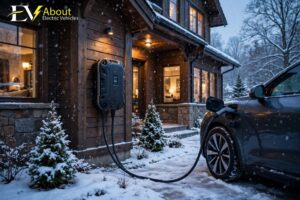
Q.6 Do home chargers work in the rain and snow?
Yes. Quality outdoor-rated chargers are built for all weather and are safe to use in rain and snow. Models like the Grizzl-E are specifically designed for severe cold climates.
Conclusion
The best home charger for an electric car is the one matched to your car, your circuit, and your weather. For most people, that is the Charge Point Home Flex — flexible, powerful, and backed by the best app. Watching the budget? The Emporia delivers nearly the same speed and smarts for around $400. Tesla households should start with the Universal Wall Connector, outdoor parkers with the Grizzl-E, and tight garages with the Wallbox Pulsar Plus. Whichever you choose, insist on safety certification, size your circuit correctly, and let a licensed electrician handle the wiring — then enjoy the real luxury of EV ownership: a full battery, every morning, without ever visiting a fuel station.