
A long range electric scooter is designed for riders who want to travel farther between charges. It can be useful for longer commutes, daily errands, city travel, and riders who do not want to recharge after every short trip. However, a scooter with a large advertised range is not automatically the best choice. Real-world range, battery size, charging time, motor performance, rider weight, tires, comfort, reliability, and safety all matter. This guide explains the important points so you can choose a long-range scooter based on how you ride.
What Is a Long Range Electric Scooter?
A long range electric scooter is an electric scooter built to provide more travel distance from one charge than a typical compact commuter model. Manufacturers usually achieve longer range by using a larger battery, improving energy efficiency, or combining both. Larger batteries can store more energy, but they also add weight and cost.
There is no universal distance that officially makes a scooter “long range.” Different manufacturers and retailers use the term differently. Instead of focusing on the label, compare the battery capacity and realistic riding range.
How Far Can a Long Range Electric Scooter Go?
Manufacturers normally publish a maximum or estimated range. That figure may be measured under controlled conditions and may not match everyday riding.
Your actual distance can change because of:
- Rider weight
- Riding speed
- Hills and slopes
- Wind
- Temperature
- Tire pressure
- Road surface
- Frequent acceleration
- Stop-and-go traffic
For example, a scooter may reach its advertised distance during gentle riding but travel considerably less when used at higher speed on hills. For daily planning, use the manufacturer’s range as a reference and leave a reasonable reserve instead of planning every trip around the maximum number.
Long Range Electric Scooter Battery Size
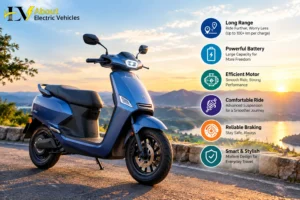
Battery capacity is one of the most important specifications to check. It is commonly measured in watt-hours, or Wh.
You can estimate nominal battery energy with this formula:
Voltage × Amp-hours = Watt-hours
For example, a 48V battery rated at 20Ah has about 960Wh of nominal capacity.
A larger Wh number generally means more stored energy. However, battery size alone does not determine range. Two scooters with similar batteries can consume energy at different rates because of their motors, controllers, weight, tires, aerodynamics, and riding conditions. When comparing models, look at battery capacity together with tested or realistic range whenever that information is available.
Battery Type and Quality
Most modern long-range scooters use lithium-based battery systems because they can store substantial energy without the weight of older battery technologies. Do not choose a battery only because the specification sheet shows a large capacity. Check the manufacturer, warranty, replacement options, charging instructions, and available service. Battery quality is especially important on a long-range scooter because the larger pack represents a major part of the scooter’s value.
Motor Power for Long Trips
A larger battery is helpful only if the scooter can use its energy effectively. Motor performance matters when you ride on hills, carry additional weight, or need stronger acceleration. Motor power is often listed in watts, but wattage should not be the only factor you consider. Controller tuning, scooter weight, wheel size, terrain, and rider weight also affect performance.
For flat city roads, you may not need an extremely powerful motor. If your route includes steep hills, choose a model designed for that terrain and check its stated maximum load. Higher power can also increase energy consumption, especially when used aggressively.
Charging Time Matters
A long-range scooter can reduce charging frequency, but a large battery may take longer to refill. Check the manufacturer’s stated charging time and the charger output before buying. Some models support faster charging options, while others are designed around a slower standard charger.
Think about your routine. If you can charge overnight, charging speed may not be very important. If you need to ride several times during the same day, faster charging can become much more valuable. Never choose a replacement charger simply because its connector fits. Use the charger supplied with the scooter or one specifically approved by the manufacturer.
How to Improve Range
You can often increase practical range through simple riding habits. Keep tires at the pressure recommended by the manufacturer. Avoid unnecessary hard acceleration and very high speeds when maximum distance is the priority. Smooth throttle control can reduce energy waste. Carry only what you need and avoid unnecessary extra weight.
Plan routes with fewer steep climbs when practical. Regular maintenance also matters because mechanical problems or poorly maintained tires can increase resistance. Temperature can affect battery performance, so do not expect identical range in every weather condition.
Long Range Electric Scooter for Commuting
A long-range model can be useful for commuters who travel farther than the typical short urban route. Before buying, measure your normal round-trip distance. Then consider whether you can charge at work, at home, or at another safe location.
You should also think about portability. A large battery can make a scooter heavier. If you need to carry the scooter upstairs or place it on public transport, extra range may come with a practical disadvantage. The best commuter model is the one that balances range with weight, comfort, storage, and charging convenience.
Tires, Suspension, and Comfort
Long rides make comfort more important. Small, hard tires may feel acceptable on short trips but become tiring over longer distances and rough pavement. Larger pneumatic or appropriately designed tires can improve ride comfort, while suspension can help absorb some road impacts.
However, suspension does not make every road safe. You still need to slow down for potholes, bumps, broken pavement, and other hazards. Check the deck size, handlebar position, riding posture, and overall stability. A scooter that looks impressive on paper may become uncomfortable after anhour of riding.
Brakes and Safety
Range should never come before braking and control. Check whether the scooter has a suitable braking system for its weight and speed. During a test ride, braking should feel controlled and predictable. Lights and reflectors are important when riding in low-light conditions. Follow local rules about helmets, road use, speed, and where electric scooters are permitted.
The U.S. Consumer Product Safety Commission advises riders to follow local traffic laws, keep both hands on the handlebars, use one rider per scooter, and inspect important components before riding. It also recommends using the manufacturer’s charging instructions and approved equipment.
Charging a Long Range Electric Scooter Safely
Use the supplied charger or a replacement approved for the exact scooter. Do not use modified battery packs or batteries repaired by unqualified people. CPSC recommends being present while charging, never charging while sleeping, and unplugging the device when charging is complete.
If the battery becomes unusually hot, swollen, damaged, or behaves abnormally, stop using it and follow the manufacturer’s safety instructions.
New vs Used Long Range Electric Scooter
A used scooter can cost less, but battery condition matters. Ask about age, charging history, and repairs. Test the brakes, motor, tires, charger, and battery. If battery condition is uncertain, compare the saving with the risk of an early replacement.
Long Range Electric Scooter: What Should You Pay For?
Spend more on features that improve daily use rather than cosmetic extras. Battery capacity is important, but so are battery quality, brakes, tires, comfort, charging support, service, and replacement parts. A scooter with slightly less advertised range may be a better purchase if it offers stronger reliability and easier maintenance. Do not pay a premium for extreme range if your normal trips are short. A smaller and lighter scooter may be easier to use and transport. My Practical Approach to Choosing a Long Range Scooter I would start by calculating the longest trip I regularly make.
Next, I would check whether the advertised range gives enough margin for real-world conditions. I would compare battery capacity, charger time, weight, motor performance, braking, tire design, and warranty. Then I would check where replacement batteries and important parts can be obtained. If two scooters offered similar range, I would choose the one that was easier to charge, maintain, carry, and service. Long range is valuable, but only when the rest of the scooter works for your routine.
FAQs About Long Range Electric Scooter
Q.1 What is the best long range electric scooter?
There is no single best model for everyone. The right choice depends on required range, terrain, rider weight, budget, comfort, charging access, and portability.
Q.2 How many miles can a long-range scooter travel?
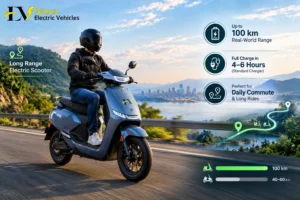
Some high-capacity models claim well over 50 or even 100 miles, but maximum claims can differ greatly from real-world results. Independent 2026 testing shows that actual range can be substantially below manufacturer claims, so tested range is more useful when available.
Q.3 Is a bigger battery always better?
No. A larger battery can increase range but usually adds weight and cost. Choose enough capacity for your actual trips.
Q.4 How long does a long-range scooter take to charge?
Charging time depends on battery capacity and charger output. Larger packs often take longer unless the scooter supports a higher-output charging system.
Q.5 Can I ride a long-range scooter every day?
Yes, if it is designed for your rider weight, route, and local riding conditions. Regular inspections and correct charging are important.
Q.6 Are long-range scooters safe?
They can be used responsibly when riders follow local laws, wear appropriate protective equipment, maintain the scooter, and use approved batteries and chargers. CPSC recommends approved equipment and safe charging practices.
Conclusion
A long range electric scooter can make longer daily travel more convenient, but maximum advertised range should not be your only buying criterion. Compare battery capacity, realistic range, motor performance, charging time, comfort, brakes, tires, weight, weather limits, warranty, and service support. Think about your actual route before paying for extra battery capacity.
The best long-range scooter is not necessarily the one with the biggest battery or highest range claim. It is the model that gives you enough dependable range while remaining comfortable, practical, safe, and affordable for the way you ride.