
Choosing between electric scooter brands can be difficult because many companies sell models with similar-looking specifications. One brand may focus on affordable commuting, another on premium comfort, and another on high-performance riding. The best choice therefore depends on what you need from the scooter rather than the name printed on the deck.
A useful comparison should look beyond speed and advertised range. Battery quality, motor performance, braking, build quality, warranty, spare parts, software, charging equipment, and local service can have a bigger effect on ownership. This guide explains what separates strong electric scooter brands and how to choose one for your budget and riding style.
What Makes Good Electric Scooter Brands?
A strong scooter brand should offer more than attractive specifications. It should provide a product that works consistently and can be supported after purchase. Look at the complete ownership experience. Does the company provide clear specifications? Are replacement parts available? Can you get a suitable charger or battery? Is there a real warranty? Does the company provide instructions and customer support?
Independent testing can also be useful because manufacturer range and speed figures do not always represent everyday riding conditions. Current 2026 brand guides continue to separate mainstream commuter companies from specialist performance manufacturers, showing that different brands serve different riders.
Best Electric Scooter Brands for Different Riders
There is no single brand that wins every category. A commuter may value reliability and portability, while a performance rider may prioritize acceleration and suspension.
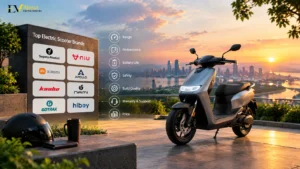
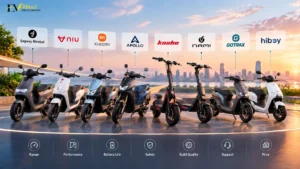
Among currently visible brands, Segway-Ninebot has a broad mainstream range. NIU focuses strongly on urban mobility and connected scooters. Xiaomi is well known for compact commuter-oriented products. Apollo occupies a more premium performance and commuter space, while brands such as Kaabo and NAMI are associated more with powerful performance scooters. Gotrax and Hiboy are commonly positioned toward more affordable options. These descriptions are categories, not guarantees that every model from a brand will suit every rider.
Segway-Ninebot
Segway-Ninebot is one of the most established names in the electric scooter market. Its range covers relatively simple commuter scooters as well as more capable models.
The main advantage is variety. A buyer can find different combinations of portability, range, comfort, and performance within the same broad brand family.
For someone who wants a mainstream scooter with a wide product ecosystem, Segway-Ninebot is worth considering. However, individual models should still be compared carefully because specifications and intended use vary.
NIU
NIU is known for connected electric mobility products and urban-focused scooters. Its scooters often emphasize practical commuting, design, controls, and technology. NIU can be a strong option for riders who want a modern commuter rather than an extreme performance machine. As with any brand, check local availability of replacement parts and service before purchasing. A good brand reputation cannot compensate for poor local support if you need repairs or replacement components.
Xiaomi
Xiaomi has become a recognizable name in personal electric mobility, particularly in compact urban scooters. Its products generally appeal to riders looking for straightforward transportation and a relatively familiar technology ecosystem.
The brand can make sense for city riders who prioritize portability and everyday practicality. Before buying, check that the exact model is officially supported in your market and that replacement tires, chargers, and other parts are available.
Apollo
Apollo focuses more heavily on premium electric scooters and performance-oriented urban riding. Its lineup includes models designed around stronger performance, comfort, and more advanced equipment. The advantage of a premium scooter brands is not simply a bigger motor. Chassis design, braking, suspension, controls, software, and overall refinement can all contribute to the experience.
Apollo models can therefore appeal to riders willing to spend more for additional features, but the individual model should still be judged against competitors at the same price.
Gotrax and Hiboy
Gotrax and Hiboy are commonly considered when buyers want an affordable electric scooter. They offer models aimed at commuters, beginners, and riders who do not need extreme performance.
Budget scooter brands can provide good value when expectations are realistic. The important step is checking the exact model’s battery, brakes, rider limit, tires, warranty, and replacement-part situation. The cheapest scooter is not always the cheapest to own. A lower purchase price can become expensive if parts are difficult to obtain or the battery needs early replacement.
Kaabo and NAMI
Kaabo and NAMI are better known in the performance end of the market. Their scooters can offer substantially more power and hardware than basic commuter models. This type of scooter can make sense for experienced riders who need strong acceleration, hill performance, larger batteries, or more advanced suspension.
However, high performance usually brings greater weight, higher cost, and more demanding handling. These scooters are not automatically better for a person whose main requirement is a short, simple commute.
Electric Scooter Brands and Battery Quality
Battery quality deserves more attention than a brand’s advertised range. Check battery capacity, charging requirements, warranty coverage, replacement availability, and the manufacturer’s information about the battery system. Range claims should be treated as estimates because real distance changes with rider weight, speed, temperature, hills, wind, tire pressure, and riding style.
A reputable manufacturer should clearly explain the battery and charging system instead of giving only a large mileage number. CPSC also recommends using an approved replacement battery and avoiding modified or reworked battery packs.
Motor and Performance
Motor power can tell you something about performance, but wattage alone is not enough to compare brands. Consider rated power, peak output, battery voltage, controller capability, wheel size, rider weight, and terrain. A powerful motor paired with a weak or small battery may not deliver useful sustained performance. For normal city riding, smooth acceleration and dependable braking may be more valuable than an extreme top-speed figure.
Brakes, Tires, and Build Quality
A scooter’s physical construction matters because these components directly affect control and comfort. Look at the brake design, tire type, suspension, deck size, stem stability, lighting, and overall frame construction. Pneumatic tires can improve comfort butrequire pressure checks and may puncture. Solid or self-sealing designs can reduce some maintenance concerns.
The best electric scooter brands should provide clear specifications rather than forcing buyers to guess what components are installed.
Warranty and Spare Parts
Warranty and parts support are easy to ignore before buying and frustrating to discover later. Find out who handles warranty claims in your country. Check whether replacement tires, brake components, chargers, displays, batteries, and other model-specific parts can actually be purchased.
A scooter may be excellent on paper but inconvenient if a small damaged component leaves it unusable for months. Local dealer support can therefore be more valuable than a slightly better specification from an unsupported brand.
Electric Scooter Brands and Safety
Brand reputation should also include safety practices. Look for clear charging instructions and properly documented electrical components. CPSC advises consumers to use micromobility products and batteries that meet applicable safety standards, use the charger supplied or recommended by the manufacturer, remain present while charging, and avoid charging while sleeping or away.
Do not assume that an expensive brand eliminates riding risk. Wear an appropriate helmet, follow local rules, keep both hands on the handlebars, and ride according to the road and traffic conditions.
How to Choose a Scooter Brands for Commuting
For commuting, start with the route. Measure your daily distance and identify hills, rough pavement, weather exposure, stairs, and storage requirements. A lightweight model may be preferable if you carry the scooter regularly. A larger battery and suspension may make more sense for longer routes.
Prioritize reliable brakes, realistic range, comfortable tires, reasonable weight, charging convenience, and available service. A commuter does not necessarily need the fastest scooter.
How to Choose a Budget Brand
If price is your main concern, do not compare purchase price alone. Calculate the complete ownership cost. Include the charger, maintenance, tires, possible battery replacement, accessories, and warranty support. A slightly more expensive scooter from a brand with accessible parts can be a better long-term value than an extremely cheap model with limited support.
How to Compare Premium Scooter Brands
For a premium scooter, expect more than additional motor power. Look for stronger chassis construction, better suspension, dependable brakes, quality displays and controls, improved battery systems, useful software, and strong service support. Premium pricing should provide a noticeable improvement in the areas that matter to your riding. If the extra money only buys a larger speed number, it may not be worthwhile for everyday transportation.
Common Mistakes When Choosing a Brand
One mistake is choosing a scooter brands because it is popular without checking the exact model. Another is believing the highest range claim. Test conditions differ, and real riding rarely matches ideal laboratory-style conditions. Some buyers also ignore weight. A powerful scooter can become inconvenient if you need to carry it regularly. Finally, do not ignore after-sales support. A scooter is a mechanical and electrical product, so access to parts and service matters throughout ownership.
FAQs About Electric Scooter Brands
Q.1 Which electric scooter brands are best?
The answer depends on your needs. Segway-Ninebot, NIU, Xiaomi, Apollo, Gotrax, Hiboy, Kaabo, and NAMI are examples of brands with different strengths and market positions.
Q.2 What is the most reliable electric scooter brand?
There is no universal reliability winner for every model and market. Look at independent testing, warranty support, parts availability, owner feedback, and the reliability history of the specific model.
Q.3 Which brand is best for commuting?
A commuter-focused scooter brand or model should offer dependable range, manageable weight, good brakes, comfortable tires, and convenient charging. Segway-Ninebot, NIU, and Xiaomi are examples worth researching in this category.
Q.4 Are expensive electric scooter brands better?
Not automatically. Higher-priced models can offer stronger hardware and better comfort, but the extra features may be unnecessary for a simple commute.
Q.5 Should I choose a brand or a specific model first?
Start with your requirements, then shortlist brands and compare specific models. The model matters more than the logo because two scooters from one company can have very different designs and capabilities.
Q.6 What should I check before buying from a new brand?
Check the company’s warranty, parts availability, charger information, battery support, customer service, safety documentation, and independent reviews. Make sure the company can support the scooter after the sale.
Conclusion
Choosing among electric scooter brands is easier when you stop looking for one universal winner. Different companies specialize in different types of riding, from lightweight commuting to premium urban travel and high-performance scooters. The right choice should combine suitable range, motor performance, braking, comfort, battery quality, portability, warranty, and parts support. Price matters, but long-term ownership matters too.
Before buying, compare the exact model rather than judging an entire brand by its reputation. A scooter from a suitable, well-supported brand can provide much better value than a more powerful model that does not fit your route or is difficult to service. For a high-competition keyword such as “electric scooter brands,” useful comparison and clear buying guidance are more valuable than simply publishing a long list of company names.