
An electric scooter charger is responsible for putting usable energy back into the battery. Although the charger may look like a simple power adapter, it has to work with the scooter’s battery, charging circuit, connector, and electrical limits. Using the wrong unit can cause charging failure, battery damage, or a serious safety problem.
If you need a replacement, do not choose one only because the plug looks right. The scooter model, battery system, charger output, current rating, connector, polarity, and manufacturer requirements all matter. This guide explains what to check before buying or using an electric scooter charger and how to charge your scooter safely.
What Does an Electric Scooter Charger Do?
The scooter charger takes electricity from a household outlet and converts it into controlled electrical power for the scooter battery. Its output is designed to bring the battery toward its required full-charge level without simply sending uncontrolled power into the pack.
The battery and its battery management system also play an important role. The BMS can monitor conditions such as voltage and temperature and help protect the cells. The charger, battery, and scooter electronics therefore work as one charging system. This is why a charger should never be treated as a universal accessory. A connector that physically fits the scooter does not prove that the electrical specifications are correct.
Understanding Battery Voltage
One of the easiest mistakes is confusing battery voltage with charger output voltage. A battery may be marketed by its nominal voltage, while the charger is labeled with the higher voltage used to reach the battery’s full charge.
For example, selected lithium-ion systems commonly use approximately 42V charging output for a 36V nominal battery and about 54.6V for a 48V nominal battery. Other systems use different values. These examples are not a replacement for the specification of your particular scooter.
The important lesson is simple: do not buy a charger by matching only the number printed as the battery’s nominal voltage. Find the required charger output in the original charger label, owner’s manual, or manufacturer documentation. Current charger guides also show that nominal battery voltage and actual charging output can be different.
What Does Amperage Mean?
Amperage tells you how much current the charger can provide. In general, a higher current rating can reduce charging time when the scooter and battery are designed to accept that current.
That does not mean a higher-amp charger is automatically better. The battery, BMS, wiring, connector, and charging circuit have their own limits. A charger with an unsuitable current rating can create problems even if its voltage appears correct. For a replacement, start with the original charger’s output current. If you want a faster charger, use only an option that the scooter manufacturer specifically supports.
How to Find the Correct Charger
If you still have your original charger, the label is usually the best starting point. Look for the output voltage, output current, model information, and connector details. If the charger is missing, check the scooter manual and official product information. Write down the exact scooter model rather than relying on a brand name alone.
Before ordering, confirm:
- scooter model
- battery nominal voltage
- required charger output voltage
- permitted charging current
- connector type
- connector polarity and pin arrangement
- manufacturer approval or compatibility
Replacement-of scooter charger suppliers also emphasize that connector size and appearance alone are not enough. Pinout, polarity, and electrical specifications must be checked together.
Why the Plug Is Not Enough
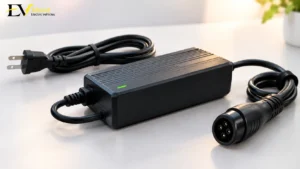
Two chargers can use similar-looking connectors and still be electrically different. The plug may have a different diameter, pin arrangement, or polarity. Even when it slides into the port, that does not establish safe compatibility.
Never force a connector into the charging port. Avoid adapters that are being used simply to make an incompatible charger physically connect. If you are uncertain about the connector, compare the old charger and the scooter port or ask the manufacturer for confirmation. This small check can prevent an expensive mistake.
Can You Use a Different Brand Charger?
Brand matching is helpful, but the brand name by itself is not the main test. A replacement from another manufacturer may work when its complete specifications are approved for the scooter.
The reverse is also true: a charger from the same brand is not automatically correct for every model. Different scooters can use different battery voltages, connector systems, and charging currents. Choose based on confirmed specifications, not just appearance or brand.
Should You Buy a Fast Charger?
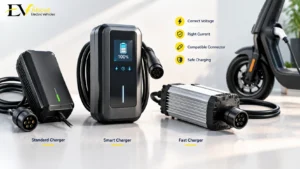
A fast scooter charger can be useful if your scooter supports it, especially when you need shorter charging stops. However, charging speed should not be increased by guessing.
Higher current can mean more heat and greater demand on the battery and charging system. The scooter manufacturer should specify whether faster charging is supported and what limits apply. For most owners, the safest choice is the standard charger supplied with the scooter. If an official fast charger is available, follow its instructions instead of using an unrelated high-current model.
How Long Does Charging Take?
There is no single charging time for every scooter. The answer depends on battery capacity, charger output, starting charge level, battery condition, temperature, and the scooter’s charging controls.
A useful way to think about it is that a larger battery generally needs more energy than a smaller one, while a charger with greater supported output can replenish energy faster. Charging also commonly slows as the battery approaches full. Use the manufacturer’s stated charging time as the main reference. If your scooter suddenly takes much longer than normal, investigate the charger, port, battery, and charging system instead of automatically buying a stronger charger.
Safe Charging Practices
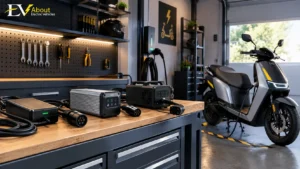
Charging deserves the same attention as riding. The U.S. Consumer Product Safety Commission recommends following the manufacturer’s instructions, using the supplied or approved charger, staying present while charging, and not charging micromobility products while sleeping or away. Place the scooter and charger in the location recommended by the manufacturer. Keep the charging area clear andavoid damaged cables, wet connectors, or overloaded electrical setups.
Do not charge a battery that is swollen, severely damaged, leaking, smoking, or showing other unusual signs. Stop using the equipment and seek qualified assistance when a battery or charger appears unsafe. CPSC has also warned about universal chargers for micromobility products after reporting fire and thermal incidents associated with incompatible chargers.
Can You Leave the Charger Connected?
Do not assume that leaving the charger connected for long periods is harmless. Follow the charging and disconnect instructions supplied with your scooter. CPSC recommends unplugging micromobility products when charging is complete and advises against charging while the owner is asleep or away. If the manufacturer provides a specific charging routine, use that routine rather than copying advice from another scooter owner. Battery systems differ.
Common Charger Problems
A charger that stops working does not always mean the charger itself is defective. The problem could be the wall outlet, cable, charging port, battery, fuse, connector, or another part of the scooter.
Useful warning signs include:
- charging does not begin
- indicator behavior is unusual
- charging repeatedly stops
- the charger becomes excessively hot
- the cable has cuts or exposed wires
- the connector is loose or damaged
- there is a burning smell, smoke, or visible damage
If a scooter charger becomes abnormally hot or shows physical damage, stop using it. Do not open the charger or attempt an electrical repair unless you are qualified to do so.
Electric Scooter Charger Maintenance
Keep your scooter charger dry and protect the cable from sharp bends, crushing, and repeated pulling. Store it where the connector will not be damaged. Keep the charging port clean and dry according to the scooter manufacturer’s instructions. Before connecting the charger, check for dirt, moisture, bent contacts, or obvious damage. A few seconds of inspection can help identify a problem before charging begins.
Buying a Replacement Charger
Price should not be the first filter when shopping for a replacement. Start with compatibility. Avoid listings that say only “fits electric scooters” without providing clear electrical specifications. A trustworthy listing should identify the output voltage, current, connector information, and compatible models or battery systems.
If your scooter has been modified, has a replacement battery, or no longer uses its original electrical components, be especially careful. The charger required by the current battery system may differ from what the scooter originally used. When information conflicts, stop and verify the system with the manufacturer or a qualified technician.
FAQs About Electric Scooter Charger
Q.1 What charger does my electric scooter need?
You need a charger approved for your scooter’s battery system. Check the original charger label or manufacturer documentation for output voltage, current, connector, and compatibility.
Q.2 Can I use a charger with the same plug?
Not necessarily. The connector may fit while voltage, current, polarity, or pin arrangement is wrong. Physical fit is not proof of electrical compatibility.
Q.3 Is a higher-amp charger faster?
It can be, but only when the battery and scooter are designed to accept that current. Do not increase charging current without manufacturer approval.
Q.5 Why does a 48V battery sometimes use a charger with a higher number?
Nominal battery voltage and full-charge voltage are different measurements. Some 48V lithium-ion systems use approximately 54.6V charging output. Always verify the exact specification for your battery.
Q.6 Can the wrong charger damage my battery?
Yes. An unsuitable charger can prevent proper charging, damage electrical components, or create a safety hazard. Use the approved charging equipment for your scooter.
Q.7 What should I do if my scooter charger gets very hot?
Stop using it if the heat is excessive or accompanied by a smell, discoloration, damage, or abnormal charging. Have the charger and scooter checked by a qualified professional.
Conclusion
Choosing an electric scooter charger is mainly a compatibility job. Start with the exact scooter and battery system, then confirm the charger’s output voltage, current, connector, polarity, and manufacturer approval. Do not use a charger simply because its plug fits.
For everyday charging, the original or officially approved scooter charger is usually the simplest option. Follow the manufacturer’s charging instructions, stay present while charging, and stop using equipment that shows serious damage or unusual behavior. A correct charger helps the scooter charge as intended and reduces avoidable electrical and battery risks. Taking a few minutes to verify the specifications before plugging in a replacement is far better than guessing every time.