
An electric scooter battery decides how much energy your scooter can carry and how often you need to recharge it. It also influences riding range, weight, charging time, performance, and ownership cost. Understanding the battery before buying a scooter can help you choose a model that fits your daily travel instead of paying for capacity you do not need. This guide covers battery size, voltage, watt-hours, range, charging, battery aging, safety, replacement, storage, and practical buying checks.
What Does an Electric Scooter Battery Do?
The battery is the scooter’s energy source. It stores electrical energy and supplies that energy to the controller and motor when you ride. The display, lights, and other electrical components may also draw power from the same system.
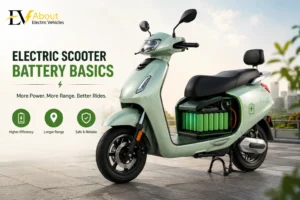
Most current electric scooters use rechargeable lithium-based battery packs because they can store substantial energy for their size and weight. A pack is made from multiple cells and includes electrical controls that help the system operate within its designed limits.
Electric Scooter Battery Voltage and Capacity
Two numbers appear frequently in scooter specifications: voltage and amp-hours. Voltage describes the electrical potential of the battery system. Amp-hours, or Ah, describe how much electrical charge the battery can store at its rated voltage. For comparing overall stored energy, watt-hours are usually more useful.
Watt-hours = volts × amp-hours
A 36V battery rated at 10Ah has a nominal capacity of about 360Wh.
This number does not tell you exactly how many miles the scooter will travel. It tells you how much energy the battery is rated to store. Actual distance depends on how efficiently the scooter uses that energy.
How Much Battery Capacity Do You Need?
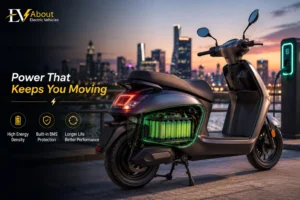
There is no ideal battery size for every rider. Start with your normal daily distance. If you travel only a few miles and can recharge at home, a modest battery may be enough. If you have a longer commute, frequent hills, or limited access to charging, additional capacity can be more useful.
Choose enough capacity for your regular route plus a sensible reserve rather than selecting a battery by size alone.
Electric Scooter Battery and Real-World Range
Advertised range should be treated as a reference. Real riding conditions can produce a different result. Speed, rider weight, hills, acceleration, road surface, tire pressure, temperature, wind, and stop-and-go traffic all affect energy consumption. If your scooter normally travels a certain distance in mild conditions, do not assume the same result in every season.
Lithium-Ion Battery Technology
Lithium-ion batteries are widely used in electric scooters because they provide high energy storage relative to their size and weight. However, “lithium-ion” is a broad category rather than one identical battery type. Different cell chemistries can have different balances of energy density, durability, cost, and power delivery. The exact chemistry is less important to many buyers than the quality of the complete battery system.
When comparing scooters, check the manufacturer’s battery information, warranty, replacement policy, and service support. A reputable battery with clear documentation is more valuable than a specification sheet that only advertises a large capacity.
Battery Management System Explained
A battery management system, or BMS, is part of many rechargeable battery packs. It monitors important electrical conditions and helps keep the cells operating within their intended limits. The BMS works as part of the larger electrical design. It does not make an unsafe battery automatically safe, and it should never be bypassed or altered.
How Long Does an Electric Scooter Battery Last?
Battery life varies between models and users. Rechargeable batteries gradually lose usable capacity through normal aging and repeated use. The rate of capacity loss depends on factors such as cell chemistry, temperature, charging behavior, storage, usage, and the battery’s design. Before buying, read the manufacturer’s warranty. The warranty can tell you more about the company’s expected support than a generic battery-life claim.
Best Way to Charge an Electric Scooter Battery
A charger can have a connector that physically fits while still being electrically unsuitable. CPSC warns consumers not to use generic “universal” chargers unless they have been tested and approved for the specific device. Follow the charging instructions supplied by the manufacturer. Charge in an appropriate location and keep damaged chargers or cables out of use.
CPSC also recommends being present while charging, never charging while sleeping, and unplugging the device when the charging cycle is complete. Do not connect a charger from another scooter simply because its voltage or plug appears similar.
Should You Always Charge the Battery to 100%?
There is no universal percentage that should be used for every scooter. Follow the instructions for your specific battery and charger. Some manufacturers provide recommendations for everyday charging and storage. Those instructions take priority because the correct practice depends on the battery design and control system.
If the scooter will not be used for a long period, check its storage guidance instead of leaving it continuously connected to the charger.
How to Get More Range From the Battery
You can often improve efficiency without changing the battery. Maintain the optimum tire pressure. Avoid unnecessary hard acceleration and extremely high speeds. Reduce extra weight when practical and use smoother throttle control. Plan routes that avoid unnecessary steep climbs when possible. Keep the scooter maintained so mechanical problems do not create extra resistance.
Electric Scooter Battery Safety
Lithium-ion batteries require careful handling because damaged or improperly managed cells can overheat and, in severe cases, enter thermal runaway. CPSC recommends using micromobility products and batteries designed and certified to applicable safety standards.
Do not use a battery that shows serious physical damage or other abnormal behavior. Follow the manufacturer’s safety instructions and seek appropriate help if there is an immediate fire hazard. Never attempt an internal repair unless you have the proper training and equipment.
Electric Scooter Battery Storage
Storage conditions matter. Follow the manufacturer’s instructions for temperature, charge level, and storage duration. Keep the scooter away from obvious heat sources, moisture, and locations where the battery can be physically damaged.
When Should You Replace the Battery?
A replacement may be needed when the battery has lost too much usable capacity, develops a serious fault, or has physical damage that makes continued use unsafe. Do not replace a battery solely because the scooter has reached a certain age. Actual condition is more useful than age alone.
Before purchasing a replacement, confirm the exact scooter model and battery requirements. Voltage, capacity, connectors, dimensions, communication systems, and mounting arrangements can differ. CPSC recommends using only replacement battery packs tested and approved for the device and confirmed as suitable by the manufacturer.
Electric Scooter Battery Replacement Cost
There is no standard replacement price. Cost depends on battery capacity, voltage, chemistry, construction, brand, availability, and labor. Large long-range packs normally cost more than smaller commuter batteries. Some scooters also require professional installation. This is why replacement cost should be part of the buying decision. A scooter with a low purchase price may become expensive if its replacement battery is difficult to find or unusually costly.
What to Check Before Buying
Do not stop at the advertised range. Check the complete battery specification.
Look for:
- Voltage
- Amp-hours
- Watt-hours
- Claimed range
- Charger type
- Battery warranty
- Replacement availability
- Manufacturer support
- Safety certification information
- Storage and charging instructions
- My Practical Approach to Choosing a Battery
I would begin with the distance I actually travel. If my daily route were short and home charging were available, I would prioritize a reliable battery and good support over a very large capacity. For longer commuting, I would compare watt-hours, realistic range, charging time, warranty, and replacement availability. I would also check whether the manufacturer sells approved replacement packs.
If two scooters offered similar range, I would choose the one with clearer battery documentation and stronger service support. Those details can matter more after several years of ownership than a small difference in advertised range.
FAQs About Electric Scooter Battery
Q.1 How long does an electric scooter battery last?
There is no single lifespan for every model. Aging depends on chemistry, use, temperature, charging, storage, and battery design. The manufacturer’s warranty and specifications are the best starting point for a particular scooter.
Q.2 Can I replace an electric scooter battery?
Yes, many scooters have replaceable battery packs, but compatibility is essential. Use a replacement approved for the exact scooter and electrical system.
Q.3 Is a higher-capacity battery always better?
No. More capacity can mean greater range, but it can also add cost and weight. Choose the capacity that fits your daily travel.
Q.4 Why does my scooter lose range in cold weather?
Low temperatures can affect lithium-ion battery performance and temporarily reduce available energy or power. Conditions may improve when the battery returns to a suitable operating temperature.
Q.5 Can I use a different charger?
Only if the manufacturer confirms that it is compatible and approved for your scooter. A charger that fits physically may still be unsafe or electrically incompatible.
Q.6 Can I throw an old battery in the trash?
No. CPSC advises against putting lithium batteries in household trash or general recycling. Use an appropriate battery recycler or hazardous-waste collection service available in your area.
Conclusion
The electric scooter battery affects much more than riding range. Its capacity influences how far you can travel, while its design, condition, charging system, and support network affect reliability and ownership cost. When choosing a scooter, compare watt-hours, realistic range, charging requirements, warranty, replacement availability, and safety information. Do not choose solely because one model has the biggest battery.
Use the correct charger, avoid unauthorized battery modifications, store the scooter as recommended, and pay attention to unusual battery behavior. A properly matched and maintained battery can make an electric scooter more practical for everyday transportation while reducing avoidable cost and safety risks.