
Charging time is one of the first things riders should consider before buying a motorcycle-style electric bike. Unlike a petrol motorcycle, an electric motorcycle needs time to replenish its battery, so understanding the charging process can help you plan commuting, daily errands, and longer journeys more effectively.
So, how long does it take to charge an electric bike? There is no single answer for every model. A typical electric motorcycle may need several hours for a complete recharge, while some models can add a significant amount of range in a much shorter period when connected to a compatible high-output charging system. The final charging time depends on several factors, including battery capacity, charger power, remaining battery percentage, temperature, battery condition, and the motorcycle’s onboard charging hardware.
How Long Does It Take to Charge an Electric Bike?
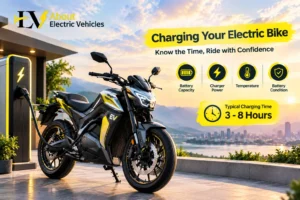
For many motorcycle-style electric bikes, a complete recharge can take roughly 3 to 8 hours, although the manufacturer’s specification should always be treated as the primary reference. A motorcycle with a relatively small battery and suitable charger may finish charging sooner. On the other hand, a high-capacity battery designed to provide greater riding range can require considerably more time.
It is also important to understand that charging is not always a perfectly consistent process. The battery may accept power more quickly during part of the session and reduce the charging rate as it approaches its upper charge level. Because of this, the time needed to go from a low battery percentage to a useful riding level may be significantly different from the time required to reach 100%.
What Determines Electric Motorcycle Charging Time?
The time required to charge an electric bike depends on how much energy the battery needs and how quickly the motorcycle can safely receive that energy.
Several components work together during charging, so looking at battery size alone does not give you the complete picture.
1. Battery Capacity
Battery capacity is usually listed in kWh (kilowatt-hours) on larger electric motorcycles. It represents the amount of energy the battery can store.
For example, a motorcycle equipped with a larger battery pack may offer greater potential range, but it also has more energy to replenish after a long ride. A smaller battery can generally be recharged with less energy, which may result in a shorter charging session when the charging equipment is comparable. Therefore, when you charge an electric bike, the battery’s capacity is one of the most important specifications to consider.
2. Charging Power
The charger determines how quickly electricity can be delivered to the battery within the limits of the motorcycle’s charging system. A higher-output charger can reduce charging time if the electric motorcycle is specifically designed to accept that level of power. However, installing or using a more powerful charger does not automatically make every motorcycle charge faster. The charger, battery pack, connectors, and onboard electronics must all support the charging rate. For this reason, always check the manufacturer’s recommended charging equipment before attempting to charge an electric bike.
3. Remaining Battery Percentage
A motorcycle battery that still has considerable energy remaining will normally require less charging time than one that has been heavily depleted. For everyday riding, you may not need to recharge from almost empty to completely full. If your next journey is relatively short, a partial recharge may provide all the range you need. This makes charging easier to fit into a normal daily routine.
4. Battery Temperature
Temperature can influence how an electric motorcycle battery accepts power. Extremely high or low temperatures can cause the battery management system to reduce charging power or temporarily prevent charging. This is a protective measure designed to keep the battery operating within an appropriate temperature range. Charging in a cool, dry, and manufacturer-approved environment is generally preferable.
5. Battery Age
A battery’s condition can change over time. Lithium-ion battery packs gradually lose some capacity as they age and accumulate charging cycles. If an older battery takes noticeably longer to recharge than it previously did, the cause may not be the charger alone. Battery condition, temperature, connections, and the charging system should all be considered. Persistent charging problems should be examined by the manufacturer or a qualified technician.
Does Charging From Empty Always Take the Longest?
Generally, yes, because a heavily depleted battery has more energy to recover. However, riders should not assume that they need to regularly run the battery almost completely empty. For normal daily use, charging based on your expected travel requirements is often more practical.
For example, someone who travels a short distance each day may only need a partial recharge. Another rider who regularly travels long distances may need a much longer charging session. The best routine depends on the motorcycle, battery system, and manufacturer’s recommendations.
How Quickly Can an Electric Bike Reach 50%?
A half-charge can be considerably quicker than a complete recharge, depending on the motorcycle and charger. Suppose an electric motorcycle has enough remaining range for your next trip but not enough for your entire day’s travel. A shorter charging session may restore useful range without waiting until the battery reaches 100%.
This is particularly useful for commuters who can plug the motorcycle in while working or taking a break. Remember that charging rates can change during a session, so you should use the manufacturer’s charging information rather than assuming that 50% of the charging time always equals 50% of the battery capacity.
Do Larger Batteries Need More Charging Time?
In many situations, yes. A larger battery stores more energy, meaning more electricity has to be transferred before the pack reaches its target charge level. However, battery capacity should never be considered by itself. A large battery may be paired with a higher-power charging system, while a smaller battery may use a relatively low-power charger. As a result, the two motorcycles may have surprisingly similar charging times.
If charging speed is important to you, compare these specifications together:
- Battery capacity
- Maximum supported charging power
- Charger output
- Estimated 0–100% charging time
- Charging system type
- Manufacturer’s recommended equipment
This gives you a much clearer idea of what it will actually be like to charge an electric bike.
Can Fast Charging Make an Electric Motorcycle Quicker to Recharge?
Fast charging can significantly reduce waiting time on compatible electric motorcycles. Instead of relying only on a basic charging setup, some models are engineered to accept substantially higher charging power. This can be useful for riders who travel frequently or need to restore range during a relatively short stop. However, fast charging should only be used when the motorcycle is designed for it.
The battery management system and thermal controls are important because higher charging power can increase heat generation. Using unofficial equipment or attempting to bypass the motorcycle’s charging limits is not a safe way to shorten charging time.
Does Fast Charging Hurt the Battery?
Fast charging is not automatically damaging when it is supported by the motorcycle’s original design. Manufacturers develop the battery, charging system, thermal management, and battery management software to work together. Problems are more likely when riders use incompatible equipment, damaged cables, or charging systems that are not approved for the vehicle.
If you want to charge an electric bike using a faster system, first confirm that the motorcycle supports that charging method. Following the manufacturer’s charging recommendations is more important than trying to achieve the shortest possible charging time.
Can You Charge an Electric Bike Overnight?
Overnight charging depends on the specific electric motorcycle and the instructions provided by its manufacturer. If the manufacturer permits overnight charging, use the correct charging equipment and keep the motorcycle or removable battery in the recommended environment.
The charging area should be dry, clean, and away from unnecessary heat sources. Cables and connectors should also be kept in good condition. If the owner’s manual does not clearly address overnight charging, check with the manufacturer rather than making assumptions.
Best Conditions for Charging an Electric Motorcycle
Where and when you charge an electric bike can affect both charging performance and battery care.
Avoid charging in extremely hot environments or immediately after exposing the battery to unusual temperatures. If the battery has become very hot or cold, follow the manufacturer’s instructions regarding when it can safely be connected to the charger.
A suitable charging location should:
- Be dry and clean
- Have appropriate electrical power
- Provide adequate ventilation where required
- Keep the charger away from water
- Keep cables and connectors undamaged
- Follow the temperature limits specified by the manufacturer
Never ignore unusual battery behavior during charging.
How to Charge an Electric Bike Safely
Safe charging is more important than simply achieving a fast charging time. Before you charge an electric bike, inspect the charging equipment and make sure the connectors are clean and dry. Use only equipment approved for your motorcycle. During charging, pay attention to unusual heat, burning smells, visible damage, smoke, swelling, or other abnormal behavior.
If something appears wrong, stop charging and follow the manufacturer’s safety procedure. High-voltage motorcycle batteries should not be opened or repaired at home unless the person performing the work has the appropriate training and equipment.
Why Is My Electric Bike Charging Slowly?
A motorcycle that suddenly begins charging much more slowly than normal may have an issue that needs attention.
Possible causes include:
- A damaged or unsuitable charger
- A problem with the charging cable
- Dirty or damaged connectors
- Very high or low battery temperature
- Battery aging
- Charging-system limitations
- Battery management system intervention
Start with the manufacturer’s troubleshooting instructions. If the charging speed remains abnormal after basic checks, professional inspection is safer than attempting to repair the battery yourself.
Do You Need to Charge an Electric Bike After Every Ride?
Not necessarily. Your charging routine should depend on your riding distance and the amount of range remaining. If you completed a short trip and still have plenty of usable range, an immediate full recharge may not be necessary.
For daily commuting, however, charging after returning home can make the motorcycle ready for the next morning.You also generally do not need to intentionally drain a modern lithium-ion battery completely before connecting it to the charger. Follow the specific battery-management recommendations provided with your motorcycle.
How Can You Reduce Charging Waiting Time?
If you regularly need to charge an electric bike quickly, look at charging specifications before buying the motorcycle. A model with a suitable battery-to-charger combination may provide a better charging experience than simply choosing the motorcycle with the largest battery.
You can also reduce unnecessary waiting by planning charging around your daily schedule. For example, connecting the motorcycle after returning from work can allow it to recharge while you are doing other activities. A partial recharge may also be sufficient when you only need enough energy for a short journey.
How Long Does an Electric Motorcycle Battery Last?
Charging time should not be confused with battery lifespan.An electric motorcycle battery normally loses some capacity gradually rather than suddenly becoming unusable after a particular number of charging sessions.
Its useful life can be influenced by factors such as:
- Battery chemistry and construction
- Temperature exposure
- Charging behavior
- Storage conditions
- Riding and energy demands
- Battery management system
- Overall battery quality
Following the manufacturer’s storage and charging recommendations can help maintain useful battery performance over time.
FAQs
Q.1How Long Does It Take to Charge an Electric Bike Fully?
Many motorcycle-style electric bikes require several hours for a full recharge, with roughly 3 to 8 hours being a common range. Actual charging time depends on the model, battery, charger, temperature, and starting charge level.
Q.2 Can an Electric Bike Charge in Two Hours?
Some electric motorcycles can recover a useful amount of battery energy within two hours, particularly when using a compatible higher-output charging system. A complete recharge may still require additional time.
Q.3 Is It Better to Charge an Electric Bike to 100%?
Not every ride requires a 100% charge. Your ideal charging routine depends on your travel requirements and the manufacturer’s recommendations for the battery.
Q.4 Can I Leave My Electric Motorcycle Charging Overnight?
Only if the manufacturer permits this practice. Always follow the motorcycle’s official charging and safety instructions.
Q.5 Does a Bigger Battery Take Longer to Charge?
It often does when charging power is similar because a larger battery contains more energy. A higher-power compatible charger can reduce the difference.
Q.6 What Should I Do If My Electric Bike Charges Slowly?
Check the charger, cable, connectors, battery temperature, and manufacturer’s troubleshooting instructions. If the problem continues, have the motorcycle inspected by an authorized service provider or qualified technician.
Q.7 Should I Wait Until the Battery Is Empty Before Charging?
No. You generally do not need to deliberately run a modern lithium-ion battery down to zero before recharging it.
Conclusion
So, how long does it take to charge an electric bike? For motorcycle-style electric bikes, charging commonly takes several hours, but there is no universal charging time that applies to every model.
Battery capacity, charger output, starting charge level, temperature, battery condition, and onboard charging technology all influence the result. A motorcycle with a larger battery may need more energy, while a compatible high-power charging system can shorten the time needed to restore that energy.
The practical approach is to choose a motorcycle whose charging characteristics match your normal riding routine. Use the manufacturer’s approved equipment, maintain suitable charging conditions, and avoid experimenting with incompatible chargers simply to charge an electric bike faster.
Once you understand your motorcycle’s battery and charging system, it becomes much easier to plan everyday rides, commuting, and longer journeys without unnecessary charging delays.