
An electric bicycle battery stores the electrical energy that powers the motor. It is one of the most important parts of an e-bike because it affects range, weight, charging time, performance, and ownership cost. A good battery should match the motor and controller, fit the bicycle correctly, and come with suitable charging equipment.
Buying an electric bicycle battery is not simply about choosing the biggest capacity. Voltage, amp-hours, watt-hours, battery chemistry, mounting style, charger compatibility, and safety features all matter. This guide explains how batteries work, how to calculate capacity, what affects range, how to charge safely, and what to check before replacing or buying one.
What Is an Electric Bicycle Battery?
An electric bicycle battery is a rechargeable energy pack that supplies electricity to the bicycle’s electrical system. Most modern e-bikes use lithium-ion battery technology because it can store a useful amount of energy without becoming extremely heavy.
The battery works with the motor, controller, display, sensors, and charger. When you pedal and request assistance, energy moves from the battery through the controller to the motor. When charging, the charger supplies energy back into the battery under controlled conditions. A battery is therefore part of a complete electrical system, not an isolated accessory.
How Does an Electric Bicycle Battery Work?
Inside a battery pack are multiple cells connected in a specific arrangement. The pack also normally includes a battery management system, often called a BMS. The BMS helps monitor conditions such as cell voltage and temperature and can provide protective functions when operating limits are exceeded. The exact features depend on the battery design.
The battery’s voltage and capacity must be compatible with the bicycle. A battery that physically fits may still be electrically unsuitable.
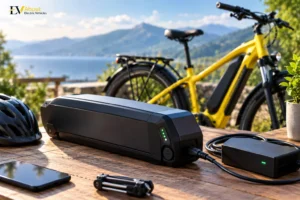
Voltage, Amp-Hours and Watt-Hours
Three numbers are especially useful when comparing batteries: voltage, amp-hours, and watt-hours. Voltage describes the electrical potential of the system. Amp-hours describe the amount of charge the battery can provide under specified conditions. Watt-hours provide a more useful estimate of stored energy.
A simple calculation is:
Voltage × amp-hours = watt-hours.
For example, a 48V 10Ah battery has approximately 480Wh of nominal energy.
This does not mean the bicycle will always use exactly 480Wh on a ride. Real energy use changes with speed, rider weight, hills, wind, tire pressure, temperature, assist level, and battery condition.
Common Electric Bicycle Battery Voltages
E-bike batteries commonly come in system voltages such as 36V, 48V, and higher-voltage configurations. The correct voltage is determined by the bicycle’s motor, controller, display, and electrical design. Do not upgrade from one voltage to another just because a larger number appears more powerful. A higher-voltage battery can be incompatible with the existing system and may damage components or create a safety problem. Always follow the bicycle or battery manufacturer’s specifications when replacing a pack.
Battery Capacity and Riding Range
Battery capacity has a major effect on potential range, but capacity alone cannot predict distance. A larger watt-hour rating generally provides more stored energy. However, a heavy rider traveling quickly uphill may use energy much faster than a lighter rider traveling slowly on level roads.
Assist level also matters. High assistance usually consumes more energy than low assistance. Frequent stops, strong wind, soft tires, and cold conditions can further change consumption. Instead of trusting one advertised maximum, compare battery capacity with your normal route and leave a practical reserve.
How to Choose the Right Battery Size
Start with your daily riding distance. If your trips are short and charging is easy, a smaller battery may be enough and can keep the bicycle lighter. Long commuters, cargo-bike riders, and people who regularly climb hills may benefit from greater capacity. The extra energy can reduce the need to recharge during the day.
Do not select capacity without considering mounting space and weight. A larger pack may not fit the bicycle’s battery mount or may change handling if it adds significant weight.
Lithium-Ion vs Other Battery Types
Lithium-ion batteries are widely used in modern e-bikes because they offer high energy density compared with older battery technologies. Different lithium-ion chemistries can have different characteristics, including energy density, durability, cost, and thermal behavior. Consumers usually should focus on the complete battery specification, manufacturer quality, certification, warranty, and compatibility rather than trying to choose chemistry from a single label.
Lead-acid batteries can still appear in some low-cost electric bicycles, but they are much heavier for a given amount of usable energy. The right choice depends on the bicycle and intended use.
How Long Does an Electric Bicycle Battery Last?
Battery lifespan depends on cell quality, charging behavior, temperature, storage conditions, depth of discharge, usage, and age. A battery gradually loses capacity over time. This means a pack that once provided a certain range may eventually provide less distance between charges.
Avoid treating battery replacement as an emergency expense. Before buying an e-bike, ask how much a compatible replacement costs, where it can be obtained, and whether the manufacturer provides service after the original warranty ends.
Charging an Electric Bicycle Battery
Use the charger supplied with the bicycle or one specifically approved for that exact battery system. CPSC warns consumers not to use so-called universal chargers unless they have been tested and approved as safe for the particular device. Before charging, inspect the battery, charger, and cable for visible damage. Follow the manufacturer’s charging instructions and use an appropriate electrical outlet.
CPSC also recommends being present while charging micromobility products, rather than charging while asleep or away from home. After charging, follow the manufacturer’s instructions for when to unplug the charger and how to store the battery.
Electric Bicycle Battery Safety
Lithium-ion batteries can experience dangerous failures when cells are defective, damaged, overheated, short-circuited, improperly charged, or otherwise abused. CPSC identifies manufacturing defects, thermal abuse, electrical abuse, and mechanical damage among causes that can contribute to cell failure.
Do not use a battery that is swollen, cracked, leaking, unusually hot, smoking, or producing an unusual smell.Stop using damaged equipment and seek qualified professional guidance. Never open a battery pack to replace cells unless you are specifically trained and authorized to perform that work. Improvised repairs can create serious hazards.
Battery Certification and System Compatibility
Safety should be considered at the system level. CPSC has highlighted UL 2849 as a voluntary consensus standard addressing electrical systems for e-bikes, including compatibility and safe operation of the bike’s electrical components. When shopping, look for credible certification information and verify what product or system the certification actually covers. Do not assume that a random battery with a similar connector is safe for your bicycle. The charger, battery, motor, controller, and wiring should be designed to work together.
Removable vs Integrated Batteries
A removable battery can be convenient because you can take it indoors for charging and storage. It can also make replacement easier when the pack reaches the end of its useful life.
An integrated battery can provide a cleaner appearance and may be better protected within the frame. However, removal may be more complicated, depending on the bicycle design. Choose based on how you store and charge the bicycle. If the bike stays outside or in a shared parking area, a removable pack can be particularly useful.
Replacing an Electric Bicycle Battery
Replacement is not simply a matter of matching physical dimensions. Confirm voltage, capacity, connector type, mounting system, battery communication requirements, charger compatibility, and manufacturer approval.
Some e-bikes use proprietary batteries or communication systems, meaning a generic replacement may not work even if the voltage looks correct. If the original battery is unavailable, contact the bicycle manufacturer or an authorized service provider for a compatible option.
Common Buying Mistakes
One mistake is choosing a battery solely because it has the highest watt-hour rating. Bigger capacity can increase cost and weight without being necessary for short trips. Another mistake is buying a cheap replacement from an unknown source without confirming compatibility or safety testing.
Do not assume that a charger will work because its plug fits. CPSC has specifically warned that incompatible chargers can create fire risks. Finally, check replacement availability before purchasing an e-bike. A battery that is difficult to source can shorten the practical life of an otherwise good bicycle
 .
FAQs About Electric Bicycle Battery
Q.1 How long does an electric bicycle battery last?
Battery lifespan varies with chemistry, quality, charging, temperature, storage, and use. Capacity gradually declines as the battery ages.
Q.2 What is the best battery size for an e-bike?
There is no universal best size. Choose watt-hours based on your normal distance, terrain, rider and cargo weight, desired reserve, and charging opportunities.
Q.3 Is a higher-voltage battery better?
Not necessarily. The battery must match the bicycle’s electrical system. Using an incompatible voltage can damage components and create safety risks.
Q.4 Can I use a different charger?
Only if it is specifically approved and compatible with the battery and bicycle. Do not rely on a charger simply because its connector fits.
Q.5 Should I remove the battery when charging?
Follow the manufacturer’s instructions. Some batteries are designed to charge on the bike, while others are intended to be removed. The charging location should be safe and appropriate.
Q.6 Can an electric bicycle battery be repaired?
Some battery systems can be serviced by qualified professionals, but opening or rebuilding lithium-ion packs can be hazardous. Use manufacturer-approved service whenever possible.
Conclusion
An electric bicycle battery determines much of an e-bike’s usable range, weight, charging routine, and long-term ownership experience. The best battery is not necessarily the biggest or cheapest one. It is the pack that matches the motor, controller, charger, frame, and rider’s actual needs.
Before buying or replacing a battery, compare voltage, watt-hours, mounting, compatibility, warranty, replacement availability, and safety credentials. Use the correct charger, follow the manufacturer’s instructions, and never ignore signs of damage or overheating.
A properly matched and responsibly maintained battery can make an electric bicycle practical and dependable for everyday travel and safe everyday riding. Focus on the complete electrical system rather than one specification, and choose quality and compatibility over a tempting low price.