
The battery is the most expensive part of any e-bike, so when range starts fading after a few years, the first question is always the same: what is the electric bike battery replacement cost? In 2026, expect to pay $300 to $1,000 or more, depending on capacity, brand, and whether you choose an original pack, a certified compatible, or a professional rebuild. In this guide we break down the real electric bike battery replacement cost by battery type, explain what drives the price up or down, and help you decide whether to replace, rebuild, or put the money toward a new bike.
Electric Bike Battery Replacement Cost by Battery Type
Battery Type | Typical Capacity | Replacement Cost |
|---|---|---|
Budget / generic 36V pack | 300–400 Wh | $300–$450 |
Mid-range 48V commuter pack | 400–550 Wh | $450–$700 |
Bosch / Shimano / Yamaha original | 500–625 Wh | $550–$850 |
Premium large-capacity (e.g., Bosch PowerTube 750, Specialized) | 700–900 Wh | $800–$1,200 |
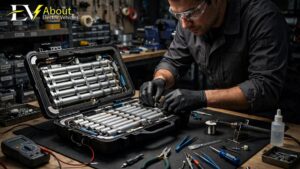
Professional rebuild (re-celling your old case) | Same as original | $350–$650 |
A useful rule of thumb: quality e-bike batteries cost roughly $1 to $1.50 per watt-hour from major brands, and $0.70 to $1 per watt-hour from reputable third parties. Multiply your battery’s Wh rating by that range and you will land close to the real price before you ever open a shop page.
What Makes One Battery Cost Twice Another?
Capacity.
Watt-hours are the fuel tank. A 750 Wh pack holds half again as much energy as a 500 Wh pack, and the price follows almost linearly. Bigger range, bigger bill.
Cell quality.
Packs built with name-brand cells from Samsung, LG, or Panasonic cost more but hold their capacity noticeably longer — often 2 to 3 extra years of useful life over no-name cells. In cost-per-year terms, the expensive pack is frequently the cheaper one.
The brand and its software.
Bosch, Shimano, and Yamaha batteries are not just cells in a case: their battery management systems talk to the motor and display, log diagnostics, and refuse to work with the wrong charger. That integration, plus safety certification such as UL 2849, is baked into the price — premium systems can run $800 to $1,200.
Mount and shape.
A proprietary in-frame PowerTube that must match your exact model costs more than a generic rack or bottle-style pack that fits thousands of bikes. If installation is needed, budget another $50 to $150 for shop labour, though most owners swap a slide-in pack in minutes for free.
How Do You Know the Battery Actually Needs Replacing?
E-bike batteries rarely die suddenly; they fade. The clearest signs are: range down by roughly a third from when the bike was new, the charge percentage dropping in sudden steps, the bike cutting power on hills it used to climb easily, or a pack that charges suspiciously fast because there is less capacity left to fill. Most lithium packs deliver 500 to 1,000 full charge cycles — typically 3 to 5 years of regular riding — before reaching that point.
Before spending anything, rule out the cheap culprits: a failing charger, corroded contacts, or a display showing wrong percentages. A dealer can run a capacity test, often free or for a small fee, and give you the battery’s true health percentage. Knowing the exact electric bike battery replacement cost for your model — and whether you truly need one yet — starts with that test.
Replace, Rebuild, or Buy a New Bike?
Replace with a new pack when your bike is otherwise healthy. A new battery typically costs 50 to 70 percent less than a new e-bike and makes the bike feel new again — this is the right call for most riders.
Rebuild (re-cell) your existing pack when a specialist fits fresh cells into your original case for $350 to $650. The professional rule of thumb: a rebuild earns its place when the quote is at least 25 to 30 percent below the price of a new pack and your case and electronics are healthy. Rebuilds shine on large, expensive packs — saving $240 or more on a 750 Wh class battery — while on small packs, discounted new batteries have squeezed the gap almost shut. One caution: never open or attempt to re-cell a pack yourself; this is specialist work with genuine fire risk.
Buy a new bike instead when the repair maths stops working: if the battery cost approaches half the value of the whole bike, or the bike also needs a motor, brakes, and drivetrain work, put the money toward a modern machine with a fresh warranty.

Compatibility: The Mistakes That Cost People Money
The most expensive mistake in any battery swap is buying the wrong pack. Match the voltage exactly — a 48V battery on a 36V system can destroy the controller and motor electronics. Confirm the mount type, connector, and communication protocol; even within one brand, different years use different hardware. Give the manufacturer or dealer your bike’s model and year and the old battery’s part number, and get the approved replacement in writing. And be wary of ultra-cheap unbranded packs online: a neat case tells you nothing about the cells or safety electronics inside, and a battery fire costs far more than the saving.
Smart Ways to Lower the Bill
- Shop the exact part number across dealers. The same Bosch or Shimano pack can vary by $100 or more between shops, and end-of-season sales are real.
- Consider certified compatibles. For older and generic systems, reputable third-party packs run 20 to 45 percent cheaper than originals where they exist.
- Ask about recycling credit. Some dealers and manufacturers discount a new pack when you hand in the old one, which also ensures it is recycled properly.
- Time it right. If your pack still gives you 70 percent of its range and your rides are short, you may comfortably get another season out of it — plan the purchase instead of panic-buying.
What the Cost Looks Like Per Year and Per Kilometre
Sticker shock fades when you spread the electric bike battery replacement cost over the battery’s working life. Take a typical $600 mid-range pack that serves you well for four years: that is $150 a year — less than many riders spend on a single petrol fill-up habit, and a small line in the budget of a bike used daily.
Per kilometre it looks even better. A 500 Wh battery delivering 60 km per charge across 800 cycles covers roughly 48,000 km in its life. Divide the $600 replacement price by that distance and the battery wear costs about 1.2 cents per kilometre — comparable to the electricity itself.
In other words, even after honestly counting the electric bike battery replacement cost, an e-bike still runs for a few cents per kilometre all-in, which is several times cheaper than any petrol alternative. The riders who get surprised by battery costs are usually the ones who never budgeted for them; riders who plan from day one treat the pack like a set of tyres — a wear item with a known price and a known lifespan.
Make the New Battery Last Longer
A replacement battery is a serious investment, so protect it: keep daily charging roughly between 20 and 80 percent, store the pack around half charge in a cool dry place, let a cold or hot battery return to room temperature before charging, and always use the correct charger. Our full electric bike battery life guide covers these habits in detail — following them is the surest way to push your next replacement as far into the future as possible and keep your long-term electric bike battery replacement cost near zero per year.
FAQs About Electric Bike Battery Replacement Cost
Q.1 How much does it cost to replace an electric bike battery?
Most riders pay $300 to $1,000 depending on capacity and brand. Generic 36V packs start around $300–$450, mid-range 48V packs run $450–$700, and original Bosch, Shimano, or premium large-capacity batteries reach $800–$1,200.
Q.2 How long does an e-bike battery last before replacement?
Typically 3 to 5 years or 500 to 1,000 charge cycles before capacity falls to around 70–80 percent of new. Good charging habits can stretch that considerably; daily deep discharges and heat shorten it.
Q.3 Is it worth replacing an e-bike battery or buying a new bike?
Usually replacing is worth it: a new battery costs about half to a third of a comparable new e-bike and restores the bike fully. Buy new instead if the battery alone approaches half the bike’s current value or the bike needs other major work.
Q.4 Can an e-bike battery be rebuilt instead of replaced?
Yes — specialists can fit new cells into your existing case for roughly $350 to $650. A rebuild makes sense when it is at least 25–30 percent cheaper than a new pack, especially on large premium batteries. Never attempt it yourself.
Q.5 Can I upgrade to a bigger battery when replacing?
Often yes, if the manufacturer supports a higher-capacity pack with the same mount and electronics — many Bosch and Shimano systems allow it. Confirm compatibility for your exact model first; never change voltage.
Q.6 Why are brand-name e-bike batteries so expensive?
You are paying for premium cells, a smart management system that communicates with the motor, rigorous safety certification, and warranty support. Cheaper packs save money mainly on cells and electronics — the two things that decide lifespan and safety.

Conclusion
The electric bike battery replacement cost is real money — $300 to $1,000 or more — but it is also the single purchase that returns an ageing e-bike to full life for a fraction of a new bike’s price. Know your pack’s watt-hours, price the exact approved replacement, compare it honestly against a rebuild quote, and protect the new battery with sensible charging habits. Do that, and the cost spreads across years of riding at just a few cents per kilometre — exactly why you bought an e-bike in the first place. And when the time comes again years from now, battery prices per watt-hour keep trending down, so the next replacement will very likely cost less than this one did.