
Choosing between an electric motorcycle vs regular motorcycle can sound like a simple cycling decision, but the comparison changes completely when “bike” is used as the primary SEO keyword while the actual vehicles are road-going motorcycles. In this guide, the term electric bike refers to an electric motorcycle, while regular bike refers to a conventional gasoline-powered motorcycle. The title and keyword remain unchanged for SEO, but the technical comparison focuses on motorcycles.
Electric motorcycles use a rechargeable battery pack, electric motor, power electronics, and a drivetrain to produce propulsion. Conventional motorcycles normally use an internal-combustion engine, fuel tank, transmission, and exhaust system. Both are motorcycles designed for road use, but their power delivery, energy storage, operating sounds, maintenance needs, and refueling or charging routines can be very different.
What Is an Electric Motorcycle?
An electric motorcycle is a full-size motorcycle powered by electricity stored in a rechargeable battery. The battery sends energy through electronic controls to an electric motor, which turns the rear wheel through the motorcycle’s drivetrain. Unlike a pedal-assist bicycle, a motorcycle does not depend on human pedaling. It is a motor vehicle with motorcycle-level controls, braking, suspension, tires, lighting, and other equipment. Electric motorcycles can be built for commuting, sport riding, touring, or mixed road use, and their performance varies widely by model.
What Is a Regular Motorcycle?
A regular motorcycle uses an internal-combustion engine, usually powered by gasoline. The engine burns fuel to create mechanical power, which is transferred through the transmission and final drive to the wheel. Conventional motorcycles are available in many forms, including standard, sport, cruiser, touring, adventure, and dual-sport models. Their range, acceleration, fuel economy, and maintenance requirements depend on engine size, design, gearing, weight, and riding conditions.
Electric Motorcycle vs Regular Motorcycle: Power and Acceleration
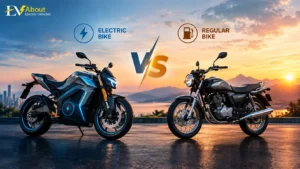
One of the clearest differences in an electric motorcycle vs regular motorcycle comparison is how the two powertrains deliver torque. An electric motor can deliver strong torque from very low rotational speed, allowing an electric motorcycle to respond quickly when the rider opens the throttle. There is no need for the same type of engine revving and gear changes associated with a conventional motorcycle.
A gasoline motorcycle builds power through its engine’s operating range and uses gearing to keep the engine in a useful range. Many riders value the sound, shifting, engine braking, and mechanical character of a combustion powertrain. Neither system has one universal performance level. Acceleration depends on motor or engine output, battery state, gearing, weight, traction, rider input, and the specific motorcycle.
Electric Motorcycle vs Regular Motorcycle: Top Speed
Top speed is another important part of the electric motorcycle vs regular motorcycle comparison, but there is no single speed that applies to every motorcycle. Electric motorcycle speed depends on motor power, battery voltage, controller settings, aerodynamics, gearing, tire capability, rider weight, and other design factors. Some electric motorcycles are built primarily for urban use, while performance-oriented models can reach much higher speeds.
Gasoline motorcycles also cover a very wide performance range. Engine displacement, power, gearing, aerodynamics, and vehicle weight can produce major differences between models. For either type, riders should follow posted speed limits and local motorcycle laws. Motorcycle safety guidance also emphasizes obeying traffic laws and becoming familiar with a motorcycle’s handling and responsiveness before riding in traffic.
Electric Motorcycle vs Regular Motorcycle: Range and Refueling
Range works differently in an electric motorcycle vs regular motorcycle comparison. An electric motorcycle stores usable energy in a battery. Real-world range can change with speed, acceleration, temperature, terrain, rider weight, wind, tire pressure, battery condition, and riding style. Higher speeds and aggressive acceleration generally increase energy consumption.
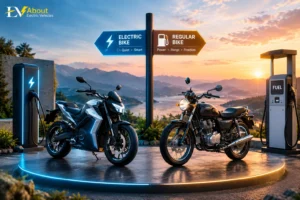
A gasoline motorcycle stores energy in its fuel tank. Refueling normally takes only a few minutes, while charging an electric motorcycle can take substantially longer depending on the motorcycle, charger, battery, and electrical supply. This creates an important practical difference. Electric motorcycles can be convenient for predictable daily routes when charging is available, while gasoline motorcycles can be easier to use for long trips where quick refueling is important.
Electric Motorcycle vs Regular Motorcycle: Charging vs Fueling
Charging is one of the biggest lifestyle differences in an electric bike vs regular bike comparison. An electric motorcycle can usually be charged using compatible equipment specified by its manufacturer. Charging time varies considerably by battery size and charging system. Riders should use the recommended charging equipment and follow the manufacturer’s instructions for charging, storage, and battery care.
A conventional motorcycle is refueled with gasoline. Fuel stations are widely available in many areas, and the short refueling process makes conventional motorcycles convenient for riders who frequently travel long distances. The better fit depends on where the motorcycle is parked, whether charging is available, and how predictable the rider’s daily travel is.
Electric Motorcycle vs Regular Motorcycle: Maintenance
Maintenance is another major difference. Electric motorcycles generally have fewer engine-related service items because they do not use a conventional combustion engine, engine oil, spark plugs, or an exhaust system. The U.S. Department of Energy notes that all-electric vehicles generally require less routine maintenance because they have fewer moving parts and fewer fluids to maintain.
However, electric motorcycles still need regular attention to tires, brakes, suspension, steering components, lights, and other motorcycle systems. Battery condition and charging equipment also matter. Gasoline motorcycles have the same basic motorcycle maintenance needs but also require engine-related servicing. Depending on the model, this can include oil and filter changes, spark-plug service, air-filter maintenance, cooling-system checks, fuel-system work, and drivetrain adjustments. Neither type is maintenance-free. The difference is mainly in which components require regular service.
Electric Motorcycle vs Regular Motorcycle: Riding Experience
The riding experience can feel noticeably different. An electric motorcycle is usually quieter and can deliver smooth, immediate power. Some models use regenerative braking or adjustable riding modes, while others provide a riding experience designed to resemble a conventional motorcycle more closely.
A gasoline motorcycle produces engine sound, vibration, heat, and gear changes that many riders consider part of the experience. Mechanical feedback can be more noticeable, particularly on motorcycles with manual transmissions. The choice here is highly personal. Some riders may prefer quiet, smooth propulsion, while others may prefer the sound and mechanical character of an internal-combustion engine.
Electric Motorcycle vs Regular Motorcycle: Cost of Ownership
Purchase price should be considered separately from running cost. Electric motorcycles can have a higher upfront price because of their battery, motor, electronics, and related systems. Conventional motorcycles may have lower or higher purchase prices depending on the model and engine class.
Operating costs can differ. Electric motorcycles use electricity rather than gasoline and generally have fewer routine powertrain maintenance items. Conventional motorcycles require gasoline and engine-related maintenance. Electricity prices, fuel prices, annual mileage, charging access, insurance, tires, repairs, and depreciation all affect total ownership cost. Because these factors vary by location and model, a simple claim that one type is always cheaper would be misleading.
Electric Motorcycle vs Regular Motorcycle for Commuting
For commuting, an electric motorcycle can work well when the rider has dependable charging and a predictable route. Smooth acceleration and quiet operation can be useful in urban environments, while the absence of gasoline stops can simplify short daily trips.
A conventional motorcycle can be practical for commuting too, particularly when the rider frequently travels beyond the practical range of the electric motorcycle or does not have convenient charging. Weather, traffic, parking, local regulations, insurance requirements, and access to charging or fuel should all be considered before choosing either type.
Electric Motorcycle vs Regular Motorcycle for Long-Distance Riding
Long-distance travel highlights one of the biggest differences between the two powertrains. A gasoline motorcycle can normally be refueled quickly, which makes repeated long-distance travel relatively straightforward when fuel stations are available.
An electric motorcycle requires charging stops planned around available charging infrastructure and the motorcycle’s usable range. Charging time can become an important part of the trip, especially when fast charging is unavailable. At the same time, electric motorcycles can provide a smooth and quiet ride, which some riders may prefer on daily or recreational routes.
Electric Motorcycle vs Regular Motorcycle: Safety and Handling
Both types are motorcycles, so the fundamental riding risks are similar. The presence of an electric powertrain does not make a motorcycle equivalent to a bicycle. NHTSA recommends motorcycle riders use appropriate helmets, stay visible, obey traffic laws, and check important items such as tire pressure, brakes, lights, and indicators before riding. NHTSA also notes that motorcycles vary in handling and responsiveness, so riders should become familiar with an unfamiliar motorcycle in a controlled area before riding in traffic.
Electric motorcycles can feel different because power delivery may be immediate and quiet. Riders should become familiar with throttle response, regenerative braking if equipped, riding modes, weight distribution, and available range before riding in demanding conditions.
Electric Motorcycle vs Regular Motorcycle: Environmental Considerations
The environmental comparison is more complicated than simply saying one motorcycle is clean and the other is not. An electric motorcycle has no tailpipe emissions while operating, but producing electricity and manufacturing batteries also involve energy and materials. The overall impact therefore depends partly on how electricity is generated and how the battery and vehicle are manufactured and handled at the end of their useful life.
A conventional motorcycle burns gasoline and produces exhaust emissions during operation. Fuel production and transportation also have environmental impacts. For buyers interested in reducing direct operating emissions, an electric motorcycle changes the vehicle’s energy pathway. The size of the overall environmental benefit depends on the full lifecycle and local electricity mix.
Which One Should You Choose?
The right choice in an electric motorcycle vs regular motorcycle comparison depends on how you actually plan to use the motorcycle. An electric motorcycle may fit a rider who values quiet operation, immediate electric power, home or workplace charging, and predictable daily travel.
A conventional motorcycle may fit a rider who prioritizes quick refueling, long-distance flexibility, widespread fuel availability, or the traditional engine-and-transmission riding experience. Before buying, compare the motorcycle’s real-world range, charging time, performance, weight, seat height, storage, service availability, insurance, local licensing rules, and total ownership cost.
FAQs About Electric Motorcycle vs Regular Motorcycle
Following are the FAQs about electric motorcycle vs regular motorcycle:
Q.1 Is an electric motorcycle the same as an electric bicycle?
No. An electric motorcycle is a motor vehicle designed and regulated as a motorcycle in applicable jurisdictions. An electric bicycle is generally a lower-powered bicycle category with different equipment and legal rules. The terminology and definitions vary by jurisdiction.
Q.2 Is an electric motorcycle faster than a regular motorcycle?
It depends on the specific models being compared. Electric motorcycles can offer strong acceleration, while conventional motorcycles span a very broad range of engine sizes and performance levels. Top speed is determined by the design and specifications of each motorcycle.
Q.3 Does an electric motorcycle need gasoline?
No. A fully electric motorcycle uses stored electrical energy rather than gasoline. It needs compatible charging equipment and access to an electricity supply.
Q.4 Are electric motorcycles cheaper to maintain?
They can have lower routine powertrain maintenance because they do not require conventional engine oil changes and have fewer engine-related moving parts. However, tires, brakes, suspension, battery systems, and other components still require inspection and service.
Q.5 How far can an electric motorcycle travel on one charge?
There is no universal range figure. Battery capacity, speed, temperature, terrain, rider weight, wind, riding style, and motorcycle design all affect real-world range. The manufacturer’s tested range should be treated as a reference rather than a guarantee for every riding condition.
Q.6 Are electric motorcycles good for commuting?
They can be well suited to commuting when the daily route fits the motorcycle’s practical range and convenient charging is available. Riders should also consider parking, charging access, traffic, weather, insurance, and local licensing requirements.
Final Thoughts
The electric motorcycle vs regular motorcycle comparison becomes much clearer when the term “bike” is understood as motorcycle in this article. An electric motorcycle replaces the gasoline engine and fuel system with a battery, electric motor, and power electronics, creating a different approach to propulsion.
Conventional motorcycles continue to offer quick refueling, broad model choice, and the familiar character of an internal-combustion powertrain. Electric motorcycles offer quiet operation, immediate electric torque, and potentially lower routine powertrain maintenance. The practical choice depends on the rider’s route, charging access, desired performance, travel distance, budget, maintenance preferences, and local rules. Instead of comparing labels alone, look closely at the specifications and ownership requirements of the exact motorcycles you are considering.