
Electric motorcycle speed is one of the first things riders consider when shopping for an electric motorcycle. Some people want a quiet and efficient machine for daily commuting, while others are interested in strong acceleration, highway performance, or long-distance touring. Unlike a conventional bicycle, an electric motorcycle is built around a much larger motor, battery, frame, braking system, and motorcycle-specific chassis.
The actual speed of an electric motorcycle depends on several factors. Motor power, battery output, rider weight, aerodynamics, road conditions, riding mode, tire choice, and electronic controls can all influence performance. A motorcycle advertised with a high top speed may also behave very differently during everyday riding. In this guide, we will explain electric motorcycle speed, how fast electric motorcycles can really go, what affects their performance, how battery capacity relates to speed, and what riders should consider before choosing a faster electric motorcycle.
What Is Electric Motorcycle Speed?
Electric motorcycle speed refers to how quickly an electric-powered two-wheeled vehicle can travel. An electric motorcycle normally receives its propulsion power from a rechargeable battery pack. The battery sends electrical energy through a control system to the motor, which converts that energy into mechanical power that turns the rear wheel.
Unlike gasoline motorcycles, electric motorcycles do not need an internal-combustion engine to generate propulsion. Electric motors can deliver strong torque from very low speeds, which can make acceleration feel immediate. However, top speed is still limited by the complete drivetrain. Motor output, battery voltage, controller settings, thermal management, motorcycle weight, aerodynamics, and gearing all play a role.
How Fast Can an Electric Motorcycle Go?
There is no single maximum speed for every electric motorcycle.
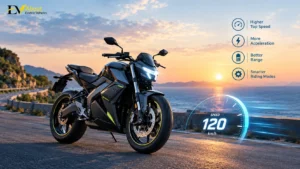
A smaller electric motorcycle designed for urban transportation may have a relatively modest top speed, while performance-oriented models can exceed 100 mph. For example, Zero Motorcycles currently lists the SR/F with a top speed of up to 124 mph, while other models in its lineup have different performance levels. High-performance electric motorcycles can go even faster. Energica, for example, lists a 150 mph top speed for the Ego, while several other motorcycles in its lineup are listed around 180–201 km/h depending on the model.
This means riders should separate three different numbers when researching electric motorcycle speed:
- The manufacturer’s claimed top speed
- The speed the motorcycle can maintain in real-world conditions
- The legal speed limit where the motorcycle is being ridden
A motorcycle’s maximum specification does not mean that a rider should travel at that speed on public roads.
What Factors Affect Electric Motorcycle Speed?
Several components work together to determine electric motorcycle speed. Looking only at motor power can give an incomplete picture.
Motor Power
Motor power is one of the most important factors affecting electric motorcycle performance. More power can allow a motorcycle to accelerate more quickly and maintain higher speeds. However, power alone does not determine top speed. The controller, battery, gearing or direct-drive setup, motor design, software limitations, weight, and aerodynamics all influence the final result.
For example, two electric motorcycles with similar peak power can deliver noticeably different acceleration and top-speed performance because their batteries, controllers, weight, and chassis designs are different.
Battery Capacity and Voltage
The battery is the energy source for an electric motorcycle. Battery capacity is commonly measured in kilowatt-hours (kWh), while voltage describes part of the electrical system’s operating characteristics. A larger battery can provide more stored energy, but a larger battery does not automatically mean a higher top speed. The battery and motor have to work together with the controller to deliver the required electrical power. Battery capacity becomes especially important when riding at higher speeds because faster riding generally requires more energy.
Rider Weight
Rider weight affects acceleration and overall efficiency. A heavier combined load means the motor must move more mass, particularly when accelerating from a stop or climbing a hill. Passenger and cargo weight can have a similar effect. The impact may be less noticeable once a motorcycle is cruising on a flat road, but it can become significant during acceleration and repeated stop-and-go riding.
Aerodynamics
Aerodynamics become increasingly important as motorcycle speed rises. At low speeds, air resistance is relatively small. As speed increases, aerodynamic drag becomes a much larger factor. Riding position, rider clothing, windshield design, fairings, and the overall shape of the motorcycle can therefore influence high-speed performance. This is one reason a motorcycle may require substantially more power to increase its speed from 80 mph to 100 mph than it needed to reach 60 mph.
Tires and Tire Pressure
Tires affect grip, rolling resistance, stability, and handling. Incorrect tire pressure can change the way an electric motorcycle responds to acceleration, braking, and cornering. Riders should always follow the motorcycle manufacturer’s recommended tire pressures and use tires designed for the vehicle. Because electric motorcycles can produce strong instant torque, suitable tires are particularly important.
Does a More Powerful Motor Mean a Faster Electric Motorcycle?
Not necessarily. A powerful motor can provide rapid acceleration and strong performance, but top speed depends on the complete drivetrain and motorcycle design. The controller may limit electrical output, while the battery must be capable of supplying sufficient power. The motor’s operating characteristics, cooling system, software, gearing, wheel size, aerodynamic design, and total vehicle weight can also affect performance. This means a motorcycle with a larger motor is not automatically faster in every situation. When comparing electric motorcycles, it is better to look at the complete performance package instead of focusing on one number.
Electric Motorcycle Speed and Riding Modes
Many modern electric motorcycles provide multiple riding modes. Depending on the manufacturer, these modes may change throttle response, regenerative braking, power delivery, traction control, or other performance characteristics.
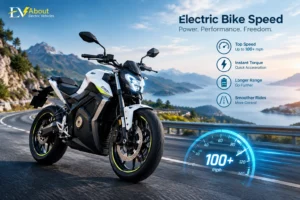
A lower-power mode can make an electric motorcycle easier to manage in heavy traffic and may reduce energy consumption. A higher-performance mode can provide stronger acceleration and higher electric bike speed. when conditions allow. Some motorcycles also allow riders to customize performance settings through electronic controls or smartphone-connected systems. The important point is that the fastest available setting is not necessarily the most appropriate setting for every road or situation.
Does Speed Affect Electric Motorcycle Range?
Yes. Electric motorcycle speed has a major effect on electric motorcycle energy consumption. When a motorcycle travels faster, aerodynamic resistance increases significantly. Maintaining a high cruising speed can therefore use considerably more energy than riding at a moderate speed. Acceleration also consumes energy. Frequent hard acceleration followed by braking can reduce efficiency compared with smoother riding.
Other factors can reduce range as well, including:
- Rider and passenger weight
- Strong headwinds
- Hills
- Cold temperatures
- Tire pressure
- Riding mode
- Frequent acceleration
- High-speed highway riding
Manufacturers may publish different range figures for city riding, mixed riding, or highway conditions. These figures should not automatically be treated as the distance every rider will achieve. For example, Zero lists separate range information for some motorcycles depending on the riding conditions, illustrating why advertised range and real-world range can differ.
What Is the Fastest Legal Electric Motorcycle Speed?
There is no universal answer because motorcycle laws differ between countries, states, and other jurisdictions. A high-performance electric motorcycle may technically be capable of speeds well above ordinary road speed limits. That does not mean those speeds are legal on public roads.
Before purchasing an electric motorcycle, riders should check the requirements that apply in their location, including:
- Motorcycle licensing
- Registration
- Insurance
- Helmet requirements
- Vehicle certification
- Road access
- Local speed limits
- Highway regulations
Motorcycle classification and licensing requirements can differ by jurisdiction. NHTSA notes that U.S. motorcycle licensing regulations vary by state, and motorcycle riders generally need the appropriate motorcycle license or endorsement.
How to Choose an Electric Motorcycle for Speed
If electric motorcycle speed is your main priority, first determine where and how you plan to ride. For city commuting, extreme top speed may be less useful than quick acceleration, manageable weight, comfortable ergonomics, and practical range.
For highway riding, pay closer attention to sustained high-speed performance, battery capacity, charging capability, wind protection, braking performance, and stability. If you regularly travel long distances, range and charging infrastructure may matter more than having the highest possible top-speed figure.
When comparing models, examine:
- Peak motor power
- Torque
- Battery capacity
- Claimed top speed
- Real-world range
- Charging time
- Braking system
- Suspension
- Tire specification
- Motorcycle weight
- Riding modes
- Warranty and service support
A balanced electric motorcycle can be more useful for everyday riding than one designed primarily around maximum speed.
How to Ride an Electric Motorcycle Safely at Higher Speeds
Higher speed requires greater attention, control, and stopping distance. NHTSA emphasizes that motorcycles provide substantially less physical protection than passenger vehicles and that riders are particularly vulnerable in crashes. Always wear an appropriate motorcycle helmet and protective riding equipment. NHTSA recommends DOT-compliant motorcycle helmets and also advises riders to use protective clothing, gloves, and appropriate footwear. Before riding a new electric motorcycle at higher speeds, become familiar with its acceleration, braking response, weight, and handling in a controlled environment.
Frequently Asked Questions About Electric Motorcycle Speed
Following are the frequently asked questions about electric motorcycle speed:
Q.1 What is the average electric motorcycle speed?
There is no single average because electric motorcycle speed range from smaller commuter vehicles to high-performance motorcycles. Many models are designed for urban transportation, while premium performance motorcycles can reach or exceed 100 mph.
Q.2 Can an electric motorcycle go 100 mph?
Yes. Some production electric motorcycles can reach 100 mph or more. Zero, for example, lists the SR/F with a top speed of up to 124 mph.
Q.3 Can an electric motorcycle go 150 mph?
Some high-performance models can. Energica lists a 150 mph top speed for its Ego electric motorcycle.
Q.4 Does a bigger battery make an electric motorcycle faster?
Not automatically. A larger battery primarily provides more stored energy. Speed also depends on the motor, controller, battery output capability, vehicle weight, aerodynamics, and electronic limitations.
Q.5 Does riding faster reduce electric motorcycle range?
Generally, yes. Higher speeds require more energy, largely because aerodynamic resistance increases with speed. Aggressive acceleration and high-speed highway riding can also reduce the distance available from a charge.
Q.6 Is an electric motorcycle faster than a gas motorcycle?
It depends on the models being compared. Some electric motorcycles offer extremely strong acceleration because electric motors can deliver substantial torque immediately, while conventional motorcycles vary widely in power and performance.
Q.7 What is the best speed for an electric motorcycle?
There is no universal best speed. The appropriate speed depends on the road, traffic, weather, rider experience, motorcycle capabilities, and applicable speed limits. Riders should always follow local laws rather than treating the motorcycle’s maximum speed as a recommended riding speed.
Conclusion
Electric motorcycle speed can vary dramatically when the term is used to describe electric motorcycles. Smaller electric motorcycles may focus on practical urban transportation, while high-performance models can deliver speeds above 100 mph. Motor power is important, but it is only one part of the equation. Battery output, vehicle weight, aerodynamics, tires, riding mode, controller settings, and road conditions all influence real-world performance.
A motorcycle’s advertised top speed also should not be confused with its practical cruising speed or the legal speed limit. For many riders, acceleration, range, charging time, braking performance, comfort, and reliability may be more important than chasing the highest number on a specification sheet.
When choosing an electric motorcycle, consider how you actually plan to ride. A well-balanced motorcycle with suitable range, predictable handling, strong brakes, and appropriate performance can provide a better everyday experience than a machine designed only for maximum speed.