
An electric cargo bicycle is designed to carry people, groceries, work equipment, pets, or other heavy loads while electric assistance reduces the effort required to pedal. Unlike a regular e-bike, a cargo model is built around carrying capacity, stability, and practical everyday use.
Electric cargo bicycles are useful for families, commuters, small businesses, deliveries, and riders who want to replace some short car trips. The right model depends on load, distance, terrain, storage, and budget. This guide explains the main designs, motor and battery choices, safety, maintenance, and buying factors.
What Is an Electric Cargo Bicycle?
An electric cargo bicycle combines a cargo-bike frame with an electric motor and rechargeable battery. Its frame, wheels, brakes, racks, or cargo box are designed to carry more weight than a typical bicycle. Depending on the model, assistance may come through a hub motor or mid-drive motor and may be controlled through pedal assist or a throttle where permitted. Cargo capacity is not unlimited. Always check the manufacturer’s maximum permitted load, including the rider and cargo, before carrying heavy items.
Why Choose an Electric Cargo Bicycle?
The biggest advantage is practical transportation. A cargo bike can handle school runs, grocery shopping, commuting, local deliveries, and errands without requiring a car for every short journey. Electric assistance becomes especially useful when the bicycle is loaded or the route includes hills. It can make starting from a stop easier and reduce the physical effort required over longer trips.
Main Types of Electric Cargo Bicycles
Cargo bikes come in several designs, but three common layouts are longtail, mid-tail, and front-loading.
Longtail Cargo Bike
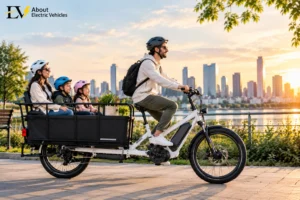
A longtail extends the rear section of the bicycle to create extra carrying space behind the rider. This area can support passengers, child seats, panniers, or other cargo. Longtails are popular with families because they can carry children while remaining narrower than many front-box designs. They can also work well for groceries and everyday commuting.
Mid-Tail Cargo Bike
A mid-tail is shorter than a full longtail. It provides additional carrying capacity while staying relatively compact. This design can be easier to store or maneuver in places where a larger cargo bicycle would be inconvenient. Capacity is generally lower than a large longtail, so check the manufacturer’s specifications.
Front-Loading Cargo Bike
A front-loading cargo bike places a box or cargo platform between the rider and the front wheel. This design provides a large loading area and lets the rider keep cargo or passengers within view. Front loaders are useful for families and businesses, but their longer wheelbase and steering characteristics may require practice before the rider becomes comfortable.
How Does an Electric Cargo Bicycle Work?
The battery supplies electricity to the controller, which manages power delivered to the motor. A pedal-assist sensor detects pedaling and tells the system when to provide assistance. Torque sensors measure rider effort and can produce a more responsive feeling. Cadence sensors mainly detect whether the pedals are turning and then activate assistance according to the selected setting.
Motor Power and Torque
Motor power affects how an electric cargo bicycle handles acceleration, hills, and heavy loads. However, wattage alone does not tell you how the bicycle will perform. Torque is particularly important for loaded starts and climbs. A cargo bike carrying a rider, children, groceries, or equipment needs a drive system suited to that total weight.
Mid-drive motors can use the bicycle’s gears and are often useful on hills. Hub motors can be simple and effective for many flatter routes. Do not automatically choose the highest-powered system. Check local laws, battery capacity, terrain, total load, and the manufacturer’s recommended use.
Battery Capacity and Range
A simple battery estimate is:
Voltage × amp-hours = watt-hours.
For example, a 48V 15Ah battery has approximately 720Wh of nominal energy.
Actual range can vary significantly. Rider weight, cargo weight, hills, wind, speed, tire pressure, temperature, assist level, and battery age all affect energy consumption.
If your daily trip is long, choose enough capacity to leave a practical reserve. If you mostly travel short distances, a smaller battery may reduce cost and weight.
Some cargo bicycles support dual batteries, which can increase available energy for longer routes. Confirm the manufacturer’s range and charging requirements rather than relying only on marketing claims.
How Much Can an Electric Cargo Bicycle Carry?
Every cargo bicycle has a specified maximum load. This may include the rider plus passengers and cargo, so read the manufacturer’s definition carefully. Never assume that a large rack means unlimited carrying capacity. Weight distribution matters as well. Heavy items should be secured and positioned according to the bike’s instructions.
When carrying children or passengers, use equipment designed and approved for that bicycle. Footrests, restraints, seats, and protective covers may be required depending on the design.
Electric Cargo Bicycle for Families
For families, a cargo bike can replace some short school, shopping, and recreational car trips. Longtails can carry children on the rear section, while front loaders place passengers in a box ahead of the rider. The best choice depends on the number and age of passengers, local roads, storage space, and the accessories supported by the bike.
Before carrying children, check the manufacturer’s age, weight, seating, and restraint requirements. Practice riding before carrying passengers.
Electric Cargo Bicycle for Work and Delivery
Cargo bikes are also useful for tradespeople, couriers, food delivery, and local businesses. Boxes, racks, panniers, and platforms can carry tools, packages, supplies, or equipment. For commercial use, consider battery range, payload, brakes, tire durability, and replacement-part availability. A dependable bicycle can be more valuable than one with a higher advertised power rating.
Brakes, Tires, and Stability
A loaded cargo bicycle needs dependable braking equipment. The combined weight of rider, bicycle, passengers, and cargo affects stopping performance. Before buying, check the brake type, rotor size where applicable, tire width, wheel construction, and manufacturer’s load limits.
Extra length or weight changes steering and braking behavior. Keep loads secure and distribute weight as recommended. Practice slow turns, controlled stops, and maneuvering before riding in traffic with a full load.

Electric Cargo Bicycle Safety
Safety starts with the bicycle itself. Use a model from a reputable manufacturer and follow the manufacturer’s instructions for loading, charging, maintenance, and accessories.
Battery safety is especially important. The CPSC recommends using e-bikes and batteries designed, manufactured, and certified to applicable safety standards. UL 2849 addresses the electrical system of an e-bike, including its drivetrain, battery, and charger system combination.
Use the correct charger and battery for the bicycle. Do not modify battery packs or use damaged batteries. If a battery becomes swollen, unusually hot, damaged, or produces an unusual smell, stop using it and seek appropriate professional assistance. Follow local traffic laws and helmet requirements.
Maintenance Requirements
Regular maintenance helps a cargo bike handle heavy loads safely. Check tire pressure, brake operation, chain condition, wheel security, fasteners, and cargo attachments.
Clean the bicycle according to the manufacturer’s instructions and keep electrical connectors protected. Mid-drive models may place additional stress on the chain and drivetrain, so those parts deserve regular inspection. Have unusual motor noises, electrical faults, brake problems, or structural concerns checked by a qualified technician.
What to Check Before Buying
Before purchasing an electric cargo bicycle, check the following:
- Maximum total load
- Cargo area and accessory compatibility
- Motor type and torque
- Battery capacity and removable design
- Realistic range for your route
- Brake system
- Tire and wheel design
- Frame dimensions and storage requirements
- Warranty and service support
- Replacement battery and parts availability
- Local e-bike rules
Take a test ride if possible. Pay attention to steering, braking, starting, turning, and comfort.
Common Buying Mistakes
One common mistake is choosing a cargo bike based only on motor power. A powerful motor cannot compensate for poor brakes, unsuitable tires, inadequate battery capacity, or an uncomfortable frame. Another mistake is ignoring dimensions. A bike that carries everything you need is not useful if you cannot store it or transport it.
Do not overlook accessory costs. Child seats, passenger pads, racks, boxes, covers, panniers, and safety equipment can significantly change the final price. Finally, verify the total weight limit before deciding what the bike can carry.

FAQs About Electric Cargo Bicycle
Q.1 Is an electric cargo bicycle worth it?
It can be worthwhile if you regularly carry people or goods and want to replace short car trips. Its value depends on your distance, load, terrain, storage, and local riding conditions.
Q.2 How far can an electric cargo bicycle travel?
There is no universal range. Battery size, total load, speed, terrain, temperature, tire pressure, and assist level all affect distance. Use the manufacturer’s range as a comparison point rather than a guarantee.
Q.3 Can an electric cargo bicycle carry two children?
Some models are designed for multiple passengers, but capacity varies. Check the manufacturer’s total load, seating, age, and accessory requirements before carrying children.
Q.4 Are electric cargo bikes hard to ride?
They can feel different because they are heavier and may be longer than normal bicycles. With practice, most riders can learn the steering, braking, and balance characteristics.
Q.5 Can I use an electric cargo bicycle for delivery work?
Yes. Many cargo designs are suitable for local deliveries, provided the load stays within the manufacturer’s limits and the bicycle has enough range, braking ability, and reliability for the job.
Conclusion
An electric cargo bicycle can turn everyday cycling into practical transportation for people, groceries, equipment, and deliveries. Its biggest strengths are carrying capacity and electric assistance, but choosing the right model requires more than comparing motor wattage.
Look at the total load rating, battery capacity, motor and torque, brakes, tires, dimensions, accessories, service support, and local regulations. Think about how you will actually use the bike every day.
The best electric cargo bicycle is not necessarily the fastest or most powerful model. It is the one that safely carries your normal load, provides enough range, fits your storage space, and makes your daily trips easier and more practical.