
Electric Motorcycle Maintenance is an important part of owning an electric motorcycle, especially when the motorcycle is used for daily commuting, long rides, or changing weather conditions. Although the title and focus keyword of this guide use the phrase “Electric Motorcycle Maintenance,” the maintenance information below is specifically written for electric motorcycles.
Electric motorcycles have fewer engine-related service items than gasoline motorcycles, but they still require attention to tires, brakes, suspension, wheels, drive systems, batteries, charging equipment, controls, and electrical connections. Manufacturers recommend pre-ride checks and scheduled inspections. This is where Electric Bike Maintenance matters.
Why Is Electric Motorcycle Maintenance Important?
Regular Electric Motorcycle Maintenance can help you identify small problems before they become expensive or unsafe. An electric motorcycle can produce strong instant torque, while its battery and electrical systems add another layer of components that should be inspected correctly.
Good maintenance helps you monitor:
- Tire condition and pressure
- Brake performance
- Drive belt or chain condition
- Battery and charging condition
- Electrical connections
- Suspension and steering
- Lights, indicators, and controls
- Warning messages and unusual sounds
- Overall motorcycle condition
Electric Motorcycle Maintenance Checklist
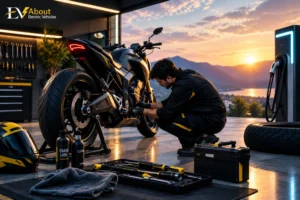
A quick inspection before every ride is one of the simplest ways to practice Electric Bike Maintenance. For beginners, Electric Bike Maintenance starts with simple safety checks. You do not need to spend a long time checking every component. A short safety inspection can reveal obvious problems before you enter traffic.
Check the Tires
Tires are the motorcycle’s only direct contact with the road, so they deserve regular attention. Check the recommended cold tire pressure in your motorcycle’s owner’s manual and inspect both tires for cuts, cracks, punctures, uneven wear, or embedded objects.
Also inspect the tread and sidewalls. Low or incorrect pressure can affect handling, range, tire wear, and stability. Zero Motorcycles’ owner documentation emphasizes checking tire condition, tread depth, pressure, damage, and alignment during pre-ride inspection.
Check the Brakes
Electric motorcycles can accelerate quickly, so dependable brakes are essential. Before riding, test the front and rear brakes and make sure the controls feel normal.
Inspect the brake pads and rotors for visible wear or damage. Pay attention to unusual grinding, squealing, vibration, pulling, or a change in lever or pedal feel. If braking performance suddenly changes, do not ignore it. Brake fluid should also be checked according to the manufacturer’s maintenance schedule. Some electric motorcycles use ABS and other electronic braking systems, so warning lights should be taken seriously.
Check the Throttle and Controls
A motorcycle throttle should operate smoothly and return correctly when released. Check the throttle before riding and make sure it is not sticking. Also test the horn, headlight, brake light, turn signals, display, and other controls. Zero’s pre-ride inspection documentation includes checking throttle operation and the electrical lighting system.
Inspect the Drive System
Electric motorcycles may use a belt, chain, or another type of final-drive arrangement depending on the model. Do not automatically apply bicycle-style chain maintenance to every electric motorcycle. If your motorcycle uses a belt, inspect it for visible damage, abnormal wear, contamination, or tension issues according to the manufacturer’s instructions. If it uses a chain, check its condition, lubrication, and adjustment requirements. Zero documentation, for example, specifies belt inspection on some models and chain inspection and lubrication on models equipped with a chain.
Electric Motorcycle Cleaning
Cleaning is a simple but important part of Electric Bike Maintenance. Consistent Electric Bike Maintenance also makes damage easier to spot. Dirt, road salt, mud, and moisture can collect around the wheels, brakes, suspension, drive system, and bodywork.
Use a soft cloth, suitable motorcycle cleaner, and gentle water when cleaning. Avoid directing high-pressure water toward sensitive electrical components, connectors, charging ports, bearings, or other areas where water intrusion could cause problems. After washing, dry the motorcycle properly. Pay attention to areas where water can remain trapped. A clean motorcycle is also easier to inspect for cracks, leaks, wiring damage, loose fasteners, and wear.
Electric Motorcycle Battery Maintenance
Battery care is one of the most important parts of Electric Bike Maintenance. Good Electric Bike Maintenance protects both safety and reliability. The traction battery is a major component of an electric motorcycle, and its care should always follow the specific manufacturer’s instructions.
Keep the battery area and charging connection clean and dry. Use the charger and charging equipment specified for your motorcycle. Do not use an incompatible charger simply because its connector appears to fit. Temperature can also affect battery performance. Follow the manufacturer’s guidance for charging, storage, and operating temperatures. Zero provides owner resources that include charging guides and long-term storage guidance.
Never continue using a battery that is visibly damaged, swollen, leaking, or behaving abnormally. If you notice unusual heat, smoke, a strong electrical smell, physical damage, or repeated charging faults, stop using the motorcycle and contact an authorized service professional.
Charging Port and Cable Care
The charging port is another area that deserves regular attention. Before connecting the charger, make sure the connector and port are clean, dry, and free of obvious damage. Do not force a connector into place or pull the cable by the wire. Store charging equipment as recommended.
If charging repeatedly stops, produces an error, becomes unusually hot, or behaves differently from normal, investigate the issue according to the owner’s manual rather than repeatedly reconnecting the charger without understanding the cause.
Inspect the Electrical System
Electric motorcycles depend on electrical connections, sensors, controllers, displays, and other electronic components. Most riders should not open high-voltage battery systems or attempt internal electrical repairs. Instead, perform a visual inspection of accessible wiring and connectors. Look for damaged insulation, loose components, exposed wires, corrosion, or signs of water intrusion. Dashboard warning messages should not be ignored. A persistent warning light or error code may indicate a problem that requires professional diagnosis.
How Often Should You Perform Electric Motorcycle Maintenance?
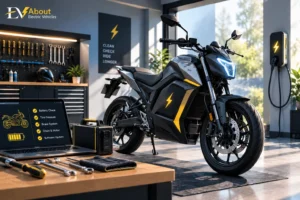
There is no single maintenance schedule for every electric motorcycle. Electric Motorcycle Maintenance should always follow the motorcycle manufacturer’s schedule.
Before Every Ride
Check tires, brakes, throttle, lights, controls, battery charge, and obvious signs of damage. This follows the basic idea of manufacturer pre-ride inspections.
Every Few Rides
Look for unusual noises, vibration, changes in braking, drive-belt or chain issues, loose fasteners, tire damage, or dashboard warnings.
Every Few Weeks
Clean the motorcycle and perform a more detailed inspection, especially if you ride through rain, dust, mud, or poor road conditions.
At Scheduled Service Intervals
Follow the exact service schedule in your owner’s manual. As one current example, Live Wire lists a first service at 1,000 miles and subsequent service every 5,000 miles for the referenced models, but your motorcycle may have a completely different schedule.
Common Electric Motorcycle Maintenance Mistakes
Many maintenance problems start with habits. Avoid these common mistakes:
- Ignoring tire pressure
- Delaying brake inspections
- Using the wrong charger
- Washing sensitive areas with excessive water pressure
- Ignoring warning lights or error messages
- Overlooking drive-belt or chain wear
- Attempting high-voltage electrical repairs without proper training
- Using incorrect replacement parts
- Skipping scheduled professional service
- Continuing to ride after a serious safety-related problem appears
When Should You Take an Electric Motorcycle to a Professional?
Basic inspections are manageable for many owners, but some repairs should be handled by qualified technicians. Electric Bike Maintenance includes knowing when not to repair something yourself.
Seek professional service if you notice:
- Battery damage or abnormal battery behavior
- Persistent electrical errors
- High-voltage system warnings
- Brake problems
- Damaged wheels or suspension
- Major drive-belt or chain problems
- Repeated charging failures
- Unusual motor noises or vibration
- Serious overheating
- Problems you cannot confidently diagnose
Never experiment with high-voltage components simply to save service costs. The safest approach is to follow the manufacturer’s instructions and use an appropriately trained service center when required.
How to Make Your Electric Motorcycle Last Longer
Keep the tires correctly inflated, inspect the brakes, follow the battery and charging instructions, and keep the motorcycle clean. Avoid aggressive modifications that could interfere with the electrical system, thermal management, charging system, or safety controls. Use manufacturer-approved or properly specified replacement components. Also pay attention to changes. A new vibration, unfamiliar sound, reduced performance, charging problem, warning message, or unusual tire wear can provide an early indication that something needs attention.
FAQs About Electric Bike Maintenance
Q.1 How often should I perform Electric Motorcycle Maintenance?
Perform a basic safety inspection before every ride and follow your motorcycle manufacturer’s scheduled service intervals for deeper maintenance. Riding frequency and conditions can affect how often certain components need attention.
Q.2 Does an electric motorcycle need an oil change?
A typical battery-electric motorcycle does not have a conventional internal-combustion engine, so traditional engine-oil and spark-plug services are generally not required. However, some models can still have other fluids or mechanical service requirements, so always check the owner’s manual. LiveWire, for example, identifies transmission fluid on applicable models as a service item.
Q.3 How do I maintain an electric motorcycle battery?
Keep the battery and charging equipment clean and dry, use the correct charging equipment, follow the manufacturer’s temperature and storage guidance, and never use a visibly damaged battery.
Q.4 Do electric motorcycles use chains?
Some do, while others use belts or different final-drive designs. Check your specific motorcycle before choosing a maintenance procedure. Zero models demonstrate that both belt and chain arrangements can be used across electric motorcycles.
Q.5 Can I wash an electric motorcycle with water?
Yes, but use appropriate cleaning methods and avoid high-pressure water around sensitive electrical components, connectors, bearings, and charging areas. Follow the cleaning instructions provided by the manufacturer.
Q.6 Does an electric motorcycle need professional servicing?
Yes, periodic professional servicing may be necessary, especially for brakes, suspension, electrical diagnostics, high-voltage systems, and manufacturer-specified inspections. The exact schedule depends on the model.
Conclusion
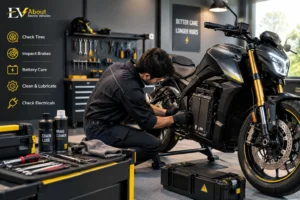
Good Electric Motorcycle Maintenance is not about performing complicated repairs every week. It is about building a consistent inspection routine and responding to problems early. Start with the basics: check the tires, brakes, throttle, lights, controls, and battery condition before riding. Keep the motorcycle clean, inspect the belt or chain when applicable, and follow the charging and storage instructions provided by the manufacturer.
Remember that electric motorcycles remove several traditional engine-maintenance tasks, but they do not eliminate maintenance altogether. Mechanical components and electrical systems still need proper care. Most importantly, never ignore a safety-critical problem or attempt high-voltage repairs without the required knowledge and equipment. When Electric Motorcycle Maintenance becomes part of your normal ownership routine, you can keep your electric motorcycle in better condition and identify many problems before they become larger issues.