
It is the biggest question in motorcycling right now, and there is no single winner — only the right bike for the way you ride. In this electric motorcycle vs gas motorcycle comparison, we go head to head on performance, range, running costs, maintenance, and the everyday riding experience, using real flagship examples like the Zero SR/F and a typical 600cc petrol sportbike. By the end, you will know exactly which side of the electric motorcycle vs gas motorcycle debate fits your life — and your wallet.
The Short Version: Scoreboard
Category | Electric Motorcycle | Gas Motorcycle |
|---|---|---|
Acceleration (0–60 mph) | ~3.0–3.5 sec, instant torque | ~2.8–4.0 sec, needs revs and gears |
Top speed | 110–124 mph typical | 130–170+ mph |
Range | 100–180 miles (less on highway) | 150–250+ miles per tank |
Refuel / recharge | 1 hr (DC fast) to overnight at home | ~5 minutes at any petrol station |
Fuel cost per mile | ~3 cents (home electricity) | ~10+ cents |
Maintenance per year | $150–$400 | $500–$1,200+ |
Purchase price | Higher ($16,000–$22,000 flagships) | Lower ($5,000–$13,000 typical) |
Noise & vibration | Near silent, glass-smooth | Loud, characterful, vibrating |
Gears / clutch | None — twist and go | 6-speed manual |
Now let’s take each round of the electric motorcycle vs gas motorcycle contest in turn.
Round 1: Performance — Torque Now vs Power Later
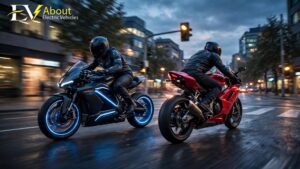
Electric motors deliver maximum torque the instant you twist the throttle. A Zero SR/F makes about 110 hp but a huge 140 lb-ft of torque — more than most litre-class petrol bikes — and all of it is available from zero rpm. The result is 0–60 mph in roughly 3.5 seconds with no clutch, no shifting, and no drama, every single time.
Petrol sportbikes match or beat that on paper, but you have to work for it: keep the engine in its powerband, manage the clutch, and nail your shifts. At the top end, petrol wins outright — a 600cc supersport will run to 150 mph or more, while most electric bikes top out around 110–124 mph, limited by gearing and heat. For real-world road riding, though, the electric motorcycle’s instant punch out of corners and away from lights feels faster where it counts. Round: electric, for usable road performance; petrol, for top speed.
Round 2: Range and Refuelling — Petrol’s Strongest Card
This is where the electric motorcycle vs gas motorcycle fight tilts petrol’s way. A petrol bike covers 150–250 miles per tank and refuels in five minutes anywhere. A flagship electric bike manages 140–180 miles in the city but often only 90–110 miles at steady highway speed, because aerodynamic drag drains the battery fast.
Charging has improved — DC fast charging takes a LiveWire or Energica to around 80% in about 40 minutes, and a Zero with its rapid-charge option reaches 95% in about an hour — but that is still not five minutes. The network keeps growing too, and because most electric motorcycles now use standard connectors, the chargers built for electric cars increasingly serve bikes as well.
Every year this round of the electric motorcycle vs gas motorcycle contest gets closer, even if petrol holds it for now. The counterpoint is home charging: plug in at night, wake up to a “full tank” every morning, and never visit a fuel station for daily riding. If your riding is commuting and day trips under 150 miles, range is a non-issue. For cross-country touring, petrol still wins comfortably. Round: petrol.
Round 3: Running Costs — Electric’s Knockout Punch
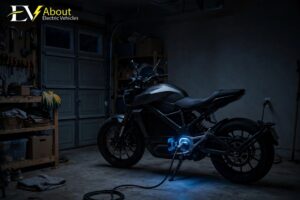
Per mile, electricity from a home outlet costs roughly 3 cents; petrol works out to 10 cents or more. Over 8,000 miles a year, that is about $240 versus $800 — a saving of over $500 annually before maintenance even enters the picture.
Maintenance widens the gap further: $150–$400 a year for electric against $500–$1,200 or more for petrol, thanks to no oil, plugs, filters, valve services, or clutch. We break every item down in our electric motorcycle maintenance cost guide. Add it together and the typical electric rider saves $700–$1,300 every year in running costs — money that steadily claws back the higher purchase price. Round: electric, decisively.
Round 4: The Riding Experience — Silence vs Soul
This round is pure preference, and honest riders admit both sides have a point. An electric motorcycle is eerily smooth: no vibration through the bars, no engine heat roasting your legs in traffic, no stalling, no gear to miss. In the city it is relaxing in a way no petrol bike can match, and the low centre of gravity from the battery makes handling feel planted and easy.
What you give up is the theatre: the exhaust note, the revs rising, the mechanical dance of clutch and gearbox that many riders consider the soul of motorcycling. Some also find regenerative braking and the silence take a week to get used to. Neither experience is objectively better — but they are genuinely different, so test-ride both before deciding. Round: draw.
Round 5: Price and Total Cost of Ownership
Petrol bikes are cheaper to buy — a superb Yamaha MT-07 costs under $10,000, while electric flagships run $16,000–$22,000. Budget electric commuters narrow the gap, but model for model, electric costs more upfront.
Total cost over five years tells a closer story. Take a $20,000 electric flagship versus a $12,000 petrol sportbike, both ridden 8,000 miles a year: the electric bike saves roughly $2,800 in fuel and $2,500 in maintenance over five years, closing most of the $8,000 price gap — and high-mileage riders close it completely. Battery warranties of 5 years with unlimited miles on leading brands remove the biggest ownership worry; see our electric motorcycle battery life guide for how long packs really last. Round: petrol on price, electric closing fast on total cost.
Round 6: Practical Ownership — The Everyday Details
Beyond the headline numbers, the electric motorcycle vs gas motorcycle choice shows up in small daily ways. Electric bikes need no warm-up, no choke, and no winter fuel stabiliser — but the battery prefers storage around half charge, and range can drop noticeably on freezing days. Petrol bikes shrug off the cold but demand more fettling if left standing.
Insurance is broadly similar, though some electric models sit in higher groups because of their price and torque. Licensing rules are identical — you need the same motorcycle licence either way. Weight is a wash: battery bikes carry their mass low and feel lighter on the move than their spec sheets suggest.
City riders should note the regulatory wind: low-emission zones in many cities already charge or restrict older petrol vehicles, and noise rules increasingly favour near-silent electric machines. An electric motorcycle is also welcome in places a loud exhaust is not — early-morning departures from a quiet street being the classic example. None of these details decides the electric motorcycle vs gas motorcycle contest alone, but together they explain why so many daily riders, once they switch, never switch back. Round: electric, on convenience.
Which One Should You Buy?
Choose electric if you commute or ride mostly within 100 miles of home, can charge where you park, want minimal maintenance, and love instant, silent acceleration. Urban and suburban riders get the most from electric, every single day.
Choose petrol if you tour long distances, ride where charging is scarce, enjoy shifting gears and engine character, or need the lowest possible purchase price. For now, petrol remains the do-everything, go-anywhere default.
Still torn? Many riders are solving the electric motorcycle vs gas motorcycle question with “both” — an electric commuter for weekdays and a petrol bike for weekend tours. If you can only have one, match it to the riding you actually do 90% of the time, not the trip you dream about once a year.
FAQs: Electric Motorcycle vs Gas Motorcycle
Q.1 Is an electric motorcycle faster than a gas motorcycle?
In acceleration, often yes — instant torque gives 0–60 mph times around 3.0–3.5 seconds, matching 600cc sportbikes with far less effort. For outright top speed, petrol bikes still win, reaching 150 mph or more versus roughly 110–124 mph for most electric models.
Q.2 Are electric motorcycles cheaper to run than gas motorcycles?
Yes, substantially. Electricity costs about 3 cents per mile from home versus 10+ cents for petrol, and annual maintenance runs $150–$400 against $500–$1,200 or more. Most owners save $700–$1,300 a year in running costs.
Q.3 How far can an electric motorcycle go on one charge?
Flagship models manage 140–180 miles in city riding and around 90–110 miles at highway speed. Smaller commuter models cover 50–100 miles. A petrol motorcycle typically travels 150–250 miles per tank.
Q.4 Do electric motorcycles hold their value?
The market is still young, but values are stabilising as battery health proves better than feared — well-kept examples retain most of their capacity for years. Petrol bikes have a longer, more predictable resale track record for now.
Can you tour on an electric motorcycle?
Yes, with planning. DC fast charging models can add about 80% charge in roughly 40 minutes, making 250–300-mile days possible along charger routes. Petrol remains easier for remote, unplanned touring.
Which is better for a beginner, electric or gas?
Electric is arguably friendlier: no clutch or gears to learn, smooth predictable power, and no stalling. Petrol offers far more cheap used options, which is why many beginners still start there.
Conclusion
The electric motorcycle vs gas motorcycle debate has no universal winner — it has a right answer per rider. Electric wins on acceleration feel, running costs, maintenance, and home-charging convenience; petrol wins on range, refuelling speed, top speed, and purchase price. If your riding is daily, local, and home-based, an electric motorcycle will save you money and hassle from day one. If your riding is long, remote, and spontaneous, petrol still earns its place in the garage.
And whichever you choose today, remember the gap is narrowing every model year — the rematch a few years from now will be even closer. Test-ride both, be honest about your 90% use case, and you will make the right call.