
If you are planning to buy an electric rickshaw for passenger service, delivery work, or daily local transport, electric rickshaw price in India is only one part of the decision. The battery, motor, range, charging time, load capacity, warranty, and dealer support can change the real value of a vehicle.
In 2026, the Indian market has electric three-wheelers across several price levels. Basic e-rickshaws can cost much less than premium electric autos with larger batteries, stronger drivetrains, and longer certified ranges. This guide explains the electric rickshaw price in India, what affects it, and how to choose a model without paying for features you do not need.
Electric Rickshaw Price in India in 2026
The electric rickshaw price in India can vary widely by vehicle type, battery technology, motor output, brand, city, and registration requirements. Current market listings show electric auto-rickshaws from around ₹1 lakh at the lower end, while higher-end electric three-wheelers can reach ₹6.5 lakh or more before on-road costs.
A more useful buying range for many buyers is roughly ₹1.5 lakh to ₹4 lakh. Entry-level passenger e-rickshaws usually sit toward the lower side. Branded electric autos with advanced batteries, better performance, and stronger after-sales support normally cost more.
For example, current listings put the TVS King EV Max around the ₹3 lakh range, while the Mahindra Treo is also positioned above basic e-rickshaw products. Prices can change with location, taxes, offers, and variant, so always confirm the final quotation with an authorized dealer.
What Changes the Electric Rickshaw Price in India?
Several parts determine the final purchase price. The biggest factors are battery capacity, battery chemistry, motor output, vehicle size, chassis strength, warranty, features, and brand support.
A basic model may use a smaller battery and simpler equipment to keep its price low. A premium vehicle may include a larger lithium-ion battery, stronger suspension, better braking hardware, connected features, and a more capable powertrain.
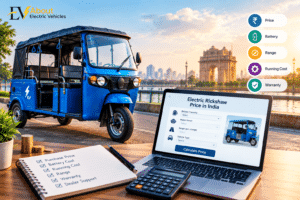
Battery Type and Cost
The battery is one of the most important parts of an electric rickshaw. Older and budget-focused vehicles may use lead-acid batteries because they have a lower starting cost. Lithium-ion batteries generally cost more but can offer advantages in weight, energy density, charging performance, and usable life.
Battery capacity also matters. A larger pack can support longer trips, but it adds cost and weight. Before buying, ask the dealer about battery warranty, expected replacement cost, charging requirements, and whether the quoted price includes the battery. Do not compare two rickshaws only by their purchase price. A cheaper vehicle can become expensive if its battery needs early replacement or if replacement parts are difficult to obtain.
Motor Power and Performance
Motor power affects acceleration, hill-climbing ability, efficiency, and how the rickshaw behaves under load. A vehicle carrying passengers on flat roads does not always need the same power as one operating on steep roads or carrying heavy loads. Look at the motor rating along with the vehicle’s gross weight, payload, controller, and battery. A high motor rating alone does not guarantee better real-world performance.
For commercial use, smooth acceleration and dependable operation are often more important than maximum speed. A test drive with a realistic load can tell you much more than a specification sheet.
Range on a Full Charge
Range is a major factor when comparing the electric rickshaw price in India. Larger battery packs and efficient drivetrains can increase the usable distance between charges, but advertised range should not be treated as a guaranteed daily result. Actual range depends on passenger or cargo weight, traffic, road condition, speed, temperature, tire pressure, driving style, and use of electrical accessories. Stop-and-go city traffic can produce different results from controlled test conditions.
Before buying, estimate your daily route. If you normally travel 80 to 100 kilometers, choose a vehicle with enough practical range to complete the work without constantly worrying about the battery level.
Charging Time and Electricity Use
Charging time depends on battery size, charger output, battery condition, and charging system. Some modern electric autos can recharge relatively quickly, while basic models may need several hours. Your daily schedule matters. If the rickshaw operates from morning until evening, overnight charging may be enough. If you need two shifts, faster charging or a larger battery may be more useful.
Electricity is normally cheaper than petrol or CNG on a per-kilometer energy basis, but the exact saving depends on your electricity tariff, vehicle efficiency, and daily distance. Calculate your expected cost per kilometer before buying.
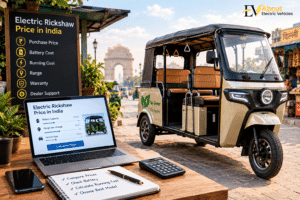
Running Cost and Maintenance
An electric rickshaw has fewer moving powertrain components than a conventional engine vehicle. There is no engine oil, spark plug, or exhaust system to maintain. However, tires, brakes, suspension, steering parts, electrical components, and the battery still require attention.
For a commercial operator, this can make total operating cost more important than the initial purchase price. A vehicle that costs ₹50,000 more but saves money on energy, maintenance, or downtime may be the better business decision.
Popular Electric Rickshaw Choices in India
The Indian market includes low-cost e-rickshaws from many manufacturers as well as established automotive brands. Models such as Mahindra Treo and TVS King EV Max compete in the more developed electric three-wheeler segment.
TVS states that the King EV Max has a certified range of up to 179 km and uses a lithium-ion battery. Bajaj also offers electric three-wheelers with different body and range configurations. These examples show why comparing only the vehicle’s starting price can be misleading.
Government Incentives and Subsidies
Government incentives can affect the effective purchase cost, but eligibility should be checked before assuming a discount. India’s PM E-DRIVE scheme includes registered electric three-wheelers, including e-rickshaws and e-carts, and focuses on eligible vehicles with advanced batteries.
The official scheme information says eligible e-3Ws are for commercial use and that the program supports both registered e-rickshaws/e-carts and L5 electric three-wheelers. The scheme has also been extended through government notifications, so buyers should check the current rules and approved vehicle list. Do not subtract a subsidy from the dealer’s quotation unless the dealer confirms that your exact model and purchase are eligible.
New vs Used Electric Rickshaw
A used electric rickshaw can reduce the upfront cost, but the battery condition becomes especially important. A vehicle may look clean while having a battery that is close to the end of its useful life.
For a used model, check battery age, charging behavior, range under load, motor noise, brakes, suspension, tires, steering, wiring, and accident history. Ask for service records and ownership documents. A new vehicle usually costs more but can provide a fresh battery, manufacturer warranty, and clearer service support. For someone depending on the rickshaw for daily income, lower downtime may justify the higher purchase price.
How to Choose the Right Electric Rickshaw
Start with your work pattern instead of starting with a brand name. Decide how many kilometers you travel each day, how many passengers or how much cargo you normally carry, and where you will charge. Pay special attention to battery warranty and dealer support. Ask how long replacement parts normally take to arrive and where warranty work is performed. These details can matter more than a digital display or cosmetic feature.
When comparing the electric rickshaw price in India, consider the complete ownership cost rather than only the initial purchase price. Battery expenses, electricity, maintenance, financing, and downtime can all affect the long-term cost.
Questions to Ask Before Buying
Ask the dealer for the exact ex-showroom and on-road price. Confirm battery capacity, motor rating, certified range, warranty period, charging time, payload, tire size, service intervals, and replacement battery cost. Also ask whether the quoted price includes the charger and whether any current incentive has already been included. Get important promises in writing. These details can help you understand whether the quoted electric rickshaw price in India represents the complete cost of the vehicle or only its starting price.
Common Buying Mistakes
One common mistake is choosing the lowest purchase price without checking the battery. Another is believing the maximum advertised range will always be achieved in real traffic. Some buyers also ignore the service network. If a vehicle breaks down and parts are unavailable locally, lost working days can become more expensive than the original price difference.
Avoid buying without a proper test drive. Test acceleration, braking, steering, suspension, turning space, and behavior with a realistic load. Also inspect the charger, battery compartment, wiring, and safety equipment.
FAQs About Electric Rickshaw Price in India
Q.1 What is the electric rickshaw price in India in 2026?
Current listings show a very broad market, from around ₹1 lakh for some basic e-rickshaws to ₹6.5 lakh or more for higher-priced electric three-wheelers. The final electric rickshaw price in India depends on the model, city, battery, taxes, and variant.
Q.2 Which electric rickshaw is best for daily commercial use?
There is no single best model for every operator. Choose based on practical range, payload, battery warranty, service availability, charging time, and total running cost rather than price alone.
Q.3 Is an electric rickshaw cheaper than a petrol or CNG auto?
It can be cheaper to operate because electricity may cost less per kilometer and the electric powertrain has fewer routine service items. Your actual saving depends on electricity rates, daily distance, vehicle efficiency, and battery replacement costs.
Q.4 How much does an electric rickshaw battery cost?
Battery prices vary greatly by chemistry, capacity, brand, and vehicle. Replacement costs can be a major expense, so ask for the current battery replacement quotation and warranty before purchasing.
Q.5 Does PM E-DRIVE apply to electric rickshaws?
Eligible electric three-wheelers, including registered e-rickshaws and e-carts, are covered under PM E-DRIVE subject to the scheme’s conditions, approved models, battery requirements, and commercial-use rules.
Q.6 Should I buy a new or used electric rickshaw?
Buy new if you want a fresh battery, warranty, and lower uncertainty. A used vehicle can make sense when its battery, documents, mechanical condition, and service history are verified.
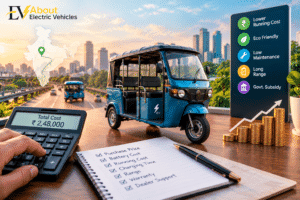
Conclusion
The electric rickshaw price in India depends on much more than the number on the dealer’s quotation. Battery technology, range, motor performance, charging needs, warranty, service support, and operating cost all affect the real value of the vehicle.
For commercial buyers, the practical approach is to calculate the complete cost of ownership and match the rickshaw to the daily route. Compare practical range instead of only certified figures, inspect the battery carefully, and confirm current government incentives before making a payment. A low purchase price can be attractive, but a reliable electric rickshaw that works consistently, charges conveniently, and has dependable service support can provide better long-term value for your daily commercial work and income.