
An electric scooter with a seat lets you travel in a more relaxed way than a regular standing scooter. Rather than staying on your feet throughout the ride, you can sit comfortably while the scooter moves, making longer trips easier for many riders. This can be useful for longer commutes, errands, and riders who prefer a more relaxed posture.
However, adding a seat does not automatically make every scooter better. The frame, wheel size, suspension, brakes, battery, motor, seat position, and total weight all affect how the scooter feels and performs. Some models are designed around a seat from the beginning, while others are standing scooters that accept an optional saddle. This guide explains the differences, important specifications, comfort factors, safety points, maintenance needs, and buying decisions that matter most.
What Is an Electric Scooter With Seat?
An electric scooter with seat is a battery-powered two-wheeled vehicle that allows the rider to sit while operating it. Some have a permanent saddle, while others use a removable or optional seat. Purpose-built seated scooters are generally designed around the rider’s seated position. Their frame, deck, handlebars, and seat height are selected as a complete system.
A stand-up scooter with an approved seat attachment is different. It may give you the flexibility to stand or sit, but the frame was designed for standing. That difference can affect posture, handling, ground clearance, and comfort.
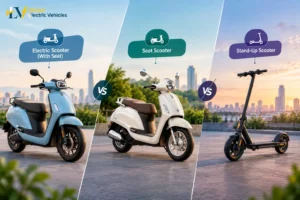
Electric Scooter with Seat vs Stand-Up Scooter
A stand-up scooter is compact and easy to carry, store, and maneuver. It works well for short urban trips. A seated model gives your legs a break during longer rides. The seat can make stop-and-go travel more comfortable on longer trips for many riders.
The tradeoff is size and weight. A seated scooter may have a larger frame, wider tires, a longer wheelbase, or a heavier battery, making it harder to carry or store. The better choice depends on how you actually travel.
Seat Height and Riding Position
Seat height is important because it affects comfort and control. Your feet should be able to reach the ground in a controlled way when you stop, depending on the scooter’s design and your riding technique. The handlebars should also be positioned so you are not forced to stretch too far forward or hunch your shoulders.
Check the distance between the seat, handlebars, and foot area. A seat can be padded and still uncomfortable if the riding geometry does not match your body. If the seat is adjustable, use it to keep your knees and arms in a natural posture.
Battery and Real-World Range
Battery capacity is one of the most important specifications. It is usually expressed in watt-hours or calculated from voltage and amp-hours. A larger battery can store more energy, but the advertised range should not be treated as a guaranteed distance. Speed, rider weight, hills, wind, tire pressure, temperature, and frequent acceleration all affect energy use.
Choose a range that comfortably covers your normal trip with some reserve. Buying a much larger battery only because the advertised range is impressive may add weight and cost without providing much benefit for short daily travel. For a daily commuter, real-world usable range is more important than the highest number printed on a product page.
Motor Power and Hill Performance
Motor power affects acceleration and the ability to handle inclines, but wattage alone does not tell you everything about performance. A heavier seated scooter and rider combination places more demand on the motor than a lightweight stand-up setup. Hills, headwinds, and frequent stops increase that demand further.
If your route includes steep roads, compare motor capability, battery voltage, controller specifications, total weight capacity, and real-world testing rather than looking at watts alone. Also check the manufacturer’s maximum rider or total load rating. Never assume a powerful motor makes an overloaded scooter safe.
Tires, Suspension, and Ride Quality
Pneumatic tires contain air and can provide useful cushioning on uneven pavement. Tubeless pneumatic tires offer a similar air-filled ride without an inner tube. Solid or honeycomb tires reduce the chance of air-related flats but can feel firmer. Suspension can further improve comfort, especially on roads with cracks, rough patches, and small bumps. However, suspension does not remove the need for suitable tires and correct pressure. CPSC warns that e-scooters have small tires and that uneven surfaces or obstacles can cause sudden stops and falls.
Brakes and Stability
Larger seated scooters may carry more mass, so stopping performance becomes especially important. Stability also depends on wheelbase, tire size, steering geometry, rider position, and road conditions. A long wheelbase can feel planted, but a larger frame may be harder to maneuver in tight spaces. Before buying, make sure it feels stable when you shift your weight or turn.
Weight Capacity Matters
Always check the manufacturer’s stated load limit. Your total load may include your body weight plus clothing, a backpack, groceries, or other cargo. Do not treat the maximum rating as a target. Leaving some capacity available can provide a better margin for normal riding conditions.
Overloading can affect acceleration, braking, range, suspension behavior, tire load, and overall handling. It can also increase stress on the frame and components. A scooter with a large battery and powerful motor is not necessarily suitable for a heavier rider if its frame or suspension has a lower load rating.
Charging and Battery Care
Use the charger supplied with the scooter or one specifically approved by the manufacturer. CPSC advises users to follow the manufacturer’s charging instructions, remain present while charging, and avoid charging while sleeping or away from home. Keep the charging area dry and suitable for the equipment. Do not use a damaged charger or a battery that shows signs of serious damage.
For storage, follow the manufacturer’s instructions for charge level, temperature, and duration. Excessive heat can be harmful to batteries, so avoid leaving the scooter in extremely hot conditions when the manufacturer warns against it.
Maintenance for an Electric Scooter With Seat
Maintenance is straightforward when performed regularly.Check pneumatic tire pressure, inspect the tread and sidewalls, and look for cuts or embedded objects. Test the brakes and make sure the handlebars, seat, and seat mount remain secure.
Inspect bolts and fasteners periodically, especially around the seat assembly if the scooter uses a removable saddle. Keep the charging connector clean and dry. Follow the manufacturer’s service intervals for the motor, suspension, battery, and other components. CPSC recommends checking handlebars, brakes, throttle, lights, tires, cables, frame, and other components before riding.
Is a Electric Scooter With Seat are Safe?
Safety depends on the machine, rider, environment, and riding behavior. A seat can improve comfort, but it does not protect you from traffic, obstacles, or poor road conditions. Wear an appropriate helmet, follow local traffic rules, use lights and visibility equipment when needed, and keep both hands available for control. CPSC specifically recommends helmets and advises riders to slow down and remain aware of their surroundings.
Never carry another person unless the scooter is specifically designed and approved for that use. A passenger changes the load and handling characteristics.
How to Choose the Right Model
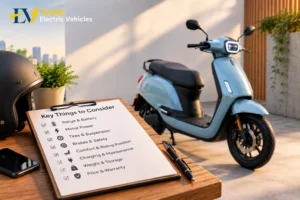
Start by defining your normal trip. Measure your daily distance, identify hills and rough roads, and decide whether you need to carry the scooter. Then compare the specifications that affect your actual use: usable range, load capacity, motor capability, tire construction, brakes, suspension, seat height, charging time, and weight.
Check warranty coverage and spare-part availability before buying. A scooter can have impressive specifications but be difficult to own if parts are unavailable. If you are considering a seat kit for a stand-up scooter, verify that the manufacturer specifically approves the accessory for your model.
FAQs About Electric Scooter With Seat
Q.1 Is an electric scooter with seat better than a standing scooter?
It depends on your needs. A seated design can be more comfortable for longer trips, while a standing scooter is often lighter and easier to carry.
Q.2 Can I add a seat to any electric scooter?
No. Only use a seat kit that the scooter manufacturer approves for the specific model. Compatibility involves more than whether the seat physically attaches.
Q.3 Is a electric scooter with seat is good for commuting?
Yes, when its range, load capacity, speed, brakes, and comfort match your commute. It can be especially useful for longer local trips where standing becomes tiring.
Q.4 How far can an electric scooter with seat travel?
Range varies by battery, motor, rider weight, speed, terrain, wind, tire pressure, and temperature. Use manufacturer specifications as a reference rather than a guarantee.
Q.5 Are seated electric scooters safe?
They can be ridden safely when the scooter is suitable for the rider and maintained correctly. Wear a helmet, follow local laws, inspect the scooter, and ride at a controlled speed.
Q.6 Is a seat better for long rides?
A properly fitted seat can reduce fatigue compared with standing continuously. However, comfort still depends on seat shape, height, suspension, tires, riding position, and road quality.
Conclusion
An electric scooter with seat can be an excellent choice when comfort is more important than maximum portability. It can make longer commutes, errands, and neighborhood trips easier by allowing the rider to travel from a supported position. The best model is not necessarily the fastest or most expensive. Focus on seat ergonomics, range, motor capability, tires, suspension, brakes, load capacity, and build quality.
If you choose a stand-up electric scooter with a seat attachment, make sure the manufacturer approves the kit for that exact model. If comfort is your main priority, a purpose-built seated design may provide better overall geometry. Treat safety as part of the buying decision. A helmet, proper maintenance, sensible speed, suitable tires, and attention to road conditions matter as much as the specifications.