
Electric cars are becoming a common choice for daily travel, but charging is still one of the biggest questions for new EV buyers. Electric car charging stations make it possible to recharge an EV away from home, whether you are commuting around the city or taking a long road trip. The good news is that India’s EV charging network is growing quickly. Government data reported 67,657 EV chargers installed across states and Union Territories as of August 7, 2026. Public charging infrastructure is also expanding through government programs and private charging networks.
Finding a charger is only the first step. You also need to know about charging speed, connector types, AC and DC charging, costs, and compatibility. This guide explains what you need to know before using electric car charging stations in India.
What Are Electric Car Charging Stations?
Electric car charging stations are places where EV drivers can plug in their vehicles and recharge the battery using electricity. They can be found at homes, offices, shopping centers, hotels, parking areas, fuel stations, dealerships, and along highways.
Not every charging station works in the same way. Some provide slower AC charging for vehicles that stay parked for several hours. Others provide DC fast charging, which can add a significant amount of range in a shorter time. The right charger depends on your EV’s battery, connector, maximum charging speed, and your current needs.
How Do Electric Car Charging Stations Work?
When you plug in your electric car, electricity flows from the power supply to the car’s battery. With AC charging, electricity is supplied to the car and converted by the vehicle’s onboard charger into the form needed by the battery. DC fast charging sends power directly to the EV battery, allowing it to charge much faster.
The important thing to remember is that a powerful charger does not automatically mean your car will charge at that full speed. Your vehicle has its own maximum charging limit. For example, if your EV can accept only 60 kW, connecting it to a much higher-power charger will not make it charge at the charger’s maximum output.
AC vs DC Charging: Which One Should You Use?
AC Charging
AC charging is mainly useful when your vehicle will remain parked for a longer period.
It is commonly used at:
- Homes
- Offices
- Hotels
- Shopping centers
- Workplaces
- Parking facilities
AC charging is a good option for daily EV use because you can charge your car while you work, shop, or sleep.
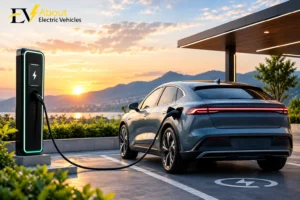
DC Fast Charging
DC fast charging is designed for situations where you need to recharge more quickly.
It is especially useful for:
- Highway trips
- Long-distance travel
- Quick charging stops
- Drivers without convenient home charging
Indian EV charging specifications include different AC and DC charging configurations, with DC systems ranging from lower-power options to high-power charging equipment. For most drivers, AC charging is useful for routine charging, while DC fast charging is more valuable during longer journeys.
How Fast Do Electric Car Charging Stations Charge?
There is no single charging speed for every EV station.
Charging time depends on:
- Charger power
- Battery capacity
- Vehicle charging limit
- Current battery level
- Battery temperature
- Charging conditions
- Vehicle battery management system
A larger battery may take longer to charge than a smaller one, but charging power also matters. Charging is usually fastest when the battery has a lower state of charge. As the battery gets closer to full, charging power can decrease. This helps manage battery temperature and protect the battery. For this reason, EV drivers on road trips often do not wait for the battery to reach 100% before continuing their journey.
What Charging Connectors Are Used in India?
Before using a public charger, make sure its connector is compatible with your electric car. Different EVs can use different charging standards. India’s charging ecosystem includes standards such as Type 2 and CCS2 for electric cars, along with other charging systems for different types of vehicles. Government EV standards also cover charging equipment, communication, safety, and interoperability.
Before visiting a charging station, check which connector your electric car supports. A charger may be nearby but still be useless if it does not have the correct connector for your vehicle.
How to Find Electric Car Charging Stations Near You?
Finding electric car charging stations is easy with an EV charging app or navigation system. These tools can show nearby charging points, charger availability, charging speed, prices, and payment options.
Before driving to a station, check:
- Exact location
- Connector type
- Charging speed
- Availability
- Operating hours
- Price
- Payment method
- User reviews, where available
This is particularly important before a long trip. A station shown on a map may be occupied, temporarily offline, or unsuitable for your vehicle.
How Much Does It Cost to Use Electric Car Charging Stations?
Public charging costs can be different at each station. The price usually depends on the charging network, location, amount of electricity used, and type of charger. For example, a fast charger may cost more because it can charge your car in less time. Before charging, it is a good idea to check the price so you know how much you will pay. Before starting a charging session, check the current price in the charging network’s app or at the station.
Home charging is convenient because you can charge your car while it is parked at home, such as overnight or while you work. Public charging stations are helpful when you are away from home, especially during long trips when you need to recharge your car on the road.
Are Electric Car Charging Stations Available on Highways?
Yes. Charging infrastructure is expanding beyond major cities and into highway corridors. India’s EV charging guidelines have focused on creating a more connected charging network, including infrastructure along highways and roads. However, availability can still vary by route.
If you are planning a long trip, do not assume that every highway will have a suitable fast chargerexactly when you need one. Plan your charging stops before leaving and keep enough battery range to reach an alternative location if your preferred charger is unavailable.
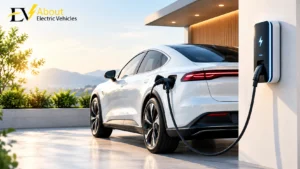
How to Plan an EV Road Trip Using Charging Stations
Long-distance EV travel becomes much easier when you plan your charging stops in advance. Start by checking your vehicle’s realistic driving range rather than relying only on its official maximum range. Then identify suitable electric car charging stations along your route.
A good road-trip plan should include:
- Your starting battery level
- Expected driving distance
- Charging stops
- Charger compatibility
- Available charging speed
- Backup charging locations
- Extra range for unexpected delays
Try not to arrive at a remote charging station with an extremely low battery. Traffic, weather, detours, and driving conditions can reduce your actual range. Keeping some extra battery capacity gives you more flexibility.
Can You Charge an Electric Car at Home?
Yes. For many EV owners, home charging is the most convenient option. You can charge your car while it is parked overnight or during other long parking periods. This reduces the need to visit public charging stations for everyday driving. However, the home charging setup should be suitable for your vehicle and electrical connection.
India’s EV charging guidance allows EV owners to charge vehicles at residences and offices using suitable electricity connections. Always follow the vehicle and charger manufacturer’s installation and safety instructions.
Are Public EV Charging Stations Safe?
Modern charging equipment includes safety systems designed to control the charging process. Still, drivers should inspect the equipment before use. Do not use a charging cable or connector that appears damaged. Do not force a connector into the vehicle’s charging port. If the charger displays an error or looks unsafe, use another station and report the problem to the charging network.
Keep the charging connection clean and follow the instructions displayed on the charger. Safety is especially important when charging outdoors in changing weather conditions.
What Should You Check Before Using a Public Charger?
Before starting a charging session, take a few seconds to confirm that everything is compatible.
Check:
- Your vehicle’s connector
- Charger connector
- Charging power
- Station availability
- Current price
- Payment method
- Cable condition
After plugging in, confirm that the charging session has actually started. Do not assume the car is charging simply because the cable is connected. Check the vehicle display or charging station screen before leaving.
What If an Electric Car Charging Station Is Not Working?
Public chargers can sometimes be unavailable because of maintenance, technical problems, communication errors, or heavy demand. If your preferred charger is not working, check the charging network’s app for another nearby station. This is why having a backup option is important during long-distance travel. If possible, choose routes with multiple charging options rather than depending on a single station.
Do Fast Chargers Affect EV Battery Life?
Fast charging is a normal feature of modern electric vehicles, but it produces more heat and can place different demands on the battery compared with slower charging. Your EV’s battery management system controls charging to help protect the battery.
For everyday use, follow the manufacturer’s charging recommendations. Use DC fast charging when you need it, especially during longer journeys, rather than assuming you must use it for every charging session.
How to Choose the Best Charging Network
The biggest charging network is not always the best one for your needs. When choosing between electric car charging stations, look for a network that offers:
Good Coverage
Choose a network with stations on the routes you regularly travel.
Reliable Chargers
A charger is only useful if it is available and working when you need it.
Compatible Connectors
Make sure the network supports the connector used by your EV.
Useful Charging Speeds
For highway travel, DC fast charging can save significant time.
Simple Payment
An easy-to-use app and clear pricing can make public charging much more convenient.
Common Mistakes to Avoid at EV Charging Stations
- New EV owners can avoid many charging problems by following a few simple rules.
- Do not choose a charger only because it is the closest one. Check compatibility first.
- Do not wait until the battery is extremely low before searching for a charger.
- Do not assume every public charger offers the same charging speed.
- Do not leave your car connected after charging is complete if the station’s rules or pricing make that unnecessary.
- Most importantly, check the charging status before leaving your vehicle.
FAQs About Electric Car Charging Stations
Q.1 How do I find electric car charging stations near me?
You can use EV charging apps, navigation systems, and charging-network platforms to find nearby stations. Check the location, connector, availability, and charging speed before travelling to the station.
Q.2 Are electric car charging stations free?
Some locations may offer free charging, but many public charging networks charge users. The price depends on the network, location, charger type, and amount of electricity used.
Q.3 Can every electric car use public charging stations?
No. Compatibility depends on the vehicle’s charging connector, charging standard, and maximum charging capacity. Always check these details before using a public charger.
Q.4 Which is better, AC or DC charging?
AC charging is generally better for longer parking periods, while DC fast charging is more useful when you need to add range quickly during a journey.
Q.5 How long does it take to charge an electric car at a charging station?
There is no fixed charging time. It depends on the battery size, charger power, vehicle charging limit, battery temperature, and current battery level.
Q.6 Can I charge my EV overnight at home?
Yes, if you have a suitable home charging setup and follow the manufacturer’s instructions. Overnight charging is convenient because the vehicle can charge while it is parked.
Q.7 Are DC fast chargers safe for electric cars?
Compatible DC fast chargers are designed to work with modern EV battery management systems. However, always use the charging equipment recommended for your vehicle and follow the manufacturer’s guidance.
Q.8 How many EV charging stations are there in India?
The exact figure depends on whether a source is counting stations, chargers, or individual charging points. Government data reported 52,718 public charging stations in July 2026 and 67,657 EV chargers installed across India as of August 7, 2026. These figures should not be treated as the same measurement.
Q.9 Are electric car charging stations available on highways?
Yes. Charging infrastructure is being expanded across cities and highways, but coverage varies by route. Always plan your charging stops before a long journey.
Final Thoughts
Electric car charging stations are becoming an important part of India’s growing EV ecosystem. More charging infrastructure means EV owners have more options for daily travel, highway journeys, and long-distance driving. Government programs and private investment are continuing to support this expansion. For everyday driving, home AC charging can be the most convenient solution. For road trips, DC fast charging can help reduce waiting time and make long-distance travel easier.
Before buying an electric car, do more than check its claimed range. Look at its charging speed, connector type, home charging requirements, public charging compatibility, and the availability of charging stations on your regular routes. The best charging network is not simply the one with the most chargers. It is the one that is compatible, reliable, accessible, and available where you actually need it.