
An electric bicycle conversion kit can turn a regular bicycle into an e-bike without buying a completely new electric bicycle. If you already own a suitable bike, conversion can add motor assistance while keeping its frame and riding position.
Choosing the right kit requires more than checking motor wattage or price. Wheel size, frame design, battery, controller, brakes, and local rules all matter. A good conversion starts with a compatible bicycle. This guide covers kit types, batteries, installation, safety, maintenance, and buying checks for everyday riders and commuters.
What Is an Electric Bicycle Conversion Kit?
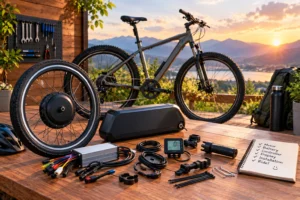
An electric bicycle conversion kit is a collection of parts used to add electric assistance to a conventional bicycle. A typical kit may include a motor, controller, display, throttle or pedal-assist sensor, wiring, and mounting hardware. The battery may be included or sold separately.
Instead of replacing the entire bicycle, you keep the existing frame and add the electric components needed for powered assistance. The result depends heavily on the original bicycle. A strong, correctly sized bicycle with good brakes can be a better conversion platform than an inexpensive frame that was never designed for the added weight and speed.
How Does an Electric Bicycle Conversion Kit Work?
The battery sends energy through the controller, which manages power to the motor. With pedal assist, a sensor detects pedaling and signals the controller. Some systems also use a throttle where local rules permit it. A display may show speed, battery status, and assist level. Wiring and controls must match the manufacturer’s instructions.
Main Types of Conversion Kits
The most common choices are hub-motor kits and mid-drive kits.
Front Hub Motor Kit
A front hub motor replaces the front wheel or is built into a replacement front wheel. It is usually straightforward because the motor sits inside the hub. Front-wheel conversion can be convenient for a simple commuter, but the added motor weight and driving force change the load on the front end. Correct installation, suitable forks, and proper torque control are important.
Rear Hub Motor Kit
A rear hub motor is installed in the rear wheel. It can provide a natural feeling of being pushed forward and works well for many everyday conversions. You must confirm the rear dropout spacing, wheel size, axle type, cassette or freewheel compatibility, and available clearance before purchasing.
Mid-Drive Kit
A mid-drive motor sits near the bicycle’s crank area and drives through the bicycle’s drivetrain. This layout can provide strong climbing performance and keeps the motor’s weight closer to the center of the bike. Mid-drive systems can be more complicated to install and may place additional demands on the chain, cassette, and other drivetrain parts. They are often attractive to riders who regularly climb hills or want a more bicycle-like power delivery.
Choosing the Right Motor
Motor power should match the bicycle and riding conditions. More power is not automatically better.
A moderate hub motor may suit flat urban riding, while hills or heavier loads may require more assistance. Check rated power, voltage, wheel compatibility, and local legal limits. The motor and controller should also be designed to work together. Mismatched components can cause poor performance or overheating.
Battery Size and Range
The battery is one of the most important parts of an electric bicycle conversion kit. Its capacity affects how far the bike can travel before recharging.
Battery energy can be estimated in watt-hours:
Voltage × amp-hours = watt-hours.
For example, a 48V 10Ah battery has approximately 480Wh of nominal energy. Actual range is not fixed. Rider weight, terrain, speed, tire pressure, assist level, wind, temperature, and battery condition all affect energy use. Do not choose a battery only for an advertised range. Compare capacity, chemistry, mounting, charger compatibility, warranty, and replacement availability. For short trips, a smaller battery may be enough. Longer commutes need more capacity so you are not regularly running very low.
Lithium Battery Safety Matters
A conversion kit is only as good as its electrical system. Lithium-ion batteries can present serious fire risks when they are damaged, defective, improperly used, or paired with unsuitable charging equipment. UL Solutions notes that UL 2849 evaluates the electrical drivetrain, battery, and charger combination of e-bikes.
Use a battery and charger that are designed for the system. Do not modify a battery pack or connect unknown electrical components simply because their plugs look similar. Inspect the battery regularly. Stop using it if you notice swelling, unusual heat, leaking, strange odors, physical damage, or abnormal noises. Follow the manufacturer’s charging and storage instructions.
Will the Kit Fit Your Bicycle?
Compatibility should be checked before ordering. Start with wheel size. The replacement wheel or motor must match the bicycle’s wheel dimensions and provide suitable tire and rim clearance. For hub motors, measure the relevant dropout width and confirm the axle design. Check whether the kit supports your existing cassette or freewheel. Some conversions may also require changes to the drivetrain.
For mid-drive systems, check the bottom-bracket type and dimensions. Do not assume that a kit will fit because the bicycle looks similar to another model. If compatibility is uncertain, ask the manufacturer or a qualified bicycle mechanic before installation.
Installation: What Does It Involve?
Installation difficulty depends on the kit and bicycle. A basic hub kit may require replacing a wheel, mounting the battery, installing controls and the pedal-assist sensor, and connecting wiring. A mid-drive conversion usually requires more work around the crank and bottom bracket and may need specific tools.
Never force components. Keep cables away from moving parts and sharp edges, and secure the battery firmly. If you are not comfortable working with bicycle mechanics or electrical connections, professional installation is a safer option.
Do You Need Better Brakes?
Possibly. Adding a motor and battery increases the bicycle’s total weight, and electric assistance can increase average riding speed. Before converting, inspect the brakes, pads, rotors, cables, and levers. Worn braking components should be replaced rather than ignored. A working motordoes not mean the conversion is complete. The bicycle must remain controllable and mechanically sound. Keep tires suitable and correctly inflated.
Electric Bicycle Conversion Kit Cost
Conversion prices vary widely depending on motor type, battery capacity, brand, included components, and installation. A basic hub kit can cost less than a complete premium system. A mid-drive kit with a quality battery and advanced controls can cost considerably more. The kit price may not include a battery, charger, torque arms, tools, brake upgrades, or drivetrain parts. Calculate the complete conversion cost before comparing it with a ready-made e-bike.
Conversion Kit vs Buying a New E-Bike
Converting an existing bicycle has one major advantage: you can keep a frame you already know and like. It can also allow you to choose the motor and battery combination that fits your needs. A new e-bike is designed as a complete system, with its frame, motor, battery, brakes, wiring, and controls selected to work together. Conversion makes sense when your bicycle is high quality and fits well. A new e-bike may be simpler when the current bike needs major upgrades or is unsuitable.
What to Check Before Buying
Before ordering, confirm:
- Wheel size and dropout compatibility
- Motor type and rated power
- Battery voltage and capacity
- attery mounting
- Controller and charger compatibility
- Pedal-assist sensor and throttle rules
- Brake and drivetrain compatibility
- Warranty, parts, and installation requirements
Check whether the battery and charger meet relevant safety requirements. “Tested to” a standard is not necessarily the same as complete product certification.
Common Conversion Mistakes
Common mistakes include buying a motor before checking the bicycle, choosing a battery without considering weight or mounting strength, and focusing on wattage while ignoring brakes and tires. Avoid mixing random batteries, chargers, controllers, and motors. Electrical compatibility matters. Finally, do not assume every conversion is legal on public roads. E-bike definitions, power limits, speed limits, throttle rules, and equipment requirements vary between jurisdictions.
Maintenance After Conversion
A converted e-bike needs both bicycle and electrical maintenance. Check tire pressure, brakes, chain, wheel security, and fasteners regularly. Inspect cables and connectors for damage. Follow the manufacturer’s battery cleaning, charging, and storage instructions. If the motor becomes noisy, power changes unexpectedly, or the battery behaves abnormally, stop riding and investigate.
FAQs About Electric Bicycle Conversion Kit
Q.1 Is an electric bicycle conversion kit worth it?
It can be worthwhile if your existing bicycle is strong, comfortable, and compatible. Compare the complete conversion cost with the price of a suitable new e-bike.
Q.2 Are conversion kits difficult to install?
Hub kits can be relatively straightforward, while mid-drive systems usually require more mechanical work. The difficulty depends on the bicycle and kit.
Q.3 Can any bicycle use a conversion kit?
No. Wheel dimensions, dropout spacing, bottom-bracket design, frame construction, drivetrain, brakes, and clearance can affect compatibility.
Q.4 Is a bigger battery always better?
No. A larger battery can increase range, but it also adds weight and cost. Choose capacity according to your real travel needs.
Q.5 Is a hub motor or mid-drive better?
Neither is universally better. Hub motors can be simple and practical for many commuters, while mid-drives can be useful for climbing and efficient power delivery through the bicycle’s gears.
Q.6 Can I install the kit myself?
If you have suitable bicycle tools and understand the manufacturer’s instructions, some kits can be installed at home. If you are uncertain about mechanical or electrical work, professional installation is safer.

Conclusion
An electric bicycle conversion kit can be a practical way to turn a conventional bicycle into an electric-assisted ride. The best results come from matching the motor, battery, controller, and controls to a suitable bicycle. Before buying, verify every compatibility measurement, calculate the complete cost, check the brakes and frame, and choose a battery and charger designed for the system. Safety should come before maximum power or the lowest price.
A well-planned conversion can give an existing bicycle a new purpose while allowing you to control the components and budget. Take time to check the details before installation, and choose a system that fits both your bicycle and the way you actually ride.