
An electric bicycle motor is the part that turns battery energy into movement. It helps the rider accelerate, climb hills, maintain speed, and travel with less effort. Because the motor affects how an e-bike feels on the road, choosing the right one is about more than looking at a large wattage number.
Hub motors and mid-drive motors are the two main designs. Each has strengths, limits, and a different riding feel. Motor power, torque, controller settings, battery capacity, rider weight, terrain, and legal limits all affect real performance. This guide explains how an electric bicycle motor works, which type may suit different riders, how motor power relates to performance, and what to check before buying.
What Is an Electric Bicycle Motor?
An electric bicycle motor is an electric machine that uses energy from the battery to assist the bicycle. The motor receives controlled electrical power through the controller and produces rotational force at the wheel or drivetrain.
Most modern e-bikes use brushless motors because they are efficient, compact, and require less routine maintenance than older brushed designs.
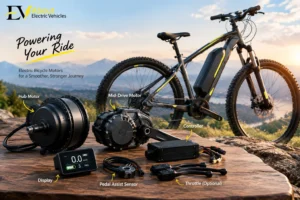
The motor does not work alone. The battery stores energy, the controller manages electrical power, and sensors tell the system when and how much assistance to provide. The display and controls let the rider select or monitor riding modes.
How Does an Electric Bicycle Motor Work?
When the rider activates the system, the controller regulates current from the battery to the motor. With pedal assist, a cadence or torque sensor detects rider input. The controller then adjusts motor assistance according to the system’s programming and selected mode.
A cadence sensor generally detects that the cranks are turning. A torque sensor measures how strongly the rider is pushing the pedals and can provide a more responsive feeling because assistance follows rider effort. A throttle-equipped system can request motor power without continuous pedaling where that feature is permitted by local law.
Main Types of Electric Bicycle Motors
There are two main motor layouts: hub motors and mid-drive motors.
Hub Motor
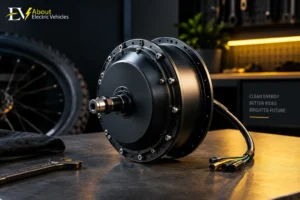
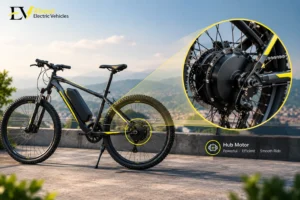
A hub motor is built into the front or rear wheel hub. The motor turns the wheel directly, so the bicycle’s existing chain and gears do not have to carry the motor’s driving force. Hub motors are popular because their design can be relatively simple and easy to maintain. They can work well for commuting, flat roads, and general recreational riding.
A rear hub motor often gives a natural pushing sensation. A front hub motor can be easier to fit on some bicycles, but fork compatibility and correct installation are important.
Mid-Drive Motor
A mid-drive motor is mounted around the crank area. Instead of directly turning a wheel, it applies power through the bicycle’s drivetrain. This layout allows the rider to use the bicycle’s gears to help the motor operate across different terrain. It can be especially useful on hills and routes with frequent changes in elevation.
The trade-off is greater mechanical complexity. Because motor force passes through the chain and gears, drivetrain components may experience more wear.
Hub Motor vs Mid-Drive Motor
Neither design is automatically better. The best choice depends on how the bicycle will be used. A hub motor can be attractive for a straightforward commuter because the motor system is relatively independent of the bicycle’s drivetrain. A mid-drive can be a better match for riders who climb hills regularly and want to use the bicycle’s gears with the motor.
For flat urban travel, a modest hub motor may provide all the assistance needed. For steep terrain, a well-designed mid-drive system can offer useful climbing performance. Consider service availability too. A motor that is easy to support locally can be more practical than a technically advanced system with difficult-to-find parts.
What Does Motor Wattage Mean?
Wattage describes electrical power, but it should not be treated as a direct measurement of speed. You may see terms such as rated power and peak power. Rated power refers to a specified continuous operating level, while peak power describes a higher output the system may provide for shorter periods.
A higher wattage can help with acceleration, hills, or heavier loads, but performance also depends on voltage, controller limits, motor design, gearing, wheel size, rider weight, and terrain. Most importantly, local laws may limit motor power or the type of e-bike that can legally use public roads. Always check the rules that apply where you ride.
Why Motor Torque Matters
Torque describes the turning force produced by the motor. It is especially relevant when starting from a stop, climbing a hill, or carrying additional weight. Two motors with similar wattage can feel different if their torque output, controller programming, or operating range differs.
Higher torque can make an e-bike feel stronger at low speed, but it can also place greater demands on drivetrain components in some mid-drive systems. If you live in a hilly area, look beyond wattage and compare the manufacturer’s torque information and the complete drive system.
Motor and Battery: Why They Must Match
An electric bicycle motor needs an appropriate battery and controller. The battery provides electrical energy, while the controller regulates how that energy reaches the motor. Voltage must be compatible across the system. A larger motor does not automatically make a bicycle faster if the controller and battery cannot provide the required power.
Battery capacity is usually discussed in watt-hours. A simple calculation is voltage multiplied by amp-hours. For example, a 48V 10Ah battery has about 480Wh of nominal energy. The motor uses energy at different rates depending on load, speed, terrain, and assist level. Therefore, battery capacity and motor power should be considered together.
How Motor Size Affects Range
The motor itself does not determine range by wattage alone. Range depends on how much electrical energy the system uses during a trip. Fast riding, steep hills, heavy loads, strong wind, low tire pressure, and frequent high-assist use can increase energy consumption. A rider using moderate assistance on flat roads maytravel much farther on the same battery.
For this reason, do not assume that a lower-power motor always provides better range. The complete bicycle, battery, riding conditions, and rider behavior matter.
Which Motor Is Best for Commuting?
For a daily commuter, reliability and predictable assistance are often more important than maximum output. A hub motor can be a practical choice for flat or moderately rolling routes. It can keep the drivetrain relatively simple and provide useful assistance for everyday travel.
A mid-drive may be worth considering when the commute includes long climbs, heavy cargo, or varied terrain. The ability to use bicycle gears can be useful in these conditions.
Electric Bicycle Motor and Pedal Assist
Pedal assist determines how the motor responds while you ride. Cadence-based systems usually detect crank movement and then provide a programmed level of assistance. They can be simple and affordable.
Torque-sensing systems measure rider effort and can adjust assistance more progressively. Many riders find this response more natural because motor output changes with how hard they pedal.
Electric Bicycle Motor and Throttle
Some e-bikes use a throttle that allows the rider to request motor assistance without relying on continuous pedaling. However, throttle availability and legal treatment vary by location.
A throttle can be useful for starting from a stop or reducing effort, but riders should still use the bicycle responsibly and maintain control at all times.
Motor Maintenance
Keep the motor area clean according to the manufacturer’s instructions and avoid exposing electrical components to water beyond their stated protection level. Check wiring, connectors, axle security, and mounting hardware regularly.
For mid-drive systems, maintain the chain and drivetrain because motor assistance can increase drivetrain load. Do not open or modify the motor unless you have the required technical knowledge and the manufacturer permits service.
Electric Bicycle Motor Safety
Motor safety is part of the entire electrical system. UL 2849 evaluates e-bike electrical systems, including the electric drivetrain, battery, and charger combination. A certification claim should be checked carefully because having an individually certified component is not the same as having the complete e-bike system certified.
Use the battery and charger intended for the bicycle. Do not modify the battery, motor, or controller with incompatible parts. If the battery becomes swollen, unusually hot, damaged, or develops an unusual smell or noise, stop using the system and have it inspected by an appropriate professional.
How to Choose the Right Electric Bicycle Motor
Start with your riding conditions rather than the largest number on a specification sheet.
Consider:
- Road surface and hills
- Rider and cargo weight
- Desired assistance level
- Daily distance
- Battery capacity
- Motor type
- Torque output
Local power and speed regulations - Warranty and service availability
- For simple city riding, a reliable hub motor may be enough. For frequent climbing, a suitable mid-drive may provide better control and use of the bicycle’s gears.
FAQs About Electric Bicycle Motor
Q.1 What is the best electric bicycle motor?
There is no single best motor. Hub motors can suit many commuters, while mid-drive motors can be useful for hills and varied terrain.
Q.2 Is a higher wattage motor better?
Not always. Higher power can improve performance under some conditions, but battery capacity, torque, controller limits, weight, terrain, and local regulations also matter.
Q.3 How long does an electric bicycle motor last?
Motor life varies with design, quality, load, weather, maintenance, and use. Keeping the electrical system dry as specified and avoiding unnecessary overload can help.
Q.4 Is a mid-drive motor better than a hub motor?
A mid-drive can have advantages on hills because it works through the bicycle’s gears. A hub motor can be simpler and practical for many flat or moderate routes.
Q.5 Does an electric bicycle motor use a lot of electricity?
Energy use depends on battery capacity, riding speed, terrain, rider weight, assist level, and motor efficiency. Moderate riding generally uses less energy than continuous high-power operation.
Q.6 Can an electric bicycle motor overheat?
Yes. Heavy loads, steep climbs, prolonged high output, poor airflow, or faults can increase heat. Follow the manufacturer’s operating guidance and stop if the system shows abnormal heat or behavior.
Conclusion
The electric bicycle motor is one of the most important parts of an e-bike, but motor wattage alone does not define performance. Motor type, torque, controller, battery, bicycle design, rider weight, terrain, and riding style all work together.
Hub motors can provide a simple and practical solution for many commuters, while mid-drive motors can be valuable for hills and demanding routes. The right choice is the one that matches your actual needs rather than the biggest specification.
Before buying, compare the complete system, check compatibility and local rules, consider service support, and pay attention to battery and electrical safety. A well-matched electric bicycle motor can provide smooth assistance, useful range, and dependable performance for everyday riding.