
An electric scooter is easy to carry, which is useful for commuting but also makes theft a real concern. A good electric scooter lock can make your scooter harder to take, especially when it is combined with smart parking and other security measures. The goal is not to make a scooter impossible to steal. Instead, you want to increase the time, effort, and tools needed to defeat the security.
Choosing the right lock is only one part of the job. The lock must fit the scooter, connect to a solid anchor, and be used on a strong part of the frame. This guide explains the main lock types, how to use them, what features matter, and how to build a practical anti-theft setup.
Why an Electric Scooter Lock Matters
Electric scooters are portable and can often be folded. That means a thief may not need to ride one away. If a scooter is not secured to something fixed, it may simply be lifted and carried away.
A built-in electronic lock, app lock, or motor lock can stop normal operation, but it does not physically attach the scooter to an object. A physical lock adds that missing layer. No lock provides a permanent guarantee against theft. Even strong locks can eventually be defeated with enough time and the right equipment. Good security therefore works by creating delay and inconvenience while reducing easy opportunities.
Types of Electric Scooter Locks
There are four common choices: U-locks, chain locks, folding locks, and cable locks. Each has a different balance of strength, flexibility, size, and weight.
U-Lock
A hardened-steel U-lock is a strong choice for many scooters. Its rigid shape gives thieves less room to use leverage, especially when the lock fits closely around the scooter and anchor. The main limitation is reach. A small U-lock may be difficult to fit around a thick scooter frame and a large parking rack. Measure the locking point before buying.
Chain Lock
A hardened chain offers more flexibility than a U-lock. It can wrap around wider posts and unusual shapes, making it useful for scooters with awkward locking points.
The tradeoff is weight. A strong chain can be inconvenient to carry every day. For a fixed parking location, however, it can be very practical.
Folding Lock
A folding lock uses connected metal sections and folds into a compact package. It can offer more reach than a U-lock while remaining easier to carry than some heavy chains. Quality varies, so do not judge a folding lock only by its appearance. Look for a recognized security rating and strong construction.
Cable Lock
Cable locks are light and flexible, but thin cables generally provide less resistance to cutting than hardened U-locks or chains. They can be useful as a secondary deterrent for accessories or a wheel, but they are a poor choice as the only protection for a valuable scooter.
What Makes a Good Scooter Lock?
Start with the material and construction. Hardened steel is generally preferred for the main lock because it is designed to resist common cutting and leverage attacks better than basic cable. Security ratings can also help when comparing products. Independent systems such as Sold Secure and ART provide a useful way to compare tested locks. However, a rating should not replace checking the actual size, shape, and compatibility with your scooter.
The lock should also be large enough to reach a secure frame point and the anchor, but not so large that it leaves unnecessary empty space. A compact fit can reduce opportunities for leverage.
Where Should You Lock an Electric Scooter?
The strongest practical method is to connect the scooter to a fixed, difficult-to-remove object such as a properly installed bike rack or substantial metal anchor.
Whenever the scooter design allows it, pass the lock through a solid frame section rather than relying only on a wheel. A wheel may be removable or replaceable, while a strong frame section is usually harder to separate from the rest of the scooter. Avoid weak objects that can be lifted, cut, removed, or carried away. A strong lock attached to a weak anchor does not create strong security.
How to Lock an Electric Scooter Correctly
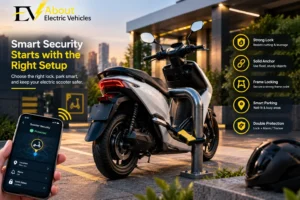
First, park in a suitable location. Choose a visible, well-lit area where the scooter is less isolated. Next, identify a strong locking point on the scooter. Check the manufacturer’s design because some scooters have dedicated openings or areas intended for a lock. Pass the main lock through the strong part of the scooter and around the fixed anchor. Keep the lock reasonably tight and avoid leaving a large amount of loose space.
Position the lock so it is not resting directly on the ground. Keep the locking hardware as protected and accessible as the design allows. Before walking away, pull the scooter and lock gently to confirm that the connection is secure. Check that the anchor itself cannot be moved or removed.
Should You Lock the Stem or Deck?
There is no universal answer because scooter designs differ. A stem may look convenient, but the folding joint or another removable component can make some stem locations less secure. A solid frame section or manufacturer-provided locking point is generally preferable when available. If you are unsure, check the scooter manual or manufacturer’s security guidance before choosing the attachment point. Do not assume that the easiest place to wrap a lock is the strongest place to secure the scooter.
Is One Lock Enough?
For a short stop in a low-risk location, one good primary lock may be reasonable. For longer parking, overnight storage, or higher-risk areas, adding a second independent layer can improve security.
For example, a hardened U-lock can secure the main frame while a second lock helps secure another part of the scooter. Using different lock styles may also force a thief to deal with different security mechanisms. The second lock should support the main lock, not replace it with another weak cable. Smart Security Beyond the Lock
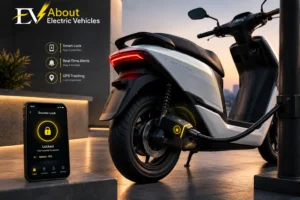
A physical lock should be part of a larger security plan. If your scooter supports a built-in alarm, electronic immobilizer, or app-based security feature, use it when appropriate. Save the scooter’s serial number, purchase records, and clear photographs. These details can help prove ownership and may be useful for a police report or insurance claim.
Where Is the Safest Place to Park?
Before buying, check lock dimensions, weight, mounting options, and the scooter’s approved locking points. A lock that stays on your scooter and fits your routine is more useful than one left at home. Location matters almost as much as the lock. During the day, choose a visible area with regular foot traffic. At night, prefer secure indoor storage or controlled-access parking whenever possible.
Avoid leaving the scooter for long periods in isolated locations. Do not assume that a quick stop is automatically safe. Theft can happen quickly when a scooter is left unattended. At home, keeping the scooter indoors is often stronger than relying on a lock outside. If indoor storage is impossible, a properly installed anchor combined with a strong lock can add another layer.
Common Electric Scooter Lock Mistakes
One common mistake is using a thin cable as the only lock. Another is locking only the front wheel and leaving the main frame unsecured. Some riders also attach a strong lock to a weak pole or removable object. Others buy a very large lock that leaves excessive space around the scooter and anchor.
Another problem is choosing a lock that is so heavy or awkward that the owner stops carrying it. The best security system is one you will actually use consistently. Finally, never rely only on a phone app, motor lock, or alarm. Electronic features are useful layers, but physical attachment remains important when leaving the scooter in public.
FAQs About Electric Scooter Lock
Q.1 What is the best electric scooter lock?
For many riders, a quality hardened-steel U-lock is a strong primary option. A chain or folding lock may be better when you need more reach or flexibility. The best choice depends on your scooter and parking location.
Q.2 Can I use a cable lock for my electric scooter?
A cable can be useful as a secondary layer, but a thin cable is generally not the best primary security for a valuable scooter. A stronger U-lock, chain, or folding lock is usually a better main choice.
Q.3 Should I lock the scooter wheel?
A wheel can be included as part of a locking setup, but do not rely on the wheel alone. Secure a strong frame section to a fixed anchor whenever the scooter design permits it.
Q.4 Can a thief break any electric scooter lock?
No physical lock is completely theft-proof. Stronger locks can increase the time and effort required, but determined thieves with specialized tools may eventually defeat them. Good parking and layered security reduce risk.
Q.5 Is a folding lock better than a U-lock?
Not automatically. A U-lock can provide excellent strength in a compact shape, while a folding lock can offer more flexibility and easier carrying. Choose based on the locking points you actually use.
Q.6 Should I use two Scooter locks?
Two quality locks can provide an additional layer, especially for long or overnight parking. If possible, using different lock types can make the theft attempt more complicated.
Conclusion
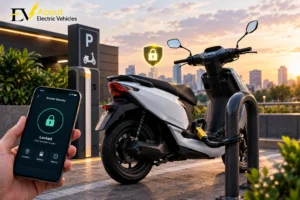
A good electric scooter lock is an important part of protecting your scooter, but the lock itself is not the whole solution. Choose a strong, well-built lock that fits your scooter, attach it to a solid frame section and a fixed anchor, and park in a visible or secure location.
For higher-risk situations, add another lock, alarm, or tracker and keep your ownership information saved. Most importantly, use the security system every time you leave the scooter unattended. Consistent habits, a suitable lock, and smart parking give you a much better defense against scooter theft.